Connect with us

Search by keyword

Physics

Is Dark Matter Hiding from Us?

A new study suggests dark matter might be created in the early universe during a supercooled phase transition. This could change how we search for dark matter, using gravitational waves as clues.

Is Dark Matter Hiding from Us
✨Researched by humans. Explained by robots. Learn more.

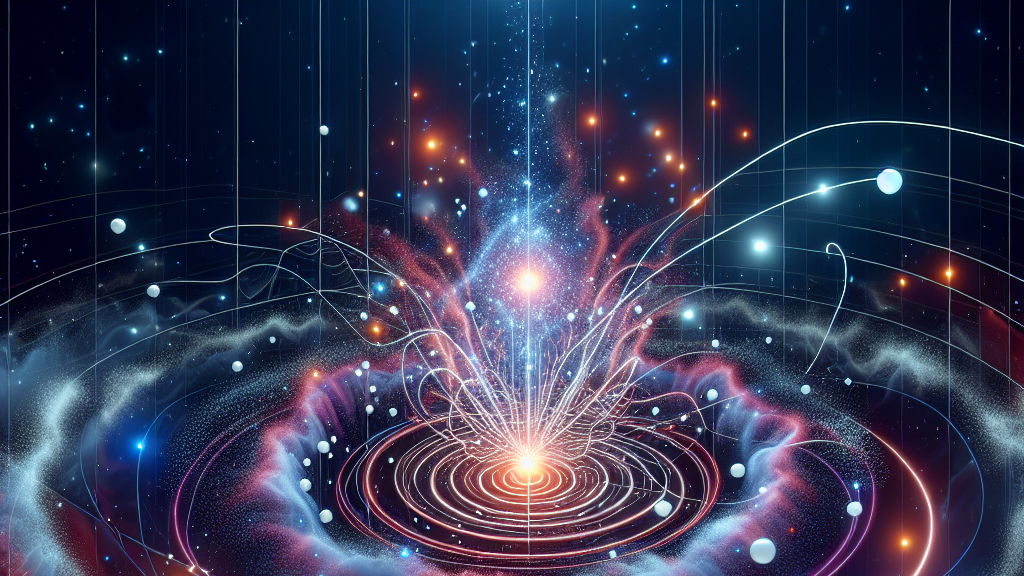
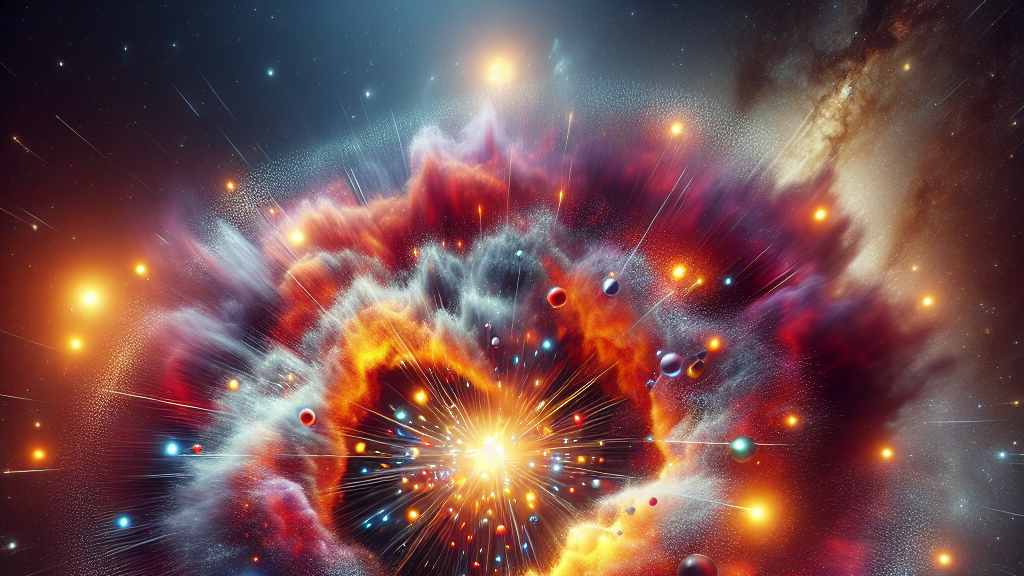
Imagine if mysterious dark matter, which makes up most of the universe’s mass, was actually being created in a kind of cosmic deep freeze! That’s exactly what a new study suggests, with dark matter forming during a dramatic event in the early universe called a ‘supercooled phase transition.’ This changes the game from what scientists usually think of as ‘freeze-out’ and ‘freeze-in’ for creating these elusive particles.

Researchers explored different dark matter candidates, like vector, fermionic, and scalar-mediated models. After running through various possibilities, they found that fermionic dark matter with a pseudoscalar mediator was the most promising. The idea is that during this phase transition, a big blast of energy changes the landscape, making it hard for dark matter to return to an old equilibrium. Instead, it ‘freezes in’ as the universe expands and cools down.

This new framework could help us detect dark matter by looking for gravitational waves—ripples in space-time—that accompany this early universe event. Future observatories like LISA and UDECIGO might be able to pick up these subtle cosmic whispers, providing exciting new ways to explore dark matter. Imagine a future where we unlock one of the universe’s biggest secrets by listening to these ‘songs’ of the cosmos!

Did you know? Scientists believe dark matter makes up about 27% of the universe, but we can’t see or touch it!

FAQs

What makes this new approach to dark matter exciting?

This approach suggests dark matter could form during a supercooled phase transition in the early universe, a process different from previously considered ‘freeze-out’ and ‘freeze-in’ scenarios, potentially offering new ways to detect it.

How might gravitational waves help us find dark matter?

Gravitational waves, generated during the supercooled phase transition, could be detected by future observatories, serving as indirect evidence for dark matter’s formation process.

Why is fermionic dark matter with a pseudoscalar mediator important in this study?

It was identified as the most viable candidate for forming during the supercooled phase transition, offering new directions for model building and potential observational verification.

Background

The concept of dark matter originated to explain gravitational effects that do not match with observable matter. Traditional models, like ‘freeze-out’ and ‘freeze-in,’ involve particles interacting and then becoming thermally stable as the universe expands. This study proposes a ‘supercooled phase transition,’ where a rapid change in energy conditions could create dark matter in a different way, by preventing these particles from reaching an equilibrium again.

History

The search for dark matter began in the early 20th century with discrepancies in star motion. Over decades, theories like WIMPs and Feebly Interacting Massive Particles emerged. This new study builds on these by introducing a cosmological event-driven mechanism, baiting gravitational waves as evidence for this new formation theory.

Based on “Beyond Freeze-Out: A Novel Freeze-in Mechanism for Dark Matter via Supercooled Phase Transitions” by Seyed Yaser Ayazi, Mojtaba Hosseini, available on arXiv (arxiv.org/abs/2502.14526), used under CC BY 4.0 (creativecommons.org/licenses/by/4.0/).

Trending

Latest

Can AI Save Water Discover How

Computers

AI is transforming the tech world, but it uses lots of water! A new tool, SCARF, helps us measure and reduce AI's water footprint,...

Whats a Forbush Decrease and Why Should We Care Whats a Forbush Decrease and Why Should We Care

Space

Scientists just observed the biggest solar storm event in years, revealing unexpected cosmic ray patterns. Understanding these changes could help us protect our technology...

Can Cars Spot Danger Faster Than Humans Can Cars Spot Danger Faster Than Humans

Computers

Think about how quickly you react when something unexpected happens on the road. This research brings us closer to creating self-driving cars that can...

Can Fear of the Other Stop Social Harmony Can Fear of the Other Stop Social Harmony

Physics

Fear of the unknown might make it harder for people to agree and get along. This study shows that when people have strong xenophobic...

Can AI Revolutionize Breast Cancer Diagnosis Can AI Revolutionize Breast Cancer Diagnosis

Electricity

This research introduces a groundbreaking AI model that can accurately assess HER2-positive breast cancer using widely accessible staining methods, potentially revolutionizing how we diagnose...

Can AI Transform Your Singing into a Choir Can AI Transform Your Singing into a Choir

Computers

Imagine singing solo and having AI turn you into a choir. This research unveils a groundbreaking AI tool that transforms your voice into rich...

You May Also Like

Space

Scientists have discovered a new way that tiny early-universe structures might grow into massive black holes, potentially changing our understanding of cosmic evolution! This...

Physics

Understanding how carbon dioxide behaves when stored deep underground could be the key to combating climate change. With a new model, scientists can predict...

Space

This research uncovers how setting a visibility limit on starlight reveals more realistic details about galaxies, helping us understand their size and mass better—crucial...

Physics

Recent research suggests that supernova explosions in our galaxy might be key to discovering new, elusive forms of dark matter. These cosmic events could...

Space

Imagine invisible particles shaping galaxies from within! This study suggests that certain types of dark matter could help solve long-standing puzzles about galaxy formations...

Physics

Supernovae might be key to unlocking the secrets of dark matter, especially through its activity in our own galaxy, the Milky Way. This research...

Space

Scientists have discovered a possible explanation for how supermassive black holes could form in the early universe. This breakthrough could change our understanding of...

Space

Explosive events in the early universe could be revealing themselves through detectable X-ray signals caused by positron annihilation. Finding these signals would shake up...

Space

Scientists have found a novel way to measure dark matter around black holes using light echoes from space. This could change how we understand...

Copyright © 2024 8ig8rain.

Disclaimer: The content on 8ig8rain.com consists of AI-generated summaries of scientific abstracts from arXiv. Please note that most arXiv abstracts are preprints and may not have undergone formal peer review. While these summaries aim to convey key ideas and potential applications, they are provided for informational purposes only and should not be interpreted as validated scientific findings or professional advice. The summaries are intended to educate, spark curiosity, and inspire further exploration of science.