Connect with us

Search by keyword

Space

Could Galaxy Groups Be Cosmic Thieves?

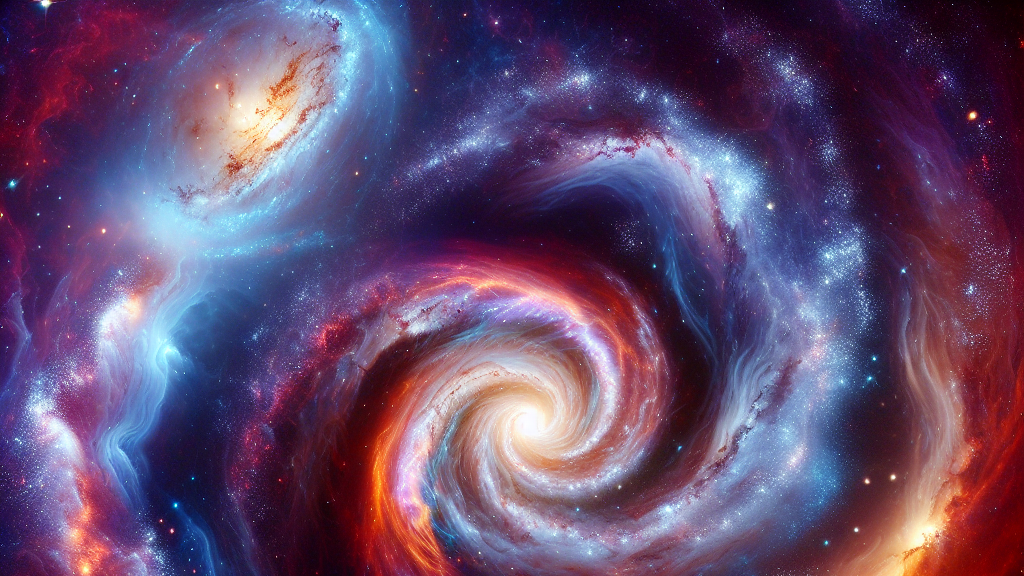
Some galaxy groups might be cosmic ‘thieves,’ picking up extra stars as they pass through clusters of galaxies. This discovery could change how we understand galaxy evolution and the structure of the universe.

Could Galaxy Groups Be Cosmic Thieves
✨Researched by humans. Explained by robots. Learn more.

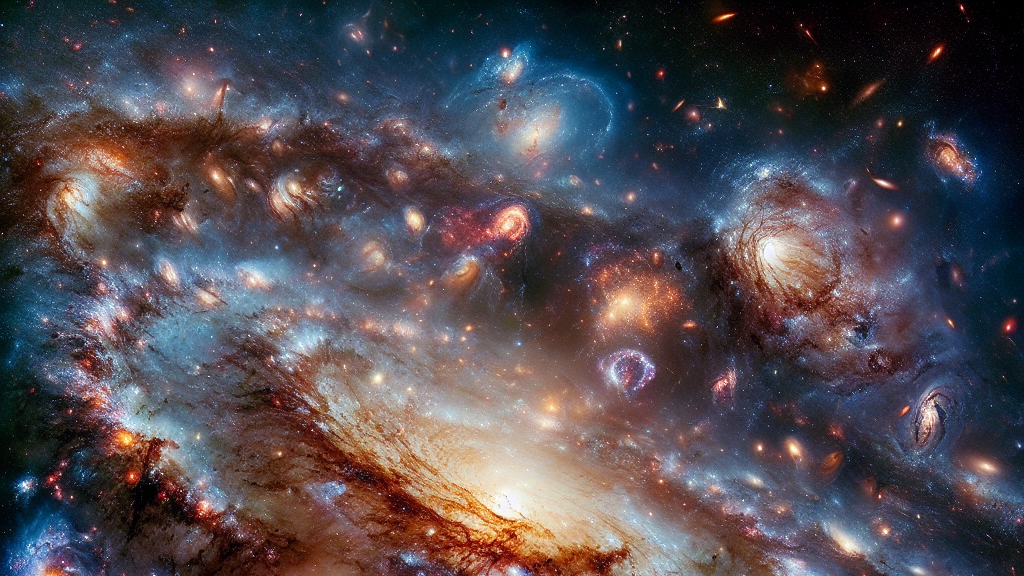
Imagine if some galaxies operated like cosmic pickpockets, stealthily gathering extra stars as they drift through the universe. Researchers have found that certain galaxy groups might be doing just that. These galactic ‘thieves’ are not just flying solo in the vastness of space—they might actually become more crowded as they pass through denser regions known as galaxy clusters.

By using advanced simulations, scientists have identified two types of galaxy groups: those that snag new galaxies during their travels—dubbed ‘thief groups’—and those that don’t. Thief groups are less compact but end up with more galaxies in their mix. On the other hand, ‘non-thief groups’ don’t seem to acquire new members, making them virtually identical to regular field groups.

This remarkable insight could redefine how we perceive galaxy formation and interaction. Imagine if entire groups of galaxies could change their character simply by passing through a cosmic neighborhood! As our understanding deepens, these findings could have implications for everything from galaxy formation theories to the way we map out our universe.

Some galaxy groups might snag new stars as they travel through clusters, earning them the nickname ‘cosmic thieves.’

FAQs

What are galaxy groups in space?

Galaxy groups are collections of galaxies that are bound together by gravity, typically consisting of a few to several dozen galaxies. They are among the most common structures in our universe.

How do thief galaxy groups differ from regular groups?

Thief galaxy groups are unique because they drift through galaxy clusters, picking up additional galaxies along the way, which makes them less compact and more populous compared to regular field groups.

Why is the concept of thief galaxy groups important?

This concept challenges our understanding of how galaxies evolve and interact over time. Recognizing that galaxies can acquire new members changes how we view the dynamics and structure of the universe.

How do scientists study these galaxy groups?

Researchers use sophisticated simulations like the IllustrisTNG300 to model galaxy interactions and capture statistical differences between thief groups and non-thief groups in their properties.

Could this change how we map the universe?

Yes, as we learn more about these interactions, it could influence methods for mapping and understanding cosmic structures, offering new insights into the evolution of galaxies.

Background

Galaxy groups are important cosmic structures consisting of a few to several dozen galaxies held together by gravity. They often interact with larger structures like galaxy clusters, which can alter their composition and structure. Taking advantage of advanced simulations, researchers can study these interactions across vast cosmic timescales, revealing how galaxies evolve as they pass through these clusters.

History

The study of galaxy groups has been pivotal in understanding cosmic dynamics for decades. Traditionally, research focused on how galaxies evolve individually or within fixed groups. Recent advancements in technology and simulations have provided the tools needed to model these complex interactions more precisely. The IllustrisTNG300 simulation offers a new lens through which we can observe and quantify how interactions with clusters influence galaxy groups.

Based on “Stealing galaxies from galaxy clusters” by Majda Smole, Miroslav Micic, Ana Mitrašinović, available on arXiv (arxiv.org/abs/2505.21629), used under CC BY 4.0 (creativecommons.org/licenses/by/4.0/).

Trending

Latest

Can AI Save Water Discover How

Computers

AI is transforming the tech world, but it uses lots of water! A new tool, SCARF, helps us measure and reduce AI's water footprint,...

Whats a Forbush Decrease and Why Should We Care Whats a Forbush Decrease and Why Should We Care

Space

Scientists just observed the biggest solar storm event in years, revealing unexpected cosmic ray patterns. Understanding these changes could help us protect our technology...

Can Cars Spot Danger Faster Than Humans Can Cars Spot Danger Faster Than Humans

Computers

Think about how quickly you react when something unexpected happens on the road. This research brings us closer to creating self-driving cars that can...

Can Fear of the Other Stop Social Harmony Can Fear of the Other Stop Social Harmony

Physics

Fear of the unknown might make it harder for people to agree and get along. This study shows that when people have strong xenophobic...

Can AI Revolutionize Breast Cancer Diagnosis Can AI Revolutionize Breast Cancer Diagnosis

Electricity

This research introduces a groundbreaking AI model that can accurately assess HER2-positive breast cancer using widely accessible staining methods, potentially revolutionizing how we diagnose...

Can AI Transform Your Singing into a Choir Can AI Transform Your Singing into a Choir

Computers

Imagine singing solo and having AI turn you into a choir. This research unveils a groundbreaking AI tool that transforms your voice into rich...

You May Also Like

Space

This research is changing the game for how we see the universe using radio waves! It enlists the help of regular people and smart...

General Relativity and Quantum Cosmology

This study explores the possible fate of our universe—revealing that under certain conditions, it might one day collapse into a Big Bang-like singularity or...

Space

Astronomers are turning cosmic data into music, making it easier for everyone to explore the mysteries of the universe. This fascinating approach of 'listening'...

Space

Imagine invisible particles shaping galaxies from within! This study suggests that certain types of dark matter could help solve long-standing puzzles about galaxy formations...

Physics

Scientists are on a mission to discover if ghost-like particles called neutrinos could reveal astonishing insights about the universe. Using cutting-edge technology, they searched...

Space

Scientists are unraveling the mystery of Fast Radio Bursts, revealing that these mysterious space signals might all come from the same type of cosmic...

Space

Scientists have discovered a new way to check for volcanic activity on planets outside our solar system, opening the door to understanding how these...

Physics

This study explores how using AI and specialized tutoring systems in astronomy classes can enhance learning experiences and AI literacy for students, potentially transforming...

Space

This research unravels the mysterious behavior of dark matter by exploring a two-species model, which could explain why some galactic regions are denser than...

Copyright © 2024 8ig8rain.

Disclaimer: The content on 8ig8rain.com consists of AI-generated summaries of scientific abstracts from arXiv. Please note that most arXiv abstracts are preprints and may not have undergone formal peer review. While these summaries aim to convey key ideas and potential applications, they are provided for informational purposes only and should not be interpreted as validated scientific findings or professional advice. The summaries are intended to educate, spark curiosity, and inspire further exploration of science.