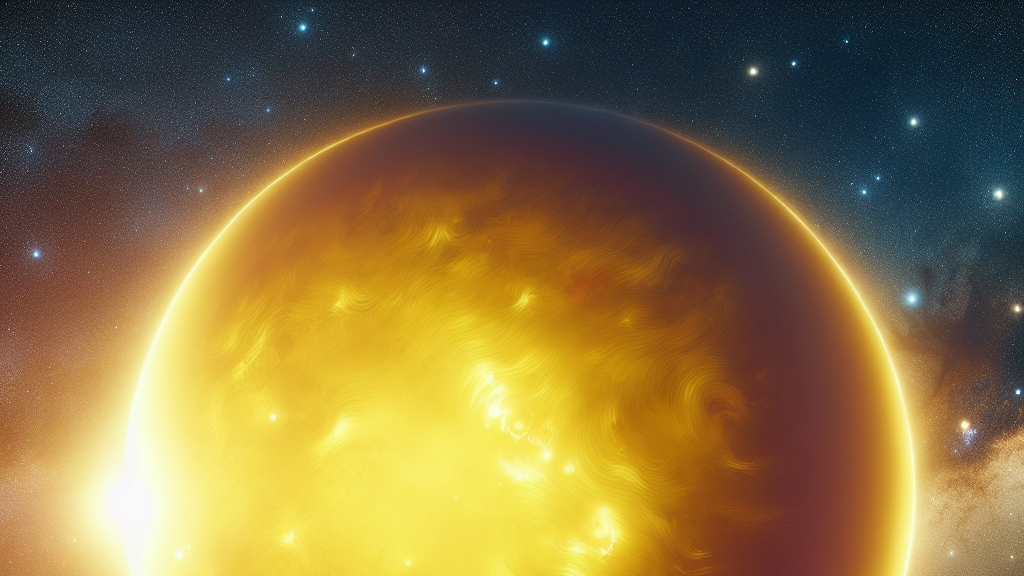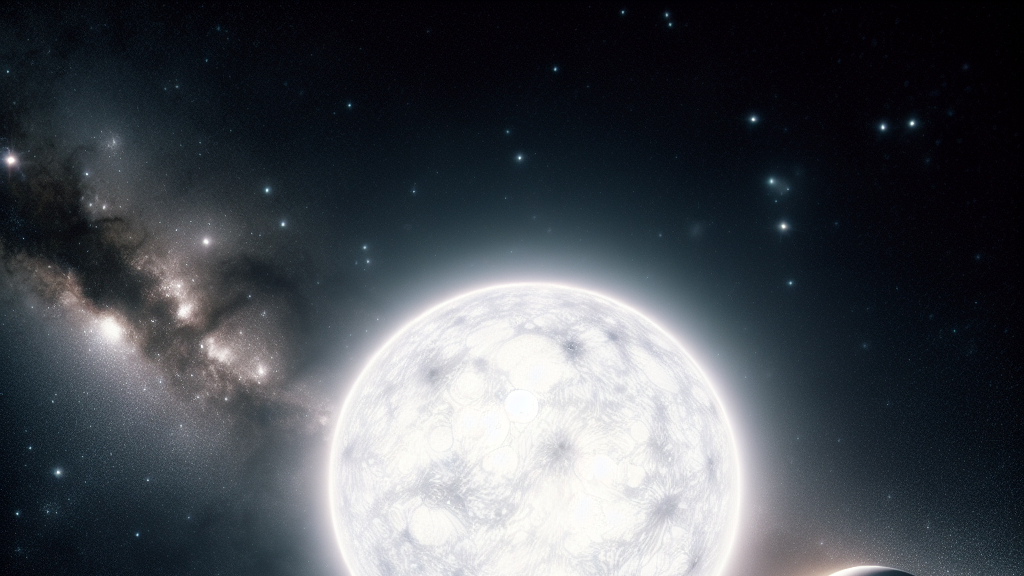
Imagine looking up at the night sky and spotting a star that usually shines brightly, but suddenly seems to flicker and dim. That’s exactly what astronomers observed with a distant star called V1460 Her. This star isn’t like our sun—it’s part of a special group called cataclysmic variables, where a white dwarf star is sucking in material from a neighboring star, like a cosmic vacuum cleaner. But recently, its ‘vacuuming’ seems to have slowed down tremendously, causing a significant drop in its brightness.
Using a space observatory called Chandra, scientists found that V1460 Her’s glow in X-ray light is much weaker than it was just a few years ago. This dimming hints at a dramatic slowdown in the star’s accretion rate—the rate at which it’s pulling in that extra material. It’s like the star is on a sudden cosmic diet, consuming much less ‘star fuel’ than before. What’s fascinating is that this makes V1460 Her one of the faintest stars of its kind ever observed in this state, making it a unique case for researchers studying how stars work.
So, why does this matter to us? Understanding these star-states helps scientists predict star behaviors and how they evolve over time. In the future, this could guide how we explore the solar system and beyond, making space travel safer and more efficient. Being able to anticipate when and why stars act up could protect spacecraft from unexpected cosmic events or even help us locate new places to search for signs of life.
Did you know that the white dwarf in V1460 Her rotates faster than a washing machine spin cycle at full speed?
FAQs
What unexpected discovery did scientists make about V1460 Her?
Scientists found that V1460 Her suddenly became much dimmer, suggesting a significant drop in how much material it’s drawing from its nearby star.
Why is this drop in brightness important?
The decrease in brightness indicates a reduced accretion rate, making V1460 Her one of the faintest known stars of its kind in this state, offering unique insights into stellar evolution.
How might this affect our understanding of star behavior?
This observation can help scientists better understand star lifecycles, which is crucial for predicting other cosmic events and planning future space missions.
What tools did researchers use to make this observation?
Researchers used the Chandra X-ray Observatory to capture the changes in V1460 Her’s brightness.
What is a cataclysmic variable star?
A cataclysmic variable star is a system where a white dwarf star draws material from a nearby companion star, leading to variable brightness levels.
Background
Cataclysmic variables (CVs) are a type of binary star system that includes a white dwarf—a stellar remnant that is not massive enough to become a neutron star. The white dwarf draws matter from a nearby companion star, which increases its brightness. In V1460 Her, the white dwarf’s accretion rate has significantly decreased, making it a low-luminosity CV at this time.
History
The study of cataclysmic variables has evolved over decades, with early discoveries focusing on their erratic brightness changes. Technology advancements like the Chandra X-ray Observatory have allowed scientists to observe these systems in greater detail, revealing new insights into white dwarf behaviors and accretion processes.
Based on “The Variable X-ray Emission of the Cataclysmic Variable V1460 Her with a Rapidly Rotating White Dwarf” by Erik B. Monson, George G. Pavlov, Gordon P. Garmire, available on arXiv (arxiv.org/abs/2501.03242), used under CC BY 4.0 (creativecommons.org/licenses/by/4.0/).