Connect with us

Search by keyword

Computers

Can Gadgets Boost Ugandan Farms’ Harvests?

This research shows how using IoT gadgets in Ugandan maize farms can help tackle challenges like unpredictable weather, low yields, and water wastage. By making these technologies easy to use for local farmers, it transforms agriculture into a more productive and sustainable sector.

Can Gadgets Boost Ugandan Farms Harvests
✨Researched by humans. Explained by robots. Learn more.

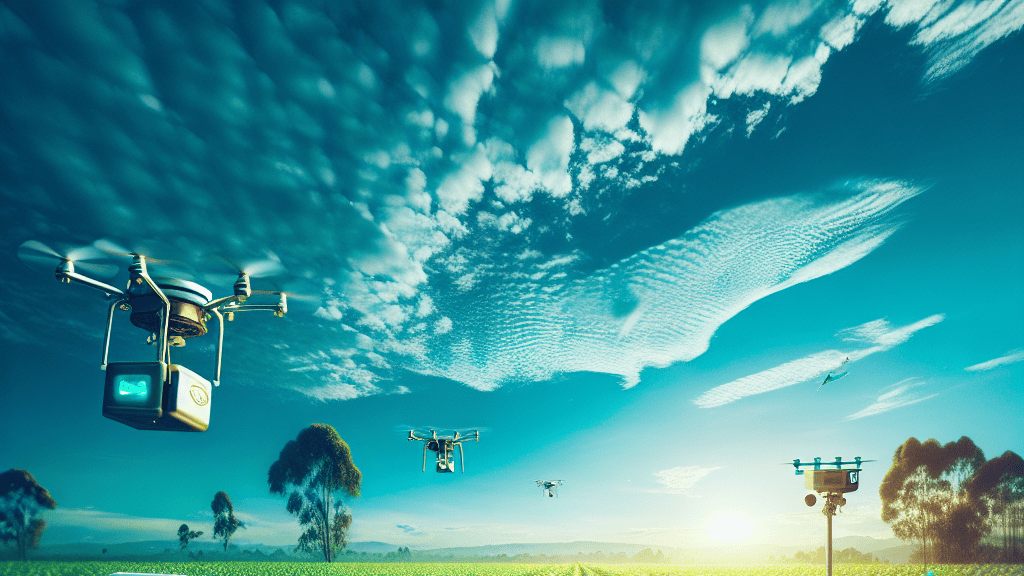
Imagine a world where small gadgets help farmers grow more food with less effort. In Central Uganda, this is becoming a reality as researchers develop a new framework using the Internet of Things (IoT) to revolutionize maize farming. These tech-driven solutions can help tackle common challenges like unpredictable weather, low crop yields, and water shortages, making farming more efficient and sustainable.

The research incorporates IoT technology, such as sensors and smart irrigation systems, into the daily farming activities of smallholder farmers in Uganda. By collecting real-time data, these devices guide farmers on when and how much to water crops and alert farmers to dwindling water supplies, preventing waste. The technology is designed to be simple and practical, using local strategies that farmers can easily understand and apply.

In the future, this approach could transform agriculture in Uganda and beyond. By integrating technology into traditional farming practices, communities can improve food security, adjust to climate challenges, and encourage sustainable rural development. This tech boost is not just about farming smarter but ensuring everyone has enough food on their plate.

Did you know that IoT can help cut watering mistakes by up to 50%, saving precious drinking water?

FAQs

How does Internet of Things technology benefit maize farming in Uganda?

The Internet of Things technology helps maize farmers in Uganda by providing real-time data that improves water use, enhances crop yields, and prevents water loss, making farming more efficient and sustainable.

What challenges does this technology address in Ugandan agriculture?

Internet of Things technology addresses challenges like climate change impacts, inefficient resource use, and low crop yields, transforming agriculture into a more predictable and productive sector.

Can smallholder farmers in Uganda easily access and use Internet of Things solutions?

Yes, the Internet of Things solutions are designed using local strategies that are easy for Ugandan smallholder farmers to understand and implement, overcoming barriers of technology access and economic constraints.

What is the goal of integrating Internet of Things in agriculture?

The goal is to make agriculture more data-informed, climate-smart, and economically viable, contributing to food security and rural development while modernizing Ugandan agriculture.

Background

At its core, the Internet of Things (IoT) involves connecting everyday objects to the internet, allowing them to send and receive data. For agriculture, this means using gadgets like sensors and smart irrigation systems that can monitor plant conditions, soil moisture, and weather changes, providing valuable information to the farmer.

History

The use of IoT in agriculture has grown as technology advanced, initially starting with basic sensors in large-scale farms. Recent studies have adapted these technologies for smallholder farms in regions like Africa, focusing on making them affordable and user-friendly. This study builds on past efforts to create a low-resource, impact-focused model specifically for regions like Central Uganda.

Based on “A Smart IoT Framework for Climate-Resilient and Sustainable Maize Farming In Uganda” by Nomugisha Godwin, Dr Mwebaze Johnson, available on arXiv (arxiv.org/abs/2501.12483), used under CC BY 4.0 (creativecommons.org/licenses/by/4.0/).

Trending

Latest

Can AI Save Water Discover How

Computers

AI is transforming the tech world, but it uses lots of water! A new tool, SCARF, helps us measure and reduce AI's water footprint,...

Whats a Forbush Decrease and Why Should We Care Whats a Forbush Decrease and Why Should We Care

Space

Scientists just observed the biggest solar storm event in years, revealing unexpected cosmic ray patterns. Understanding these changes could help us protect our technology...

Can Cars Spot Danger Faster Than Humans Can Cars Spot Danger Faster Than Humans

Computers

Think about how quickly you react when something unexpected happens on the road. This research brings us closer to creating self-driving cars that can...

Can Fear of the Other Stop Social Harmony Can Fear of the Other Stop Social Harmony

Physics

Fear of the unknown might make it harder for people to agree and get along. This study shows that when people have strong xenophobic...

Can AI Revolutionize Breast Cancer Diagnosis Can AI Revolutionize Breast Cancer Diagnosis

Electricity

This research introduces a groundbreaking AI model that can accurately assess HER2-positive breast cancer using widely accessible staining methods, potentially revolutionizing how we diagnose...

Can AI Transform Your Singing into a Choir Can AI Transform Your Singing into a Choir

Computers

Imagine singing solo and having AI turn you into a choir. This research unveils a groundbreaking AI tool that transforms your voice into rich...

You May Also Like

Physics

Understanding how carbon dioxide behaves when stored deep underground could be the key to combating climate change. With a new model, scientists can predict...

Physics

What if we could predict the absolute worst heatwave before it even happens? By using a groundbreaking climate model, scientists are now able to...

Physics

By combining technology with climate science, researchers have found a way to predict how bad heatwaves could get, allowing us to better prepare for...

Electricity

This groundbreaking study shows how advanced sensors and AI can improve methane leak detection from space, helping us fight climate change more effectively. With...

Nonlinear Sciences

This research tackles the big question of how well we can predict 'tipping points' in nature—those moments where a small change can trigger a...

Physics

Turns out, rain does more than just make the ocean surface lighter—it can change ocean stability depending on the rainfall intensity and time of...

Physics

This research reveals that the layout of city streets is key to understanding and predicting urban climate changes like heat and pollution. By studying...

Computers

Ever wondered how memes might be shaping your views on climate change? New research uncovers the hidden power of memes to influence public opinion,...

Economics

Discover how intensifying wildfires are reshaping urban areas like Los Angeles and sparking novel approaches to city planning and emergency response. This research highlights...

Copyright © 2024 8ig8rain.

Disclaimer: The content on 8ig8rain.com consists of AI-generated summaries of scientific abstracts from arXiv. Please note that most arXiv abstracts are preprints and may not have undergone formal peer review. While these summaries aim to convey key ideas and potential applications, they are provided for informational purposes only and should not be interpreted as validated scientific findings or professional advice. The summaries are intended to educate, spark curiosity, and inspire further exploration of science.