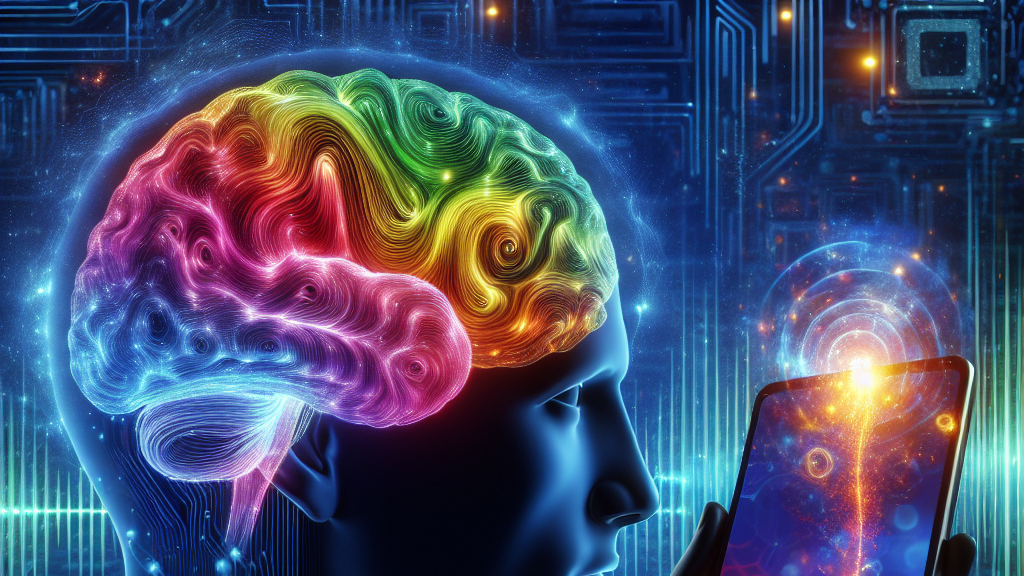
Imagine a world where you can unlock your phone or computer just by thinking about it. Brainwave-based biometrics could soon make that possible! This groundbreaking technology reads a unique ‘thought signature’ that your brain emits, acting like a secure password that only you can produce. It’s not only hands-free but also impossible for someone to steal by looking over your shoulder, making it an exciting frontier in security technology.
Researchers have conducted a massive study using brainwave data from 345 people over five years, showing that deep learning can significantly improve the accuracy of this new authentication method. Unlike traditional systems that often require cumbersome data sets, brainwaves offer a fresh, efficient approach. Their study found that these methods could accurately recognize a person over time, highlighting the potential of brainwaves to be the future of secure user authentication.
One of the most exciting applications of this research is the potential to use fewer sensors in future devices, making technology more accessible and affordable without sacrificing security. Imagine consumer-friendly gadgets that adapt easily to your identity, providing a seamless yet highly secure experience. This innovative leap could redefine how we interact with our everyday tech, enhancing privacy and protection in our digital lives.
Did you know? Brainwaves are as unique as fingerprints, making them a potentially unhackable security feature!
FAQs
How can brainwave-based biometrics revolutionize user authentication?
Brainwave-based biometrics offer hands-free, highly secure user authentication, making them difficult to replicate or hack. This method could revolutionize how we protect personal devices and data.
What makes brainwave biometrics more secure than traditional methods?
Brainwave biometrics are unique to each individual and cannot be easily mimicked or duplicated, unlike passwords or fingerprints, providing a higher level of security against hacking and fraud.
Why is deep learning important in brainwave-based authentication?
Deep learning enhances the accuracy and robustness of brainwave-based authentication by effectively analyzing complex brainwave patterns, outperforming traditional methods and improving reliability over time.
Can brainwave authentication be implemented on affordable devices?
Yes, the research suggests that fewer brainwave sensors can be used, making it feasible to integrate brainwave authentication into consumer-grade devices without compromising security.
What future developments are needed to meet industrial standards?
To meet industrial standards, further training with larger datasets consisting of at least 1,500 subjects is required, which will improve the feature extractor’s performance and reliability in diverse scenarios.
Background
Brainwave biometrics use electroencephalography (EEG) technology to capture and analyze the electrical activity generated by the brain. Each person’s brainwave patterns are distinct due to genetic and environmental factors, making them a unique form of identification. Unlike fingerprints, which can be lifted or duplicated, brainwave patterns are internal and dynamic, offering an added layer of security and privacy. Deep learning methods are employed to process and interpret these patterns, making them more reliable for continuous authentication.
History
Interest in brainwave biometrics began with the advent of EEG technology. Over the years, various studies have explored using brainwaves for different applications, from controlling prosthetic limbs to games. However, its application in user authentication has become more feasible with advancements in artificial intelligence and machine learning, especially deep learning. Prior studies have typically been limited by small sample sizes and short recording durations, which this latest research overcomes by using a larger dataset spanning five years.
Based on “Advancing Brainwave-Based Biometrics: A Large-Scale, Multi-Session Evaluation” by Matin Fallahi, Patricia Arias-Cabarcos, Thorsten Strufe, available on arXiv (arxiv.org/abs/2501.17866), used under CC BY 4.0 (creativecommons.org/licenses/by/4.0/).