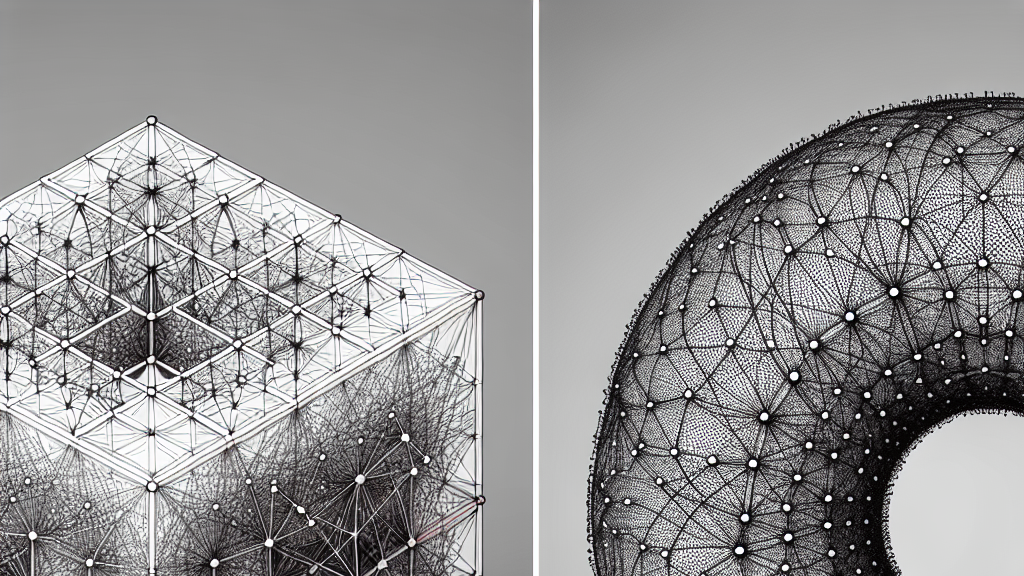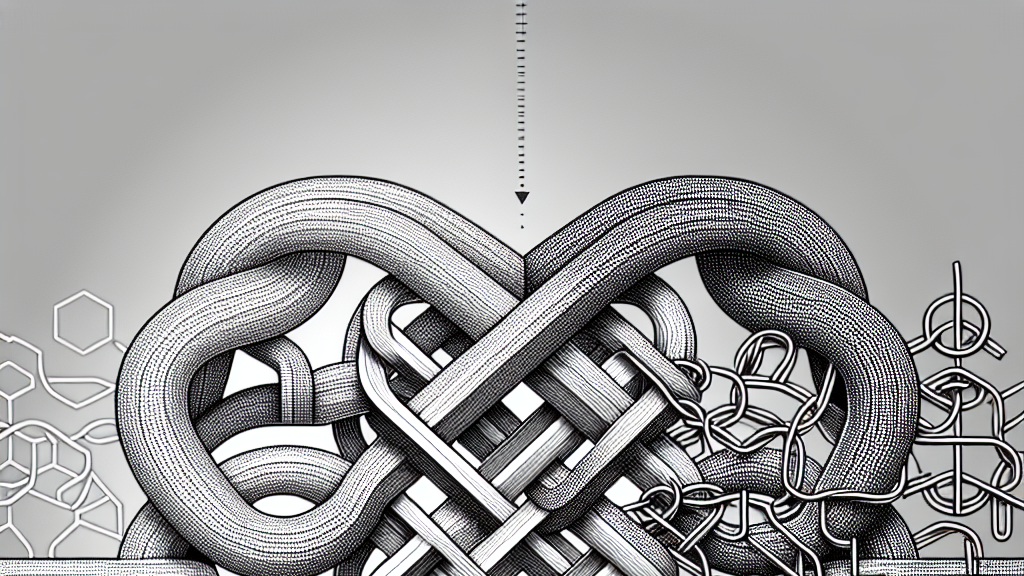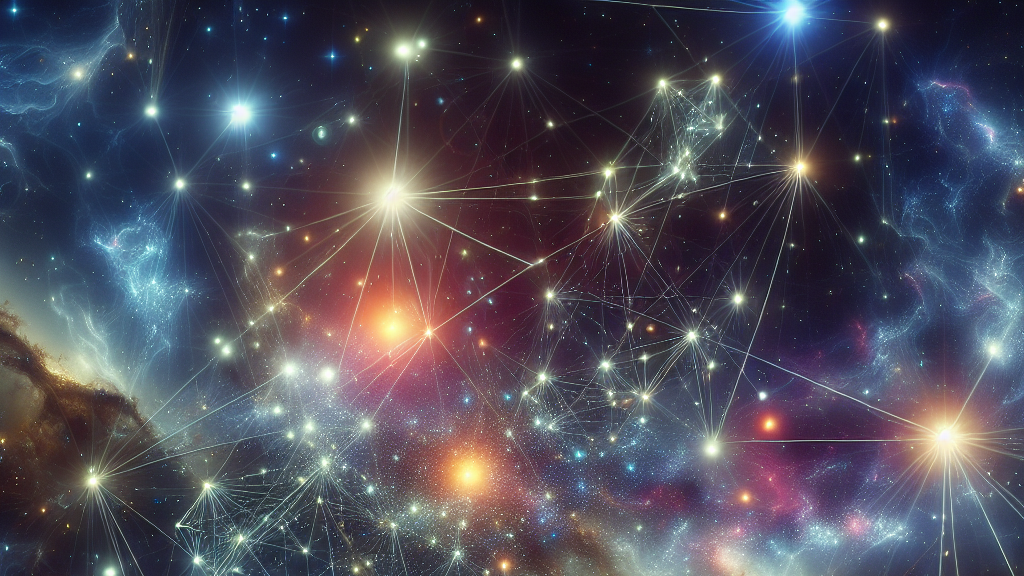
Imagine if we could map out how every part of the universe is connected, like a giant cosmic jigsaw puzzle where each piece perfectly fits and links with others. This isn’t just science fiction—scientists are developing an exciting new classification system that reveals the hidden connections between different parts of space. This could change how we understand not just the universe, but also smaller systems like networks and graphs that are part of our daily technology.
The research dives into the idea of ‘connectivity,’ which is basically how different pieces or points in a space are linked together. Think of it as a super map that shows every possible connection between stars in a galaxy or points on a graph. By analyzing spaces through ‘posets’—a fancy term for a set that’s partially ordered—scientists can see how these connections embed or fit within their surroundings, like seeing the entire structure of a building by looking at its blueprint.
This new way of mapping connections can have big impacts on technology and space exploration. Imagine being able to design more efficient routes for space travel by understanding how different regions of space link up. Or think about how we could improve the internet and wireless networks by knowing exactly how to connect different points for faster communication. With this research, the sky isn’t the limit—it’s just the beginning!
Did you know? The concept of ‘connectivity’ can apply not just to galaxies, but also to the tiniest particles in a computer network!
FAQs
What is the core idea behind studying connectivity in space-like structures?
The core idea is to understand how different parts of space are connected through a new classification system, enhancing our knowledge of cosmic structures and network systems.
How does this research redefine our understanding of connectivity in graphs and topology?
This research provides a new way to classify and understand connections in graphs and topology, allowing us to see how these connections interact within their larger space context.
What are posets and how do they relate to connectivity?
Posets, or partially ordered sets, help scientists examine connections by showing how each part is arranged in relation to others in a space structure, akin to looking at a building’s blueprint.
In what practical ways could this study impact our daily technology?
By mapping connections more accurately, this study could improve technologies like internet and wireless networks, making them faster and more efficient through better understanding of their structure.
How might this new taxonomy of connectivity affect future space exploration?
It could help design more efficient space travel routes by understanding the connection paths between different space regions, optimizing navigation and exploration.
Background
Understanding how things are connected in space can be complex, but think of it like building a map. Connectivity refers to how different pieces or points in a space are linked, much like cities connected by roads. This study introduces a new way to see these links through a classification system, using something called ‘posets,’ or partially ordered sets—similar to using a blueprint to see how parts of a structure fit together.
History
The study of connectivity in mathematical and physical spaces has roots in various fields, including graph theory and topology. Graph theory looks at how nodes (like cities) are connected by edges (like roads), while topology examines properties of space that remain constant through continuous stretching or bending. This research builds on these fields by providing a unified way to classify connectivity across different contexts, from cosmic structures to network systems.
Based on “What is Connectivity?” by Jean F. Du Plessis, Zurab Janelidze, Bernardus A. Wessels, available on arXiv (arxiv.org/abs/2501.19226), used under CC BY 4.0 (creativecommons.org/licenses/by/4.0/).