Connect with us

Search by keyword

Quantum Biology

Can QuantumDNA Revolutionize DNA Research?

Discover how QuantumDNA could transform DNA research by making complex genetic studies faster and more accessible across various scientific fields.

Can QuantumDNA Revolutionize DNA Research
✨Researched by humans. Explained by robots. Learn more.

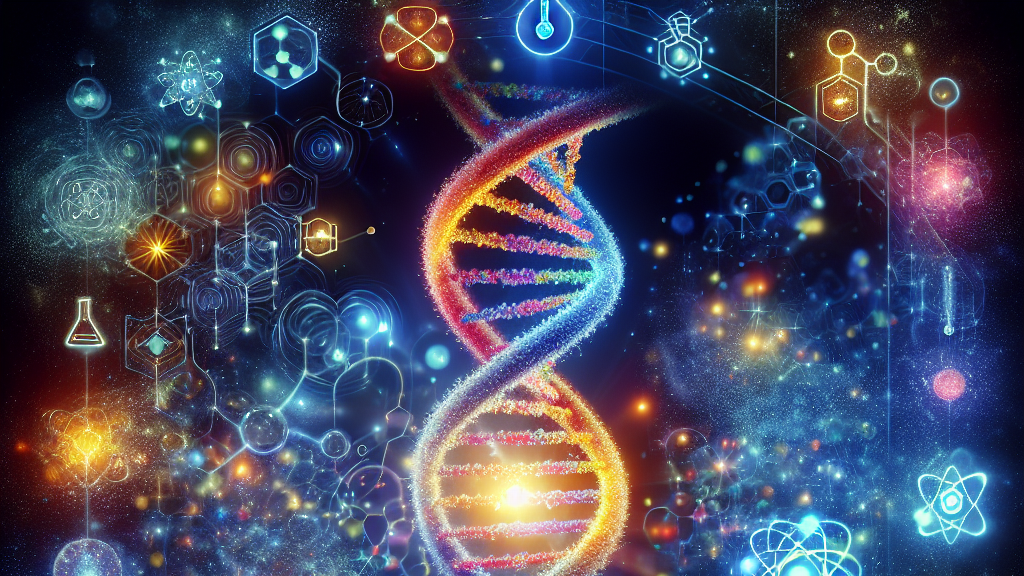
Imagine a tool that lets scientists from different fields work together seamlessly, unlocking the secrets of DNA in ways previously unimaginable. That’s exactly what QuantumDNA aims to do by simulating the charge dynamics and excited states of DNA with quantum-physical methods. It could open doors for groundbreaking discoveries in DNA damage detection and DNA-based nanotechnology.

At the heart of QuantumDNA is a powerful combination of the Linear Combination of Atomic Orbitals approach and tight-binding models, which together enable researchers to analyze large DNA sequences efficiently. This means scientists could rapidly conduct statistical studies on genetic or epigenetic phenomena that were once thought too complex to handle. And thanks to its user-friendly graphical interface, QuantumDNA is accessible even to those who aren’t quantum physicists.

Imagine a future where doctors can detect DNA damage at a molecular level to diagnose health conditions early, or develop new treatments rooted in better understanding of how DNA interacts with proteins. QuantumDNA could pave the way for such advancements, making once-remote possibilities a reality. It’s not just about the science; it’s about changing lives through better, faster access to DNA insights.

Did you know? QuantumDNA allows for the simulation of large DNA sequences, which could help unravel genetic mysteries that were previously too complex to study.

FAQs

What is QuantumDNA and why is it significant?

QuantumDNA is an open-source Python package designed to simulate DNA charge transfer and excited states using quantum-physical methods. It’s significant because it bridges the gap between physics, chemistry, biology, and medicine, allowing researchers across these fields to study DNA more efficiently.

How does QuantumDNA make complex DNA studies more accessible?

QuantumDNA uses advanced methodologies to simulate DNA processes quickly and accurately. Its graphical user interface makes it easy to use, ensuring that even non-experts can explore complex DNA dynamics and contribute to interdisciplinary research.

What practical applications could arise from using QuantumDNA in research?

QuantumDNA could lead to discoveries in diagnosing DNA damage, developing new protein-DNA interaction treatments, and advancing DNA-based nanotechnology, potentially improving healthcare outcomes and facilitating new technological innovations.

Background

DNA charge dynamics are fundamental to understanding how genetic information is transferred and processed in cells. By simulating these processes, scientists can gain insights into DNA’s role in vital biological functions and potential applications in technology and medicine. Quantum-physical methods provide detailed, accurate models that help bridge gaps between disciplines like physics and biology.

History

The study of DNA charge dynamics has evolved over decades, originally focusing on atomic interactions and molecular biology. Recent breakthroughs in quantum physics allowed for the development of tools like QuantumDNA, which combines older methodologies with cutting-edge technology to allow researchers from various fields to collaborate and explore DNA phenomena more effectively.

Based on “QuantumDNA: A Python Package for Analyzing Quantum Charge Dynamics in DNA and Exploring Its Biological Relevance” by Dennis Herb, Marco Trenti, Marilena Mantela, Constantinos Simserides, Joachim Ankerhold, Mirko Rossini, available on arXiv (arxiv.org/abs/2502.06883), used under CC BY 4.0 (creativecommons.org/licenses/by/4.0/).

Trending

Latest

Can AI Save Water Discover How

Computers

AI is transforming the tech world, but it uses lots of water! A new tool, SCARF, helps us measure and reduce AI's water footprint,...

Whats a Forbush Decrease and Why Should We Care Whats a Forbush Decrease and Why Should We Care

Space

Scientists just observed the biggest solar storm event in years, revealing unexpected cosmic ray patterns. Understanding these changes could help us protect our technology...

Can Cars Spot Danger Faster Than Humans Can Cars Spot Danger Faster Than Humans

Computers

Think about how quickly you react when something unexpected happens on the road. This research brings us closer to creating self-driving cars that can...

Can Fear of the Other Stop Social Harmony Can Fear of the Other Stop Social Harmony

Physics

Fear of the unknown might make it harder for people to agree and get along. This study shows that when people have strong xenophobic...

Can AI Revolutionize Breast Cancer Diagnosis Can AI Revolutionize Breast Cancer Diagnosis

Electricity

This research introduces a groundbreaking AI model that can accurately assess HER2-positive breast cancer using widely accessible staining methods, potentially revolutionizing how we diagnose...

Can AI Transform Your Singing into a Choir Can AI Transform Your Singing into a Choir

Computers

Imagine singing solo and having AI turn you into a choir. This research unveils a groundbreaking AI tool that transforms your voice into rich...

You May Also Like

Quantum Biology

This research explores how AI can predict the effects of DNA mutations, potentially revolutionizing synthetic biology by allowing scientists to invent new genes or...

Materials

New insights suggest quantum mechanics might influence macroscopic decisions, giving a fresh perspective on how reality is formed during big events.

General Relativity and Quantum Cosmology

Imagine using a tabletop setup to mimic the intense gravitational effects of a black hole! These 'gravity simulators' are pushing the boundaries of what...

General Relativity and Quantum Cosmology

Scientists are bringing the mysteries of black holes into the lab by creating small-scale experiments that simulate their incredible gravitational forces. This means we...

Physics

Ever wondered where the universe decides to play by completely different rules? This research suggests the boundary between classical and quantum physics might not...

Quantum Biology

This research explores how complex patterns like stripes and clusters in nature can be explained by math equations that consider both time and space....

Physics

Scientists have found a way to use light to make a material, that normally behaves one way, act like it’s breaking the laws of...

General Relativity and Quantum Cosmology

Ever wondered what happens to information once it falls into a black hole? This thrilling research delves into the discrepancies of quantum theories and...

General Relativity and Quantum Cosmology

Did you know black holes might actually be cosmic time machines? This research reveals two new ways of looking at black holes, hinting they...

Copyright © 2024 8ig8rain.

Disclaimer: The content on 8ig8rain.com consists of AI-generated summaries of scientific abstracts from arXiv. Please note that most arXiv abstracts are preprints and may not have undergone formal peer review. While these summaries aim to convey key ideas and potential applications, they are provided for informational purposes only and should not be interpreted as validated scientific findings or professional advice. The summaries are intended to educate, spark curiosity, and inspire further exploration of science.