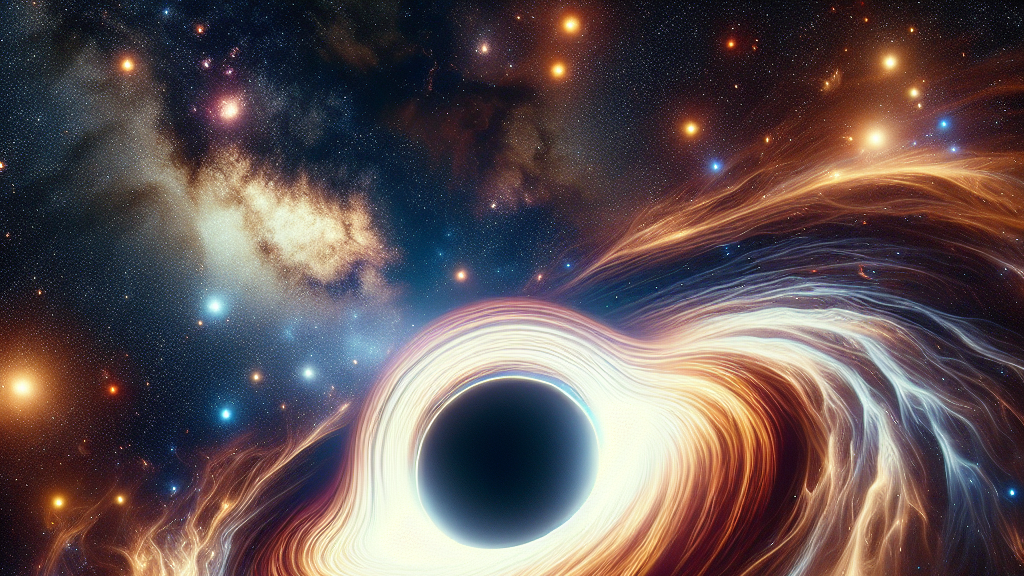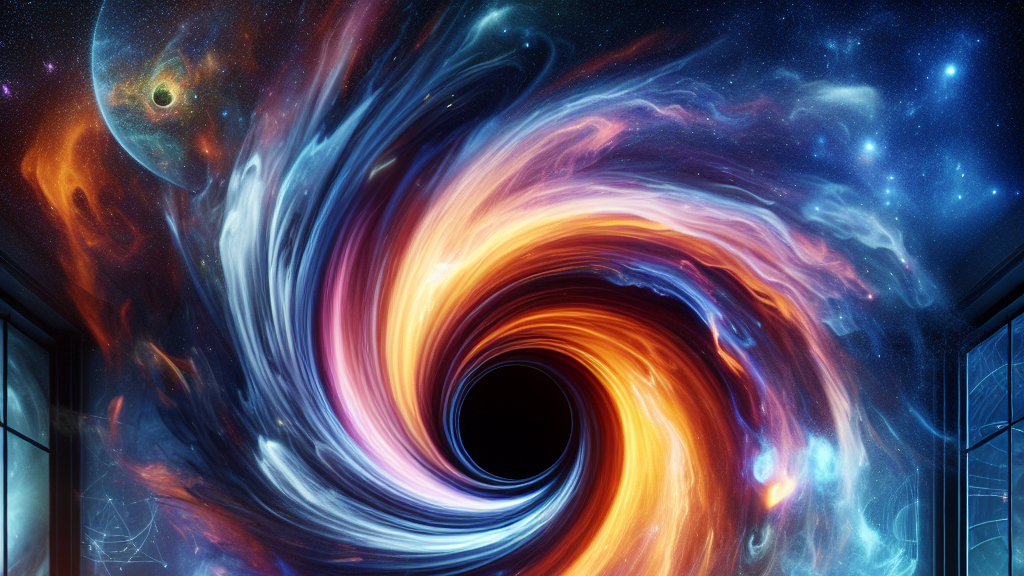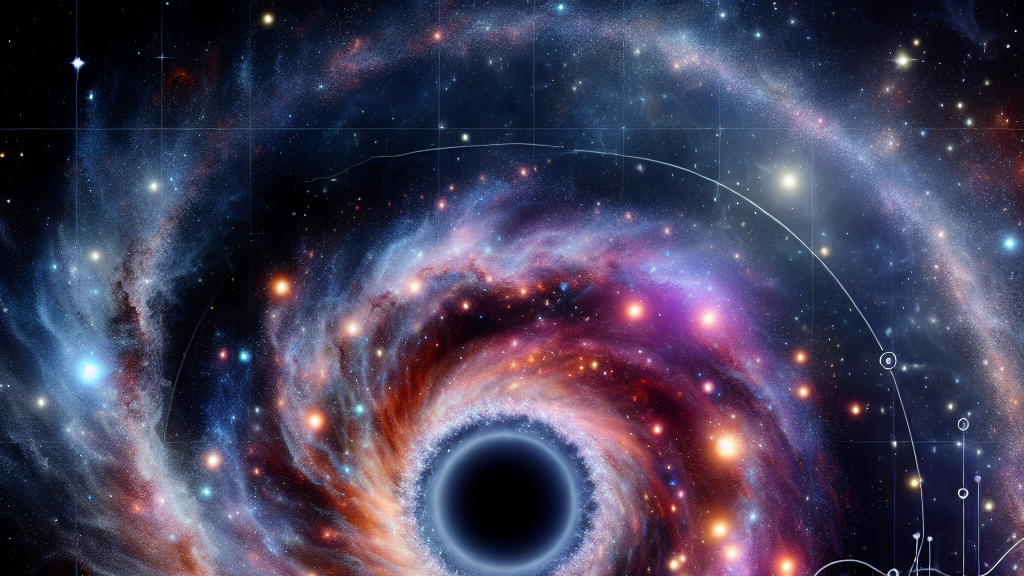
Imagine a black hole so massive that it’s rewriting the cosmic rulebook! That’s what scientists have discovered—a supermassive black hole at the heart of a distant galaxy that doesn’t quite follow the expected cosmic laws. Discovered in a system known as the Cosmic Horseshoe, this mind-boggling find is pushing our understanding of space to its limits and suggests that some galaxies might evolve differently than we thought.
This black hole discovery was made possible through a combination of new technologies and innovative techniques. Scientists observed the Cosmic Horseshoe, one of the largest galaxies ever recorded, using data from advanced telescopes and sophisticated modeling. This allowed them to detect a shockingly large black hole that doesn’t align with the usual relationships we expect between galaxies and their central black holes. It’s a hint that at extreme scales, black holes and their galaxies might grow at different rates than previously believed.
The implications of this discovery are huge. Imagine if our own galaxy’s black hole started growing at an unexpected rate, transforming the Milky Way in unforeseen ways. While that might sound like something out of a sci-fi movie, understanding these massive cosmic phenomena could help us predict the future of our universe. As technology advances, we might even find more of these cosmic giants, further refining our knowledge of how galaxies and black holes co-evolve across time.
The Cosmic Horseshoe galaxy is shaped like… well, a horseshoe due to the effects of gravitational lensing, bending light from a more distant galaxy around it.
FAQs
What makes the Cosmic Horseshoe galaxy so special in space research?
The Cosmic Horseshoe galaxy is a prime example of gravitational lensing, acting like a cosmic magnifying glass that bends light from objects behind it. This makes it possible for scientists to study incredibly distant and massive galaxies and their black holes.
Why is the discovery of this supermassive black hole groundbreaking?
This black hole is much larger than expected based on predictions, suggesting that at extreme scales, black holes and their galaxies might have a different evolutionary path. This challenges existing theories about how galaxies and their central black holes grow together.
How could this discovery affect our understanding of our own galaxy?
By studying these colossal black holes, scientists gain insights into potential future scenarios for our galaxy. It helps us understand the role black holes play in galaxy formation and evolution, which could inform predictions about the future of the Milky Way.
What is gravitational lensing, and why is it important here?
Gravitational lensing is a phenomenon where a massive object (like a huge galaxy) bends light from a more distant background object. This effect allows us to see and study faraway galaxies that would otherwise be invisible, revealing hidden cosmic secrets.
Could more such massive black holes be out there waiting to be found?
Absolutely! As our telescopes and technology improve, we expect to find many more massive black holes, expanding our understanding of the universe and the mysterious entities residing within it.
Background
Supermassive black holes are monstrous objects located at the centers of galaxies. Their mass correlates with the properties of their host galaxies, meaning they grow and evolve together over billions of years. Scientists measure these associations by studying the motion of stars around the black hole, which isn’t easy due to their vast distances from Earth.
History
Historically, black holes could only be measured in nearby galaxies. The correlation between black hole mass and galaxy properties (the M-sigma relation) was developed around nearby systems where detailed observations were possible. Advances in technology and new techniques now allow us to explore more distant galaxies, potentially rewriting this cosmic relationship.
Based on “Unveiling a 36 Billion Solar Mass Black Hole at the Centre of the Cosmic Horseshoe Gravitational Lens” by Carlos R. Melo-Carneiro, Thomas E. Collett, Lindsay J. Oldham, Wolfgang J. R. Enzi, available on arXiv (arxiv.org/abs/2502.13788), used under CC BY 4.0 (creativecommons.org/licenses/by/4.0/).