Connect with us

Search by keyword

Math

How Circles Can Pack Perfectly: Surprising Math Tricks

Ever wonder how you can pack circles (or spheres) perfectly? This math wizardry shows how they fit together in a way that optimizes space, solving a centuries-old riddle and making you rethink everything from your grocery bag packing to high-dimensional data storage.

How Circles Can Pack Perfectly Surprising Math Tricks
✨Researched by humans. Explained by robots. Learn more.

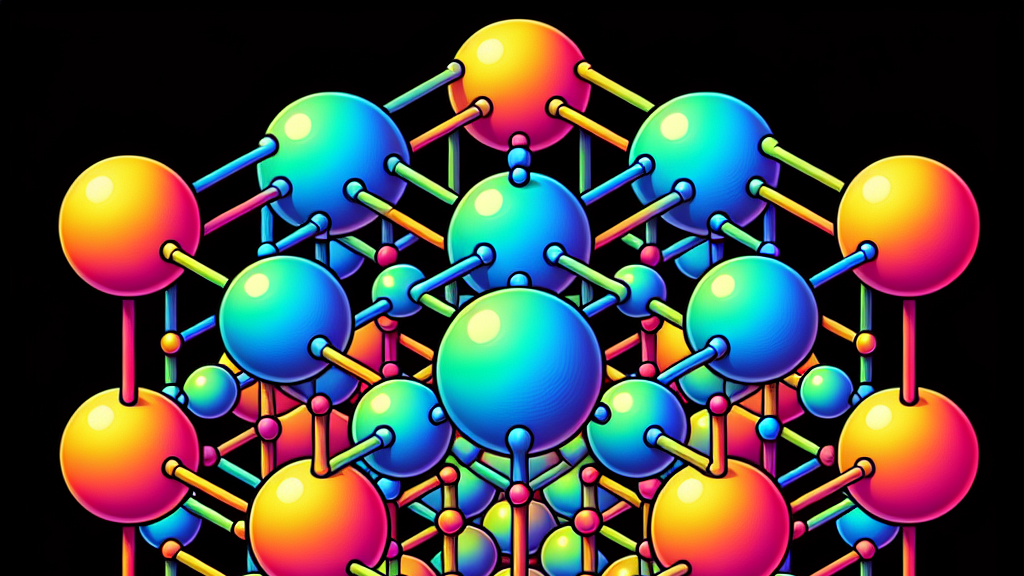
Imagine a world where packing your grocery bags perfectly was not just a way of life, but a breakthrough in mathematics. That’s the magic of sphere packing! It’s all about figuring out how to arrange spheres (like those oranges in your bag) as tightly as possible without squishing them, and mathematicians have been cracking their heads over it for ages.

Our latest breakthrough focuses on packing spheres in 48-dimensional space, which is like thinking way beyond your usual 3D world! Researchers have found that by applying specific rules about how far apart spheres’ centers need to be, they can achieve the perfect balance, like a perfectly arranged puzzle. Amazingly, this new arrangement maximizes space efficiency, proving certain geometric formations (called lattices) are the best way to pack spheres in this mind-bending space.

Why should you care? Well, this isn’t just about neatness; it’s a game-changer for technology. These ideas could lead to more efficient data storage and transmission. Imagine Netflix being able to stream even more movies with less data! Or your phone storing double the photos without extra space. It’s magic, really, and it’s all thanks to some seriously clever geometry.

Did you know that sphere packing solutions can help improve data storage? The same principles can be used to maximize how data is packed digitally!

FAQs

What is sphere packing and how does it relate to everyday items like oranges?

Sphere packing involves arranging spheres in an efficient way to occupy maximum space without overlapping. It’s like stacking oranges as densely as possible in a box!

How does this sphere packing research impact technology?

It can lead to advancements in data storage and transmission by making digital information more compact and efficient, allowing for better performance and less space usage on devices.

Why study sphere packing in 48 dimensions?

Studying higher dimensions helps mathematicians understand complex problems and find optimal solutions, which can then be translated into real-world settings, like improving storage and communication technologies.

What is a lattice and why is it important in this research?

A lattice is a specific, regular arrangement of points (or centers of spheres) in space. In the context of sphere packing, finding the best lattice helps achieve the most efficient packing arrangement.

How do these discoveries relate to games or puzzles?

Understanding optimal arrangements can be likened to solving puzzles where each piece must fit perfectly, similar to how spheres need to be packed just right to maximize space.

Background

Sphere packing involves arranging non-overlapping identical spheres within a given space. The most efficient way to do this often results in extremely regular patterns called lattices. Lattices are ways to evenly distribute points over a space, and finding the optimal lattice in various dimensions is crucial because it informs us about maximal packing density. This mathematical puzzle has implications in packing, coding theory, and information transmission.

History

The sphere packing problem has intrigued mathematicians for centuries, beginning with Johannes Kepler’s conjecture in 1611 about how cannonballs stack. Later, more dimensions came into play in the 19th and 20th centuries, involving mathematical figures like Carl Friedrich Gauss and John Leech. Recent advances have explored high-dimensional spaces, going beyond what’s physically observable, to understand the math’s underlying principles that could have technological applications.

Based on “Sphere Packings in Euclidean Space with Forbidden Distances” by Felipe Gonçalves, Guilherme Vedana, available on arXiv (arxiv.org/abs/2308.03925), used under CC BY 4.0 (creativecommons.org/licenses/by/4.0/).


Trending

Latest

Can AI Save Water Discover How

Computers

AI is transforming the tech world, but it uses lots of water! A new tool, SCARF, helps us measure and reduce AI's water footprint,...

Whats a Forbush Decrease and Why Should We Care Whats a Forbush Decrease and Why Should We Care

Space

Scientists just observed the biggest solar storm event in years, revealing unexpected cosmic ray patterns. Understanding these changes could help us protect our technology...

Can Cars Spot Danger Faster Than Humans Can Cars Spot Danger Faster Than Humans

Computers

Think about how quickly you react when something unexpected happens on the road. This research brings us closer to creating self-driving cars that can...

Can Fear of the Other Stop Social Harmony Can Fear of the Other Stop Social Harmony

Physics

Fear of the unknown might make it harder for people to agree and get along. This study shows that when people have strong xenophobic...

Can AI Revolutionize Breast Cancer Diagnosis Can AI Revolutionize Breast Cancer Diagnosis

Electricity

This research introduces a groundbreaking AI model that can accurately assess HER2-positive breast cancer using widely accessible staining methods, potentially revolutionizing how we diagnose...

Can AI Transform Your Singing into a Choir Can AI Transform Your Singing into a Choir

Computers

Imagine singing solo and having AI turn you into a choir. This research unveils a groundbreaking AI tool that transforms your voice into rich...

You May Also Like

Math

Imagine a future where your energy bills are lower because your energy storage system knows the best times to store and use energy. This...

Electricity

Ever wondered if your car could drive perfectly on its own, handling turns and bumps like a pro? This research is taking us a...

Computers

What if we could use machine learning to decode how the parts of a complex system interact? This research opens the door to understanding...

Computers

Discover the Blindfolded Spiderman Optimization, a new approach that redefines how we solve problems using a playful yet powerful method, outperforming many existing techniques...

Computers

This research explores new ways to understand and potentially trick large language models more safely and efficiently, which could help us improve AI systems...

Math

Imagine a smarter way to plan energy systems that cuts down on time and resources without sacrificing quality. This research uses graph theory to...

Math

This research shows that the best mathematical solutions remain the same, no matter how you write them down. It’s like discovering the universal language...

Statistics

Imagine your favorite AI assistant working even faster and more efficiently, thanks to clever math. This research explores how we can use queuing theory...

Math

This research sheds light on using the Koopman operator to solve complex control problems, offering fresh methods that could enhance how we manage everything...

Copyright © 2024 8ig8rain.

Disclaimer: The content on 8ig8rain.com consists of AI-generated summaries of scientific abstracts from arXiv. Please note that most arXiv abstracts are preprints and may not have undergone formal peer review. While these summaries aim to convey key ideas and potential applications, they are provided for informational purposes only and should not be interpreted as validated scientific findings or professional advice. The summaries are intended to educate, spark curiosity, and inspire further exploration of science.