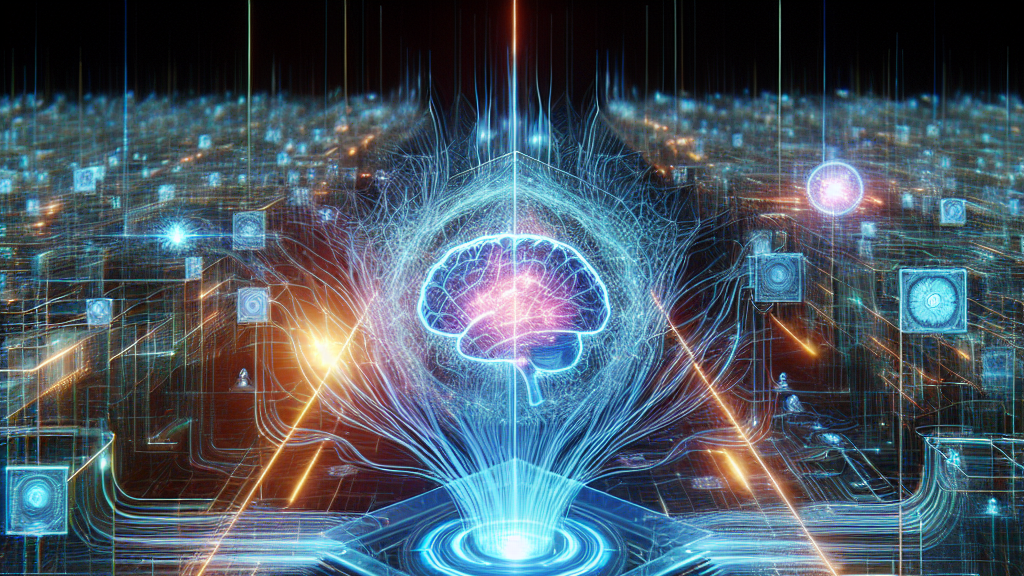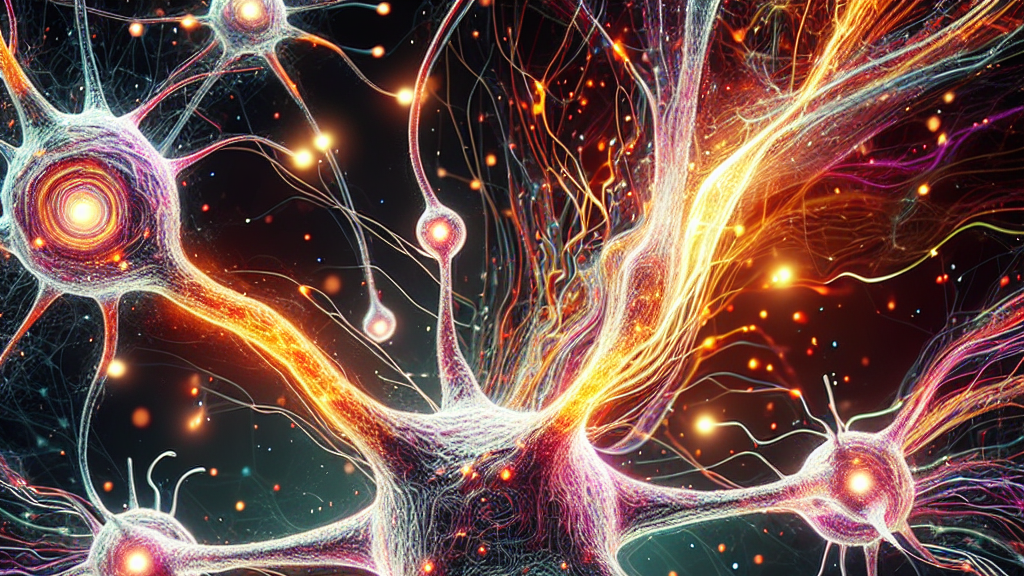
Imagine if your brain’s neurons suddenly decided to throw a surprise party and synchronize all at once! Turns out, this isn’t just a wild thought—it’s a phenomenon called ‘extreme events’ that can happen in neural networks under certain conditions. This research delves into how groups of brain cells, or neurons, can suddenly start acting in concert, leading to huge spikes in activity that aren’t typical. It’s like setting off fireworks in your brain all at once, and it all depends on how these neurons connect and respond to ‘noise,’ or random fluctuations in electrical activity.
To dive deeper, scientists used a model called Hodgkin-Huxley neurons, which are pretty much like tiny computers firing electric signals. They found that when these neurons are influenced by random noise, they can either remain calm or suddenly sync up depending on how they’re connected. When the connection or ‘coupling’ between them reaches a certain point, these neurons can unexpectedly burst into synchronized action, creating what’s known as an extreme event. These dramatic surges are not permanent, but they tell us a lot about how brains could react under stress or during certain neurological disorders.
The exciting part is that understanding these extreme events might teach us how to better manage neurological diseases or even inspire new ways to develop smarter AI. Imagine if we could predict or control when neurons decide to sync up—this could lead to breakthroughs in technology or medicine. In everyday life, this could mean more effective treatments for epilepsy or developing advanced neural network systems that mimic human brain activity more closely.
Human brains have around 86 billion neurons, often working in harmony but sometimes syncing in unexpected ways that can have big impacts!
FAQs
What are extreme events in neural networks?
Extreme events in neural networks are sudden, large-scale synchronizations of neuron activity that create unexpected spikes in brain signals. They happen when neurons, influenced by random noise, start acting in sync, like setting off fireworks in the brain.
How do noise and neural coupling influence extreme events?
Noise, or random electrical fluctuations, combined with how neurons are interconnected (neural coupling), can either keep neurons calm or trigger them to sync up abruptly. This change in behavior creates extreme events, showing how sensitive brain activity can be to subtle changes.
Why is understanding extreme events in neural networks important?
Grasping extreme events in neural networks can provide insights into neurological conditions like epilepsy and help develop better treatment strategies. It might also inspire technological advances, such as creating AI systems that mimic brain activity more closely.
What model is used to study these neural extreme events?
The Hodgkin-Huxley neuron model is used to study these extreme events. It’s a detailed representation of how neurons process electrical signals, helping researchers understand when and how neurons suddenly synchronize.
Could understanding these events impact everyday life?
Yes, this understanding could lead to better medical treatments for disorders involving abnormal brain activity and inspire new technologies that harness the brain’s ability to sync, like more sophisticated AI.
Background
Neurons communicate through electrical signals, and the Hodgkin-Huxley model describes how these signals are generated and propagated. This model considers the effect of ion channels in neuron’s membranes that regulate electrical charge. Noise refers to random electrical fluctuations affecting these signals. Mean-field coupling describes how neurons influence each other within a network, based on their average state.
History
The study of neural activity has evolved from early nerve conduction research to complex models like Hodgkin-Huxley, introduced in 1952. Over time, researchers have shifted focus from individual neuron behavior to collective neural network patterns, driven by advances in computer simulations and neuroscience techniques. Recent studies explore how noise and coupling lead to synchronized neural events, building on decades of theoretical and experimental work.
Based on “Noise-induced Extreme Events in Hodgkin-Huxley Neural Networks” by Bruno R. R. Boaretto, Elbert E. N. Macau, Cristina Masoller, available on arXiv (arxiv.org/abs/2502.19565), used under CC BY 4.0 (creativecommons.org/licenses/by/4.0/).