Connect with us

Search by keyword

Computers

Can We Predict Your Brain’s Future?

This research introduces an innovative tool that can predict how your brain might age by using a single MRI scan, potentially helping in early Alzheimer’s detection and personalized health strategies.

Can We Predict Your Brains Future
✨Researched by humans. Explained by robots. Learn more.

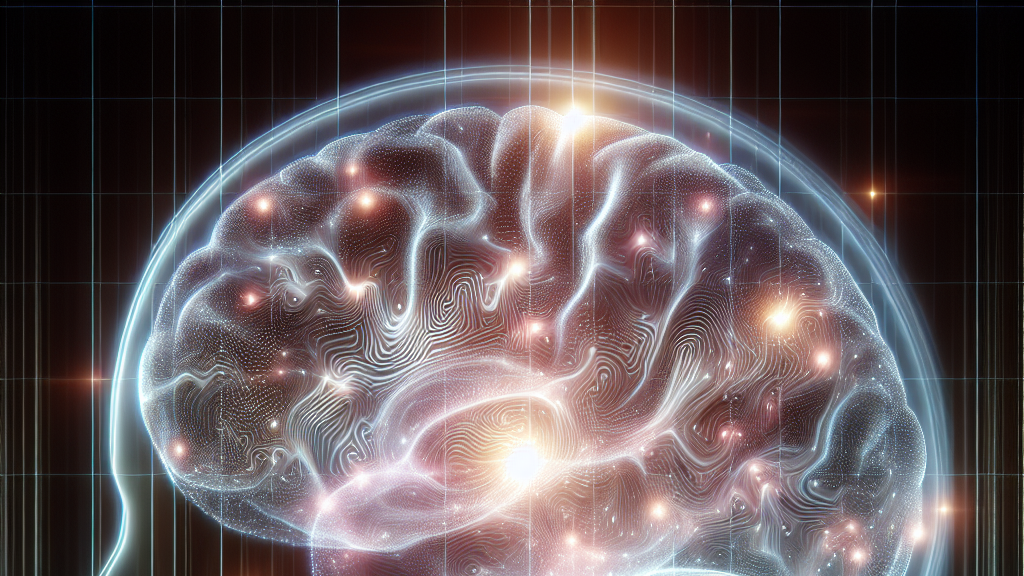
Imagine if you could see the future of your brain health with just one MRI scan! That’s the exciting promise of a new framework called InBrainSyn. It uses cutting-edge AI to simulate how your brain could change over time, be it due to normal aging or the onset of Alzheimer’s disease. It’s like having a crystal ball for your brain, offering insights into its aging journey.

InBrainSyn works by taking a snapshot of your brain today and using sophisticated algorithms to predict its future changes. This isn’t just any prediction—it’s personalized, taking into account your unique brain structure. While previous models could generate general templates for groups of people, InBrainSyn is all about you. It uses transformations that ensure the predictions are consistent with your current brain’s anatomy, making them super precise.

Why does this matter? If we can predict how your brain might change, doctors can intervene earlier, particularly in cases like Alzheimer’s. This kind of personalized foresight could shape the future of healthcare, tailoring treatments to individual needs and possibly delaying the onset of certain conditions. Imagine being able to take action today for a healthier brain tomorrow—it’s not just science fiction anymore.

With just one MRI scan, InBrainSyn can simulate realistic changes in your brain over time, potentially foreshadowing Alzheimer’s disease years before symptoms appear.

FAQs

How does Individualized Brain Synthesis predict brain aging?

Individualized Brain Synthesis uses a deep learning algorithm that examines a single MRI scan to predict future neuroanatomical changes. This approach ensures that predictions are tailored to each individual’s unique brain structure.

What makes InBrainSyn different from other brain aging models?

InBrainSyn is unique because it personalizes aging predictions to match an individual’s specific brain anatomy, unlike other models that provide generalized templates for populations. It uses deep learning to refine these predictions with high accuracy.

Can InBrainSyn help in early detection of Alzheimer’s disease?

Yes, InBrainSyn can forecast potential neurodegenerative changes like those seen in Alzheimer’s, allowing for earlier intervention and personalized health strategies to possibly delay the onset of symptoms.

Is there any practical application for this brain imaging research?

This research can revolutionize personalized healthcare by enabling earlier detection and treatment of brain diseases. It provides a glimpse into future health conditions, empowering individuals to take proactive measures for brain health.

Where can I access the InBrainSyn code?

The code for InBrainSyn is publicly available at GitHub: github.com/Fjr9516/InBrainSyn, allowing researchers and clinicians to explore its capabilities further.

Background

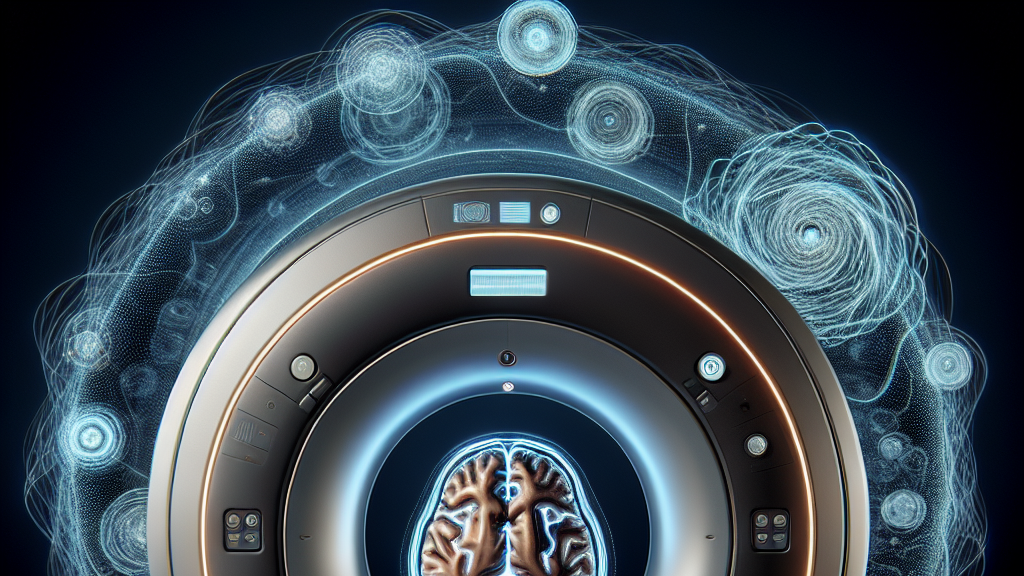
Magnetic Resonance Imaging (MRI) is a technique used to visualize the internal structures of the body, especially the brain. Deep learning models can analyze these images to detect patterns or predict changes. InBrainSyn merges these technologies to forecast how individual brains might age, using the mathematical principle of diffeomorphic transformations to keep these predictions consistent with the original anatomy.

History

MRI technology has been advancing for decades, allowing for increasingly detailed imaging of the brain. Recently, deep learning models have been used to analyze these images and predict health outcomes at a population level. InBrainSyn builds on these advances by focusing on personalized predictions, tailoring its models to the specific characteristics of individual brains.

Based on “Synthesizing Individualized Aging Brains in Health and Disease with Generative Models and Parallel Transport” by Jingru Fu, Yuqi Zheng, Neel Dey, Daniel Ferreira, Rodrigo Moreno, available on arXiv (arxiv.org/abs/2502.21049), used under CC BY 4.0 (creativecommons.org/licenses/by/4.0/).


Trending

Latest

Can AI Save Water Discover How

Computers

AI is transforming the tech world, but it uses lots of water! A new tool, SCARF, helps us measure and reduce AI's water footprint,...

Whats a Forbush Decrease and Why Should We Care Whats a Forbush Decrease and Why Should We Care

Space

Scientists just observed the biggest solar storm event in years, revealing unexpected cosmic ray patterns. Understanding these changes could help us protect our technology...

Can Cars Spot Danger Faster Than Humans Can Cars Spot Danger Faster Than Humans

Computers

Think about how quickly you react when something unexpected happens on the road. This research brings us closer to creating self-driving cars that can...

Can Fear of the Other Stop Social Harmony Can Fear of the Other Stop Social Harmony

Physics

Fear of the unknown might make it harder for people to agree and get along. This study shows that when people have strong xenophobic...

Can AI Revolutionize Breast Cancer Diagnosis Can AI Revolutionize Breast Cancer Diagnosis

Electricity

This research introduces a groundbreaking AI model that can accurately assess HER2-positive breast cancer using widely accessible staining methods, potentially revolutionizing how we diagnose...

Can AI Transform Your Singing into a Choir Can AI Transform Your Singing into a Choir

Computers

Imagine singing solo and having AI turn you into a choir. This research unveils a groundbreaking AI tool that transforms your voice into rich...

You May Also Like

Electricity

This research introduces a groundbreaking AI model that can accurately assess HER2-positive breast cancer using widely accessible staining methods, potentially revolutionizing how we diagnose...

Computers

Have you ever thought your internet was safe, only to find out that its security system misses crucial issues? This research shows us that...

Physics

Imagine a world where we can predict earthquakes in advance, potentially saving lives and money! This groundbreaking research uses deep learning to forecast tiny...

Electricity

Learn how blending advanced deep learning with cutting-edge wireless technology could supercharge your internet speed, making those buffering days a thing of the past.

Electricity

Discover Brain2Vec, a groundbreaking tool that uses brainwave data to spot stress, paving the way for personalized stress management and healthier living.

Statistics

In a world obsessed with AI, could old-school statistical methods still be the real MVPs? This study shows they might just outperform AI when...

Electricity

AI is changing the game in breast cancer diagnosis by accurately identifying cancer types from biopsy images. This means faster, less invasive tests, and...

Computers

Discover how cutting-edge AI models can transform random noise into structured, useful data. This research delves into the incredible efficiency of these models, potentially...

Physics

This research explores how artificial intelligence, specifically deep learning models, can automatically interpret complex brain scans with remarkable precision, potentially revolutionizing brain disease diagnosis.

Copyright © 2024 8ig8rain.

Disclaimer: The content on 8ig8rain.com consists of AI-generated summaries of scientific abstracts from arXiv. Please note that most arXiv abstracts are preprints and may not have undergone formal peer review. While these summaries aim to convey key ideas and potential applications, they are provided for informational purposes only and should not be interpreted as validated scientific findings or professional advice. The summaries are intended to educate, spark curiosity, and inspire further exploration of science.