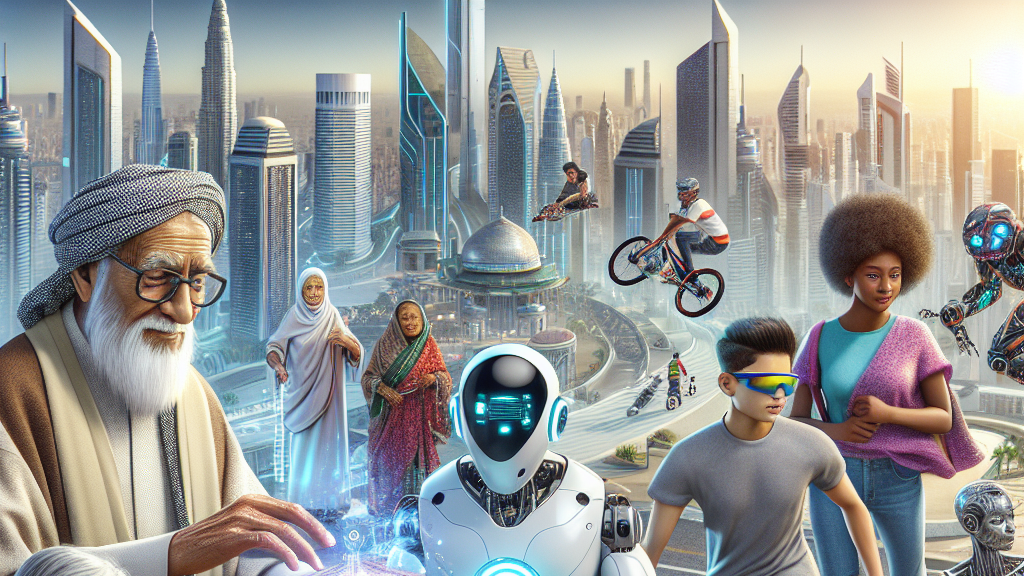
Imagine a world where history isn’t just read about or viewed in dusty documentaries, but experienced through conversations. That’s the wild idea researchers are exploring with digital doubles, using advanced artificial intelligence to recreate historical figures for educational purposes. But there’s more to it than just cool tech — it’s about balancing the magic of bringing history to life with the ethical implications of using AI in such deeply human contexts. From helping students understand history better to allowing families to cope with loss, digital doubles are a tantalizing possibility. But what if these digital recreations of Holocaust survivors, for example, suddenly became a tool for misinformation or were used without proper consent? That’s where the Minimally Viable Permissibility Principle comes into play. This framework helps evaluate the risks and benefits of using AI to preserve testimonies, ensuring that we don’t cross ethical lines while exploring innovative applications. As we progress, imagine a classroom where students meet a Holocaust survivor, not through a screen or textbook, but as a digital presence sharing first-hand experiences, changing the way history is taught and remembered. But will it really enrich learning, or are we venturing into risky territory by simulating real people? This research pushes us to think deeply about how we can embrace this technology responsibly.
Digital doubles can potentially allow historical figures to answer questions in real-time, creating an interactive learning experience.
FAQs
What are digital duplicates?
Digital duplicates are advanced recreations of living or deceased individuals using artificial intelligence. They can simulate conversations and interactions, offering a way to experience historical figures in a new dimension.
How could digital duplicates be used in education?
In education, digital duplicates can bring history to life by allowing students to interact with historical figures or hear first-hand testimonies. This has the potential to create an engaging and immersive learning experience.
What ethical concerns are associated with using digital duplicates for Holocaust testimonies?
The use of digital duplicates for Holocaust testimonies raises ethical questions about consent, authenticity, and the risk of misrepresentation. Ensuring these digital figures respect the memory and context of historical events is crucial.
What is the Minimally Viable Permissibility Principle (MVPP)?
MVPP is a framework used to assess the risks and ethical considerations of using digital duplicates. It focuses on aspects like consent, authenticity, and harm-risk mitigation to ensure responsible use of technology.
Can digital duplicates impact the way we remember history?
Yes, digital duplicates can significantly impact how we remember history by creating an immersive and interactive experience. However, it’s vital to handle this technology carefully to preserve historical accuracy and respect.
Background
Generative artificial intelligence creates digital duplicates by simulating the appearance and behavior of real people. This involves advanced algorithms that learn from existing data to recreate voices, facial expressions, and even mannerisms. The aim is to create a believable digital persona that can interact through dialogue, providing an immersive experience. Understanding generative AI is essential because it forms the backbone of digital duplicates, allowing us to bridge the past and present in a new way.
History
The journey to creating digital duplicates started with simple virtual assistants and has evolved into complex algorithms capable of mimicking human behavior. Earlier attempts at creating digital humans focused on visual realism, but recent advancements incorporate interactive elements, allowing for lifelike conversation. The idea of preserving testimonies through digital duplication builds on this foundation and introduces ethical dimensions by applying it to sensitive historical contexts.
Based on “Digital Dybbuks and Virtual Golems: AI, Memory, and the Ethics of Holocaust Testimony” by Atay Kozlovski, Mykola Makhortykh, available on arXiv (arxiv.org/abs/2503.01369), used under CC BY 4.0 (creativecommons.org/licenses/by/4.0/).