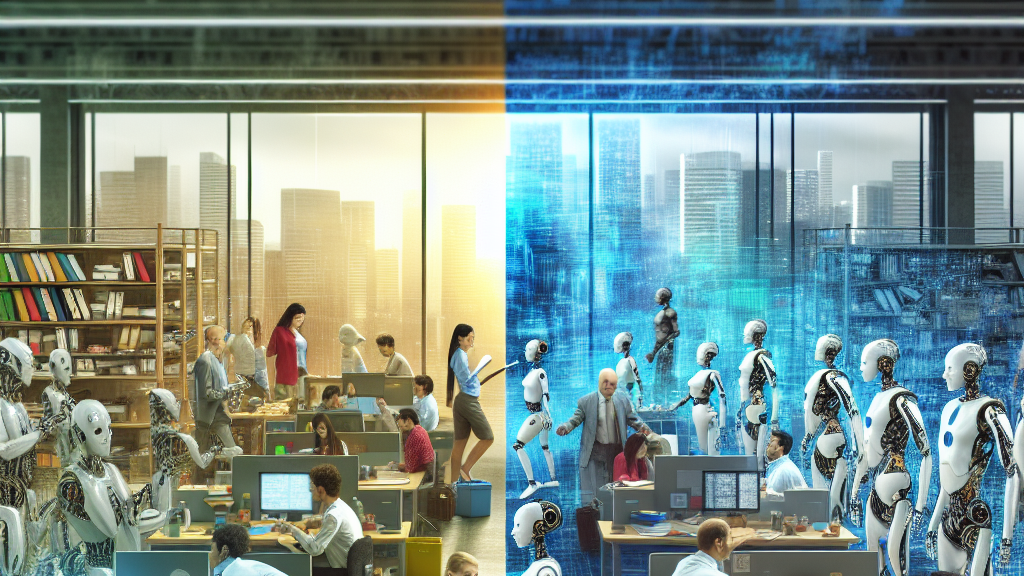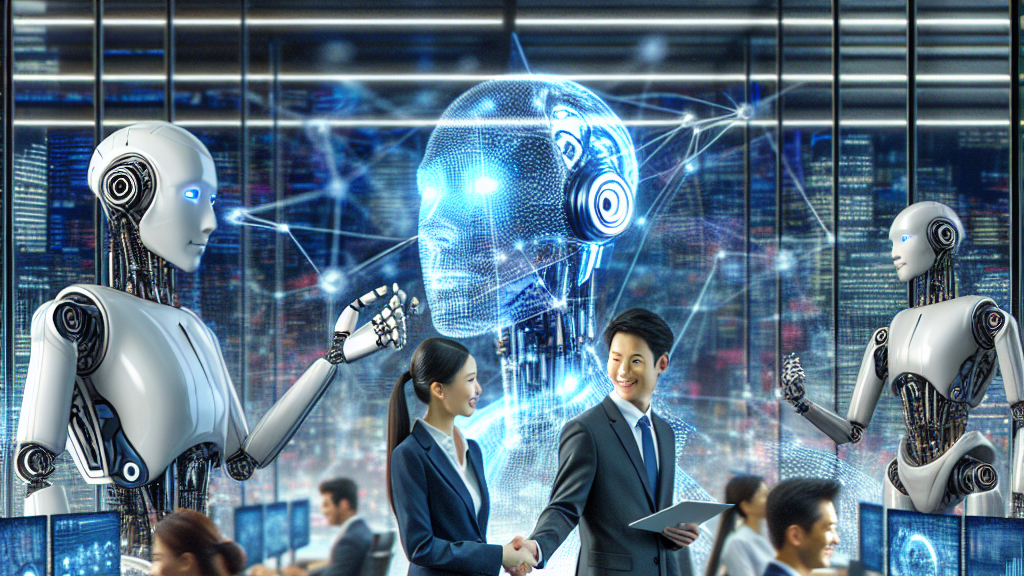
Imagine a world where AI doesn’t replace us at work but becomes our best partner. This isn’t just wishful thinking—it’s a real possibility, thanks to groundbreaking research in Generative AI (GenAI) technology. Researchers have created a model that shows how AI can work alongside humans, focusing on both our strengths and weaknesses.
The key lies in breaking down skills into tiny components called subskills. Think of these like the nuts and bolts of what makes someone good at their job. The research shows that when AI handles certain parts of a task, like repetitive actions, humans can shine in decision-making and creative thinking. This means job roles can evolve, with AI and people naturally complementing each other to succeed.
For instance, consider a customer service representative. AI can handle routine inquiries, freeing up the human worker to solve complex issues or provide personal touches that machines can’t. This kind of teamwork could boost productivity, especially for those just starting out in their careers, by helping them learn and grow faster. It’s a win-win for everyone, creating opportunities for workers and making businesses more efficient.
Did you know? AI assistance can actually help lower-skilled workers improve their productivity more than those with higher skills!
FAQs
How does Generative AI complement human skills in the workplace?
Generative AI complements human skills by taking over routine and repetitive tasks, allowing humans to focus on complex decision-making and creativity. This collaboration can enhance overall job performance and productivity.
Why does Generative AI lead to productivity compression?
Productivity compression occurs because GenAI assistance helps lower-skilled workers more significantly, narrowing the productivity gap between them and higher-skilled workers.
What role do subskills play in AI and human collaboration?
Subskills are the smaller components of a job’s overall skillset. By dividing tasks into subskills, AI can effectively manage those suited for automation, while humans handle parts requiring critical thinking and creativity.
Can AI fully replace human workers in jobs?
While AI can automate certain tasks, the research suggests it is more effective when used to complement human workers, enhancing skills and improving productivity rather than fully replacing human roles.
How can AI assistance improve job success in real-world scenarios?
In real-world scenarios, AI assistance can lead to improved job success by allowing workers to focus on tasks they excel at, increasing overall efficiency and job satisfaction.
Background
Generative AI, also known as GenAI, is a type of artificial intelligence designed to create content, ideas, or solutions based on input data. It excels at repetitive tasks that require straightforward action but struggles with complex decision-making. By integrating AI with human workers, each plays to their strengths, allowing for a more efficient and effective workforce.
History
The journey of AI technology in the workplace began with basic automation, gradually evolving into sophisticated AI systems like Generative AI. Early artificial intelligence systems were mainly task-oriented. Over time, advancements have led to AI that can learn and adapt to new circumstances. This study builds on the concept of collaboration rather than competition between humans and machines, offering a fresh perspective in the ongoing discourse about AI in the job market.
Based on “A Mathematical Framework for AI-Human Integration in Work” by Elisa Celis, Lingxiao Huang, Nisheeth K. Vishnoi, available on arXiv (arxiv.org/abs/2505.23432), used under CC BY 4.0 (creativecommons.org/licenses/by/4.0/).