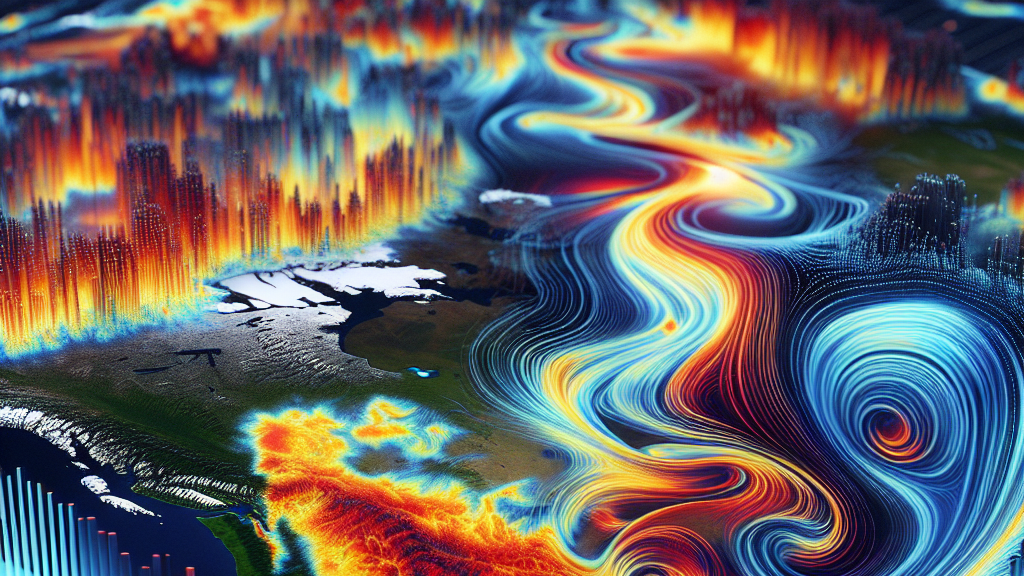
Floods are one of nature’s most devastating forces, often leading to loss of life and property destruction. Imagine having advanced notice so you could better prepare and protect your loved ones. Researchers have now developed a technology that could transform our ability to predict these disasters by improving how computer models read river networks.
In typical models, predicting floods is tricky because river systems, much like trees, have branching structures that can be hard for computers to analyze accurately. Graph Neural Networks (GNNs) are like super-smart models that process data, but they struggled with these tree-like river networks. However, the scientists found a way around this! By transforming these networks into denser graphs, enhancing the connections between the nodes, these models now understand the complexity of river systems much better.
This innovation means that, instead of just predicting floods hours before they happen, these advanced models could give you days of warning. Imagine being alerted in time to clear roads, fortify buildings, or evacuate safely. It’s a giant step toward making our communities safer from climate-change-driven weather events.
Did you know? Over 90% of natural disasters are water-related, making improved flood prediction a major global priority!
FAQs
What is the core idea behind using Graph Neural Networks for flood forecasting?
Graph Neural Networks (GNNs) are employed to improve flood forecasting by better interpreting complex river networks. These networks’ tree-like structures were traditionally difficult for models to analyze, but transforming them into denser graphs enhances node interactions, significantly boosting prediction accuracy.
How much improvement does this new method offer in predicting floods?
The new graph transformation method provides a 71% improvement in predicting long-term flood levels. This means it can predict 24-hour water levels with the accuracy of older models’ 14-hour forecasts, offering crucial extra time for communities to prepare for floods.
Why is improving flood prediction important for communities?
Improved flood prediction is vital as it provides crucial time for communities to prepare and protect themselves from devastating floods. More accurate predictions allow for safer evacuations, better planning, and reduced damage, ultimately saving lives and livelihoods.
How does the new graph-based model handle river structures differently?
The new model transforms river network graphs to make connections denser, reducing resistance distances, which helps the model understand complex flow dynamics and distal node interactions, crucial for predicting rare flood events more accurately.
How might this technology impact future early warning systems?
This technology could greatly enhance early warning systems by providing longer lead times for flood alerts, allowing for more effective emergency planning and response, reducing the impact of floods on affected communities.
Background
Graph Neural Networks (GNNs) are advanced models that help computers understand data structured in graphs. Graphs are collections of nodes (like points on a map) connected by edges (lines). River networks resemble tree structures with branches and nodes, but this complexity makes it challenging for GNNs to process them effectively. By transforming these structures into denser graphs, scientists have made them easier for GNNs to analyze, enhancing their ability to predict floods more accurately.
History
Flood forecasting has evolved significantly over the years, with models improving from simple hydrological estimates to more complex computer simulations. Graph Neural Networks have recently emerged in the field, known for their ability to handle complex data structures but were initially limited by the tree-like nature of river networks. Innovations like this study offer a significant leap forward by addressing these limitations and refining flood prediction capabilities.
Based on “Accelerating Flood Warnings by 10 Hours: The Power of River Network Topology in AI-enhanced Flood Forecasting” by Hongjun Wang, Jiyuan Chen, Yinqiang Zheng, Xuan Song, available on arXiv (arxiv.org/abs/2410.05536), used under CC BY 4.0 (creativecommons.org/licenses/by/4.0/).