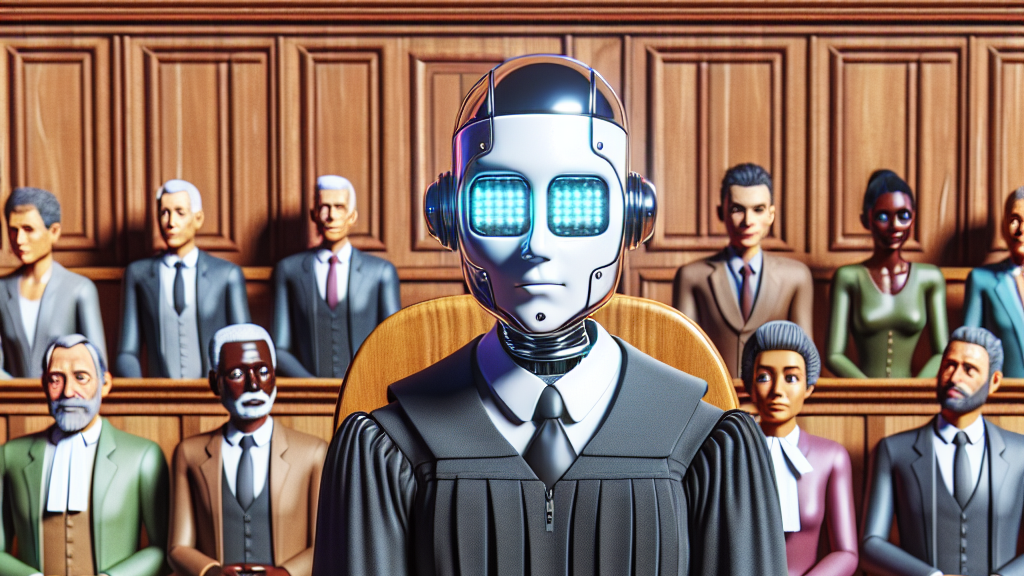
Picture this: a future where robots and AI don’t just follow instructions but truly understand and share our human values. This dreamy scenario could soon become a reality, thanks to groundbreaking research inspired by science fiction. By analyzing 824 iconic sci-fi moments, researchers are creating a guide to ensure AI decisions are in harmony with what humanity holds dear.
The research involves a deep dive into scenes from popular sci-fi movies, TV shows, and books, where AI or robotic characters made critical decisions. By examining these moments, researchers develop scenarios to test AI’s alignment with human values. The results are promising: with the addition of sci-fi inspired ‘constitutions,’ AI systems show significantly improved alignment, boasting a whopping 95.8% match with human values. This beats the typical erratic AI behavior portrayed in sci-fi, which aligns a mere 21.2% of the time.
Now, imagine a world where these findings help develop ethical guidelines for AI. Businesses and designers could use these insights to create machines that think and behave more like us, making them safer and more reliable. Whether it’s self-driving cars or household assistants, this research promises a future where AI could truly understand what we need, leading to innovations that keep us safe and secure.
Only 21.2% of AIs in science fiction align with human values, but in reality, we can push them to 95.8% alignment with the right guidelines!
FAQs
How do robots and AI systems align with human values using science fiction?
Researchers analyze key moments from 824 pieces of science fiction to create benchmarks that test AI behavior. This helps determine if AI decisions align with human values, guiding the development of ethical guidelines.
Why is aligning AI behavior with human values important?
Aligning AI with human values ensures they make decisions that are safe, ethical, and beneficial to society, preventing unwanted or harmful outcomes as depicted in many sci-fi stories.
What role do sci-fi inspired ‘constitutions’ play in AI alignment?
These constitutions offer a set of rules or guidelines derived from sci-fi narratives that help AI systems make decisions more aligned with human values, dramatically improving alignment to 95.8% according to the research.
How was the SciFi-Benchmark dataset created?
The dataset was generated by selecting key decision-making moments from sci-fi literature and analyzing them to produce questions and answers, forming a comprehensive guide for evaluating AI ethics and safety.
What could be the real-world implications of this research on AI development?
This research could lead to the creation of AI systems that make safer, more human-centered decisions, influencing areas such as autonomous vehicles, healthcare robotics, and consumer AI products.
Background
As artificial intelligence and robotics advance rapidly, one critical challenge is ensuring they align with human values. This means AI should make decisions beneficial and acceptable to society. Science fiction, with its rich history of exploring complex human and technological interactions, provides a unique insight for developing these guidelines. By examining moments where AI and robots make ethical decisions, researchers can create benchmarks to guide real-world AI development.
History
Science fiction has long explored the relationship between humans and machines, often highlighting ethical and moral dilemmas. Early works like Isaac Asimov’s ‘Three Laws of Robotics’ set the stage for considering how machines should act. As AI technology evolved, so did its portrayal in media, with contemporary sci-fi pondering ethical implications. Current research builds on this legacy, using sci-fi narratives as a framework to study AI alignment with human values, moving from imaginative tales to practical applications.
Based on “SciFi-Benchmark: How Would AI-Powered Robots Behave in Science Fiction Literature?” by Pierre Sermanet, Anirudha Majumdar, Vikas Sindhwani, available on arXiv (arxiv.org/abs/2503.10706), used under CC BY 4.0 (creativecommons.org/licenses/by/4.0/).