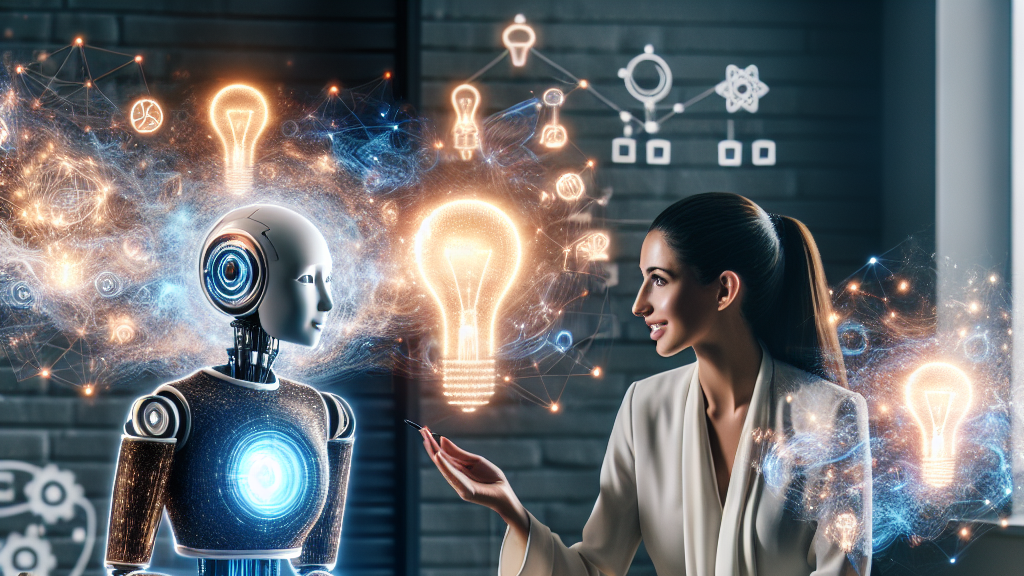
Imagine feeling guilty about using AI, like you’re cheating in some way. That’s what this study dives into, exploring how AI can turn humans into ‘c(ai)borgs’—people augmented by artificial intelligence, challenging our traditional ideas about creativity and originality. By looking at personal experiences over a year, the research shows how initial guilt gives way to empowerment as people build skills and learn to use AI more transparently.
The study uses a mix of personal reflection and storytelling, inspired by Donna Haraway’s Cyborg Manifesto, to uncover how AI reshapes our work and creativity. It highlights that while AI can make us feel like we’re not being original, it actually offers a new way to innovate and collaborate. By learning advanced AI literacy and engaging honestly with AI results, we can work together with AI to push the boundaries of what’s possible.
In the future, this research suggests we’ll see AI as an ally rather than a threat, encouraging innovation and fairness. By embracing AI as a partner, we can overcome access and agency issues, fostering a world where technology enhances our creativity rather than diminishes it. So, rather than feeling guilt, we can look at AI as a catalyst for growth and positive change.
Did you know that some people feel guilty using AI, like it’s cheating? This study shows that AI can actually make us more creative and innovative!
FAQs
What are c(ai)borgs and how do they relate to AI?
C(ai)borgs are humans who are augmented by Artificial Intelligence, blending technology into their personal and professional lives. The research explores how AI integration in workflows challenges traditional notions of creativity and originality.
How does AI influence feelings of guilt and creativity?
The study reveals that initial feelings of guilt when using AI can transition into empowerment. As people build skills and engage transparently with AI, it becomes a collaborative partner, enhancing creativity instead of hindering it.
Why does this research call for inclusive AI integration?
The research emphasizes that AI should be seen as an ally that encourages innovation and equity. By reframing AI use as growth rather than guilt, it advocates for thoughtful, inclusive collaboration with technology in the future.
Background
The study explores merging human abilities with AI as ‘c(ai)borgs,’ a concept inspired by Donna Haraway’s Cyborg Manifesto. This involves adopting AI in everyday tasks and creativity, questioning traditional views on originality and human intellect. By using an autoethnographic approach, individuals reflect on personal experiences with AI, examining emotional and ethical dimensions of this integration.
History
The concept of cyborgs, part human and part machine, has been explored since Donna Haraway’s 1985 Cyborg Manifesto, which challenged the boundaries between nature, humans, and machines. This study extends that idea by focusing on AI’s role in creativity and originality, updating the conversation for today’s technological landscape.
Based on “Feeling Guilty Being a c(ai)borg: Navigating the Tensions Between Guilt and Empowerment in AI Use” by Konstantin Aal, Tanja Aal, Vasil Navumau, David Unbehaun, Claudia Müller, Volker Wulf, Sarah Rüller, available on arXiv (arxiv.org/abs/2506.00094), used under CC BY 4.0 (creativecommons.org/licenses/by/4.0/).