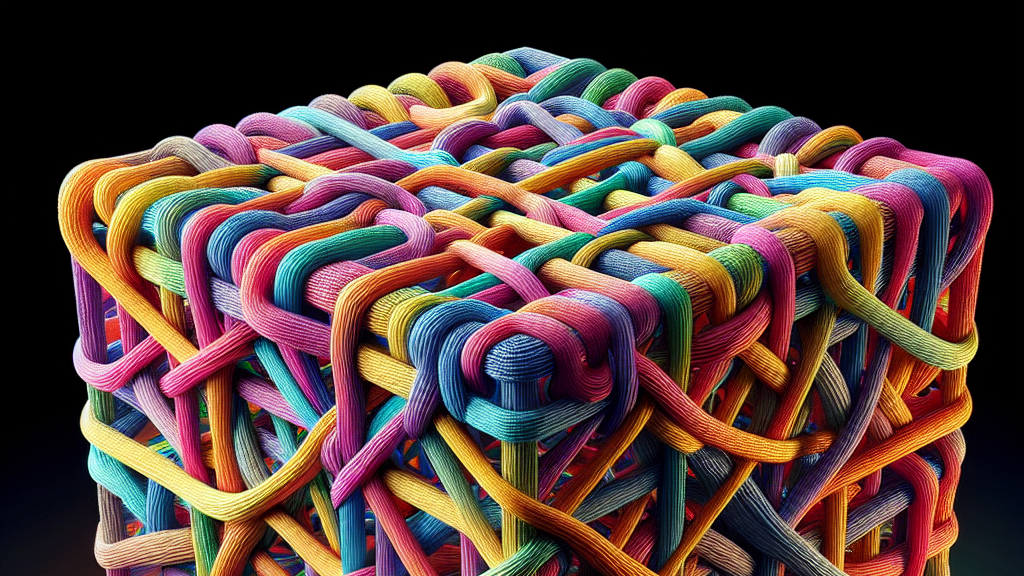
Did you ever wonder just how many tangled knots you could fit inside a box? It’s like trying to stuff as many cables as you can into your junk drawer without them getting intertwined! Scientists have been curious about this too, and they’ve been working out the math to find out the limits.
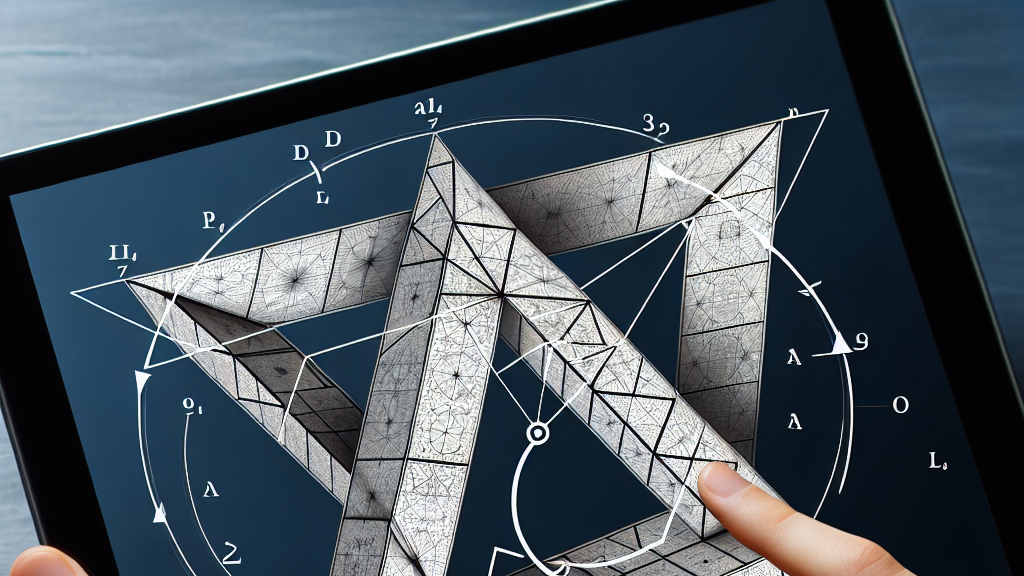
The research dives into how many non-trivial links, like knots and loops, you can pack into a single cube without them overlapping in a way that makes them indistinguishable. By using geometric principles rather than complex calculations, they’ve managed to set a boundary on this, essentially mapping out how space can be efficiently used when it comes to these intricate shapes.
Imagine if this concept could be applied in real life—think about packing your luggage with cables, ropes or even holiday lights. Understanding the geometry of knots might eventually make it easier to pack things efficiently without them getting into a tangled mess. This kind of research could lead to new ways of optimizing space in ways we haven’t even thought of yet!
Did you know that knot theory isn’t just theoretical? It’s actually used in creating secure methods for DNA analysis!
FAQs
How does this research about knots relate to everyday life?
It’s like figuring out how to efficiently pack your cables without them becoming a tangled mess. Understanding these geometric rules can lead to better space utilization and prevent frustrating tangles.
What are non-trivial links?
Non-trivial links refer to more complex knots that can’t be undone without cutting, much like intricate loops and twists that are commonly found in everyday objects like ropes and cables.
Why is it hard to fit many knots in a confined space?
Inserting multiple knots in a fixed space without them overlapping involves intricate geometric principles that determine the limits of spatial capacity. Think of it like a puzzle with no room for errors!
How could this research in knot theory impact future designs?
By knowing the limits of how knots and links can be arranged within a space, designers might create more efficient storage solutions and even improve materials like cables and wires to avoid unnecessary tangling.
What makes knot theory an important area of study?
Knot theory isn’t just academic—it’s used in many practical applications, including DNA research, to understand the complex folding patterns within cells that are crucial for life.
Background
In knot theory, scientists study links and knots—how they twist, turn, and overlap in space. A knot is essentially a tangled loop, like a rope with its ends joined together, while links refer to multiple interlaced knots. This study focuses on understanding how many such configurations can fit into a three-dimensional space, like a cube, without them intersecting in unintended ways. The geometry of these links can be surprisingly complex, involving calculations of linking numbers that determine their relationship to each other.
History
Knot theory has its origins in the late 19th century when scientists began exploring how ropes can be twisted and linked. J.J. Thomson even used this concept to model atoms as knots. Over time, it has expanded into a robust area of mathematics, influencing fields from biology to physics. The specific study on the limits of knots in space builds upon previous works that looked at how far apart components of a link need to be, refining our understanding of spatial geometry.
Based on “How Many Links Fit in a Box?” by Michael H. Freedman, available on arXiv (arxiv.org/abs/2412.02989), used under CC BY 4.0 (creativecommons.org/licenses/by/4.0/).