Connect with us

Search by keyword

Electricity

Can AI Diagnose Sepsis Faster Than Doctors?

Using deep learning, scientists have developed an AI tool that could diagnose sepsis faster than traditional methods, potentially saving lives by speeding up treatment. This innovative tech could transform how quickly and accurately dangerous infections are detected.

Can AI Diagnose Sepsis Faster Than Doctors
✨Researched by humans. Explained by robots. Learn more.

Imagine a world where doctors can diagnose life-threatening infections like sepsis in the blink of an eye! Thanks to a cutting-edge AI tool, this could soon be a reality. Researchers have developed an AI system that can identify harmful bacteria and fungi in blood samples with impressive accuracy, potentially reducing the time it takes to diagnose sepsis from days to just hours.

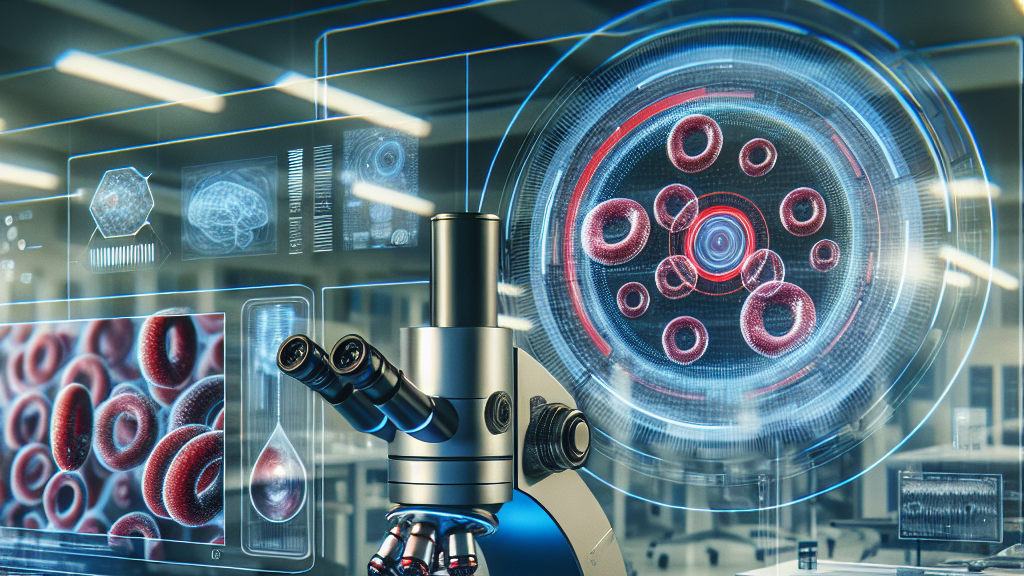
This new system uses advanced deep learning algorithms, which are like super-smart computer programs, to analyze thousands of microscopic images of blood smears. It can recognize 14 different types of bacteria and 3 types of yeast-like fungi with up to 96.2% accuracy. While it excels at identifying certain microbes, the system does face challenges with species that look very similar under the microscope. However, these early results are incredibly promising.

In the future, this AI technology could transform hospital labs, making sepsis diagnosis quicker and more accessible. Imagine having a tool that helps doctors start treatments sooner, potentially saving countless lives. As the system improves and learns from even more data, its accuracy will continue to climb, making it an essential part of modern healthcare.

Sepsis is a leading cause of death in hospitals, and quicker diagnosis could save thousands of lives each year.

FAQs

How does AI improve sepsis diagnosis?

This AI technology uses deep learning algorithms to analyze blood sample images and can detect harmful bacteria and fungi more quickly than traditional methods, potentially speeding up diagnosis and treatment.

What makes this AI system different from traditional methods?

Unlike conventional microbiological techniques that are time-consuming, this AI system can provide fast results by analyzing microscopic images with high accuracy, enabling quicker medical response to sepsis.

How accurate is the AI in identifying microorganisms?

The AI achieved an accuracy rate of up to 96.2% for certain bacteria and 71.39% for fungi, highlighting its strong capability in microbial classification.

What are the potential limitations of this AI system?

While the AI shows promising results, it struggles with identifying closely related species due to their morphological similarities, indicating a need for further optimization and data set expansion.

What impact could this technology have on patient care?

By providing rapid diagnostic results, this AI system could lead to faster treatment plans for sepsis, potentially saving lives and improving patient outcomes in hospitals worldwide.

Background

Sepsis is a severe medical condition caused by the body’s response to infection, leading to tissue damage and organ failure. Early diagnosis and treatment are vital for survival. Traditional methods rely on time-consuming lab cultures to identify the underlying bacteria or fungi causing the infection. This research introduces a deep learning technology that analyzes microscopic images to identify the infectious agents faster and more accurately.

History

Sepsis diagnosis has traditionally relied on microbiological cultures, a process that can take days. Over the years, scientists have explored faster methods, including molecular techniques and rapid tests. Recent advances in artificial intelligence, particularly in image recognition, have paved the way for using AI in medical diagnostics, offering quicker and potentially more accurate identification of microorganisms.

Based on “AI-Driven Rapid Identification of Bacterial and Fungal Pathogens in Blood Smears of Septic Patients” by Agnieszka Sroka-Oleksiak, Adam Pardyl, Dawid Rymarczyk, Aldona Olechowska-Jarząb, Katarzyna Biegun-Dróżdż, Dorota Ochońska, Michał Wronka, Adriana Borowa, Tomasz Gosiewski, Miłosz Adamczyk, Henryk Telega, Bartosz Zieliński, Monika Brzychczy-Włoch, available on arXiv (arxiv.org/abs/2503.14542), used under CC BY 4.0 (creativecommons.org/licenses/by/4.0/).


Trending

Latest

Can AI Save Water Discover How

Computers

AI is transforming the tech world, but it uses lots of water! A new tool, SCARF, helps us measure and reduce AI's water footprint,...

Whats a Forbush Decrease and Why Should We Care Whats a Forbush Decrease and Why Should We Care

Space

Scientists just observed the biggest solar storm event in years, revealing unexpected cosmic ray patterns. Understanding these changes could help us protect our technology...

Can Cars Spot Danger Faster Than Humans Can Cars Spot Danger Faster Than Humans

Computers

Think about how quickly you react when something unexpected happens on the road. This research brings us closer to creating self-driving cars that can...

Can Fear of the Other Stop Social Harmony Can Fear of the Other Stop Social Harmony

Physics

Fear of the unknown might make it harder for people to agree and get along. This study shows that when people have strong xenophobic...

Can AI Revolutionize Breast Cancer Diagnosis Can AI Revolutionize Breast Cancer Diagnosis

Electricity

This research introduces a groundbreaking AI model that can accurately assess HER2-positive breast cancer using widely accessible staining methods, potentially revolutionizing how we diagnose...

Can AI Transform Your Singing into a Choir Can AI Transform Your Singing into a Choir

Computers

Imagine singing solo and having AI turn you into a choir. This research unveils a groundbreaking AI tool that transforms your voice into rich...

You May Also Like

Electricity

This research introduces a groundbreaking AI model that can accurately assess HER2-positive breast cancer using widely accessible staining methods, potentially revolutionizing how we diagnose...

Computers

Have you ever thought your internet was safe, only to find out that its security system misses crucial issues? This research shows us that...

Physics

Imagine a world where we can predict earthquakes in advance, potentially saving lives and money! This groundbreaking research uses deep learning to forecast tiny...

Electricity

Learn how blending advanced deep learning with cutting-edge wireless technology could supercharge your internet speed, making those buffering days a thing of the past.

Electricity

Discover Brain2Vec, a groundbreaking tool that uses brainwave data to spot stress, paving the way for personalized stress management and healthier living.

Statistics

In a world obsessed with AI, could old-school statistical methods still be the real MVPs? This study shows they might just outperform AI when...

Electricity

AI is changing the game in breast cancer diagnosis by accurately identifying cancer types from biopsy images. This means faster, less invasive tests, and...

Computers

Discover how cutting-edge AI models can transform random noise into structured, useful data. This research delves into the incredible efficiency of these models, potentially...

Physics

This research explores how artificial intelligence, specifically deep learning models, can automatically interpret complex brain scans with remarkable precision, potentially revolutionizing brain disease diagnosis.

Copyright © 2024 8ig8rain.

Disclaimer: The content on 8ig8rain.com consists of AI-generated summaries of scientific abstracts from arXiv. Please note that most arXiv abstracts are preprints and may not have undergone formal peer review. While these summaries aim to convey key ideas and potential applications, they are provided for informational purposes only and should not be interpreted as validated scientific findings or professional advice. The summaries are intended to educate, spark curiosity, and inspire further exploration of science.