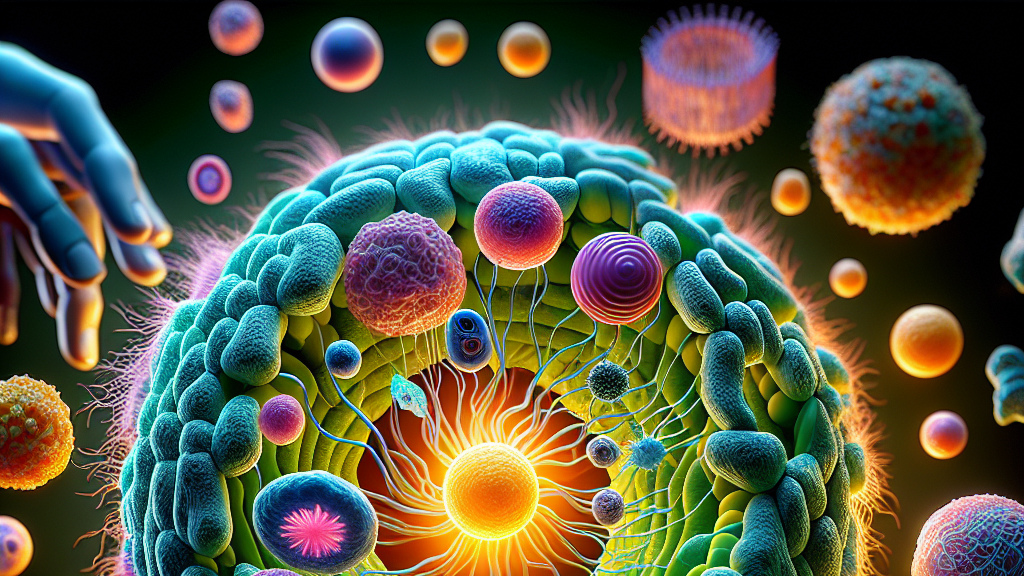
Ever wondered why your body, with all its complex shapes, turns out the way it does despite the chaos of life? Scientists think stem cells could be the unsung heroes here, helping to maintain order even when other factors are unpredictable. The way these cells work together might be the key to creating consistent shapes, just like how a conductor leads an orchestra to make beautiful music.
Researchers developed a detailed computer model to simulate how body shapes form and evolve. They discovered that even without forcing the system to be consistent, a significant number of simulations still produced the same shapes. This surprising consistency was linked to stem cells’ unique ability to move, divide, and settle into specialized forms. It’s like these cells have a built-in choreography, ensuring everything lands where it should.
In the future, this could mean big things for how we grow or repair body parts. Imagine if we could use this knowledge to grow organs or repair tissue with precision that nature does. It could transform medicine, making treatments more effective and personalized. This research hints at a future where the power of stem cells is harnessed in ways we haven’t even dreamed of yet.
Did you know that stem cells can act like tiny architects, shaping and reshaping our bodies?
FAQs
What role do stem cells play in morphogenesis?
Stem cells help shape complex body structures by moving, dividing, and transforming into specialized cells, acting like tiny architects during development.
How do scientists model the formation of body shapes?
Researchers use detailed computer simulations to evolve complex body shapes and study how stem cells contribute to consistency and structure.
Why is stem cell research crucial for medical advancements?
Stem cells have the potential to precisely repair or create tissues and organs, which could lead to breakthroughs in personalized medicine and regenerative therapies.
Background
Morphogenesis is the biological process that causes an organism to develop its shape. It involves many factors, including genetics, cell division, and differentiation. Stem cells play a crucial part due to their ability to evolve into different cell types and their potential to repair and regenerate tissues. Understanding their role in maintaining consistent body shapes could reveal new insights into developmental biology and potential medical applications.
History
The study of morphogenesis dates back to the early 20th century, with significant advances made in understanding how cells and genes influence the development of an organism’s shape. In recent years, the focus has shifted towards understanding how stem cells fit into this puzzle, as they are known for their regenerative abilities and potential to become any type of cell in the body. This research builds on these foundations by demonstrating a previously unrecognized role of stem cells in ensuring the reproducibility of body shapes.
Based on “Stem-cell differentiation underpins reproducible morphogenesis” by Dominic K Devlin, Austen RD Ganley, Nobuto Takeuchi, available on arXiv (arxiv.org/abs/2503.19375), used under CC BY 4.0 (creativecommons.org/licenses/by/4.0/).