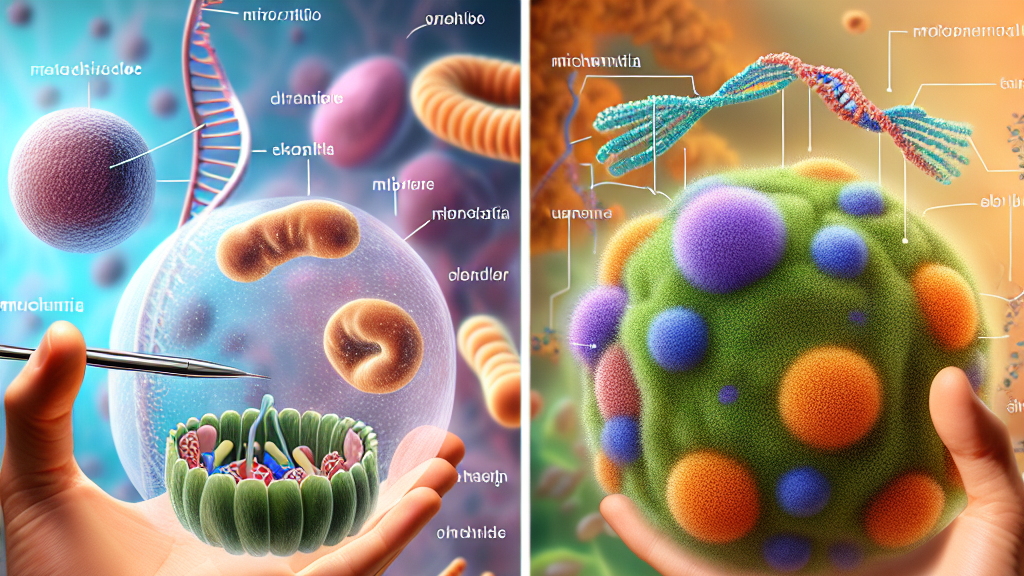
Imagine a world where life was just beginning to explore the potential of sunlight. In this ancient setting, some of the earliest bacteria embarked on a monumental journey—evolving to harness the sun’s energy more effectively than ever before. This transformation gave rise to the thylakoid membranes, tiny structures within cells that act like solar panels, boosting the efficiency of photosynthesis, a process crucial for life on Earth as we know it.
The research delves into this evolutionary leap from primitive, single-layer membranes in early bacteria, like Gloeobacterales, to the complex, multitiered ones found in modern plants. These membranes weren’t always meant for oxygenic photosynthesis; they likely started by supporting alternative electron flows before evolving into the power-packed structures responsible for converting sunlight into oxygen and energy efficiently. This change not only facilitated the proliferation of plants and algae but also marked a significant turning point in the Earth’s evolutionary timeline.
Now, let’s dream about where this knowledge could take us. Imagine applying discoveries from these ancient membranes to create more efficient solar energy technologies, inspired by biology’s natural systems. Such advances could revolutionize how we harness energy, making it cleaner and more sustainable, while drawing directly from the blueprints of life’s oldest power stations.
Thylakoid membranes are like nature’s solar panels, and their evolution helped turn simple bacteria into the first green powerhouses.
FAQs
What are thylakoid membranes and why are they important?
Thylakoid membranes are structures in cells that increase the surface area available for photosystems, thus boosting photosynthetic efficiency. This allows them to convert sunlight into usable energy and oxygen, supporting life on Earth.
How did early bacteria evolve to become efficient photosynthesizers?
Early bacteria likely started with simpler, single-layer membranes where photosynthesis occurred. Over time, they evolved to multitiered thylakoid membranes, enhancing their ability to process sunlight and increase photosynthetic efficiency.
Could this research enhance our future technologies?
Understanding the evolution of thylakoid membranes could inspire the development of advanced solar energy systems, potentially leading to cleaner and more efficient energy solutions based on natural processes.
What makes Gloeobacterales unique in photosynthesis research?
Gloeobacterales represent an ancestral state of photosynthesis, occurring in simpler cytoplasmic membranes rather than thylakoid membranes, offering insights into the early stages of photosynthetic evolution.
Background
Thylakoid membranes are essential components of photosynthetic cells found in plants and algae. These membranes create large surface areas for photosystems to efficiently capture sunlight and convert it into energy and oxygen. The evolution of thylakoid membranes marked a significant step in enabling early life forms to flourish using sunlight as an energy source.
History
The study of thylakoid membranes traces back to research on early photosynthetic bacteria, such as cyanobacteria, which evolved to utilize sunlight efficiently, leading to the oxygenation of the Earth’s atmosphere. This research builds upon our understanding of how life adapted to changing environmental conditions, resulting in the biodiversity we observe today.
Based on “On the Non-Oxygenic Origins of Thylakoids” by Luc Cornet, available on arXiv (arxiv.org/abs/2411.07081), used under CC BY 4.0 (creativecommons.org/licenses/by/4.0/).