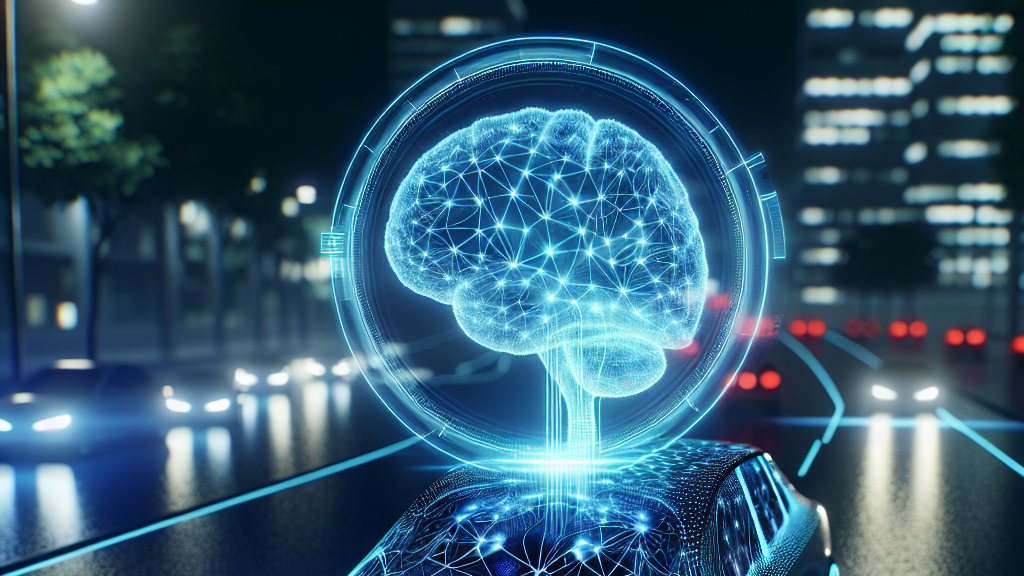
Imagine sitting in a self-driving car that not only detects its surroundings but can also tap into your brain waves to improve safety. This isn’t science fiction anymore. Researchers are developing systems that integrate human brain data with autonomous vehicle technology to create safer driving experiences.
Their groundbreaking study focuses on understanding how passengers’ brain waves, particularly the pre-event data captured by EEGs, can predict hazardous scenarios before they occur. By developing a sophisticated neural network system called the Passenger EEG Decoding Strategy (PEDS), which leverages a special kind of machine learning model known as a Convolutional Recurrent Neural Network (CRNN), they achieve predictive insights with significant accuracy. This means your brain’s reactions could help the car make better decisions during critical moments.
Think about the potential impact: cars of the future could sense your anxiety as you approach a busy intersection and adjust their driving patterns accordingly. It’s a fascinating intersection of human cognition and cutting-edge technology, paving a path to safer roads and smarter transportation. This research could lead to advancements where your vehicle becomes your most aware co-pilot, ensuring you arrive at your destination safely.
Did you know your brain’s reactions happen so quickly that they can predict dangerous situations half a second before they occur, potentially giving autonomous cars time to react faster?
FAQs
How can brain waves enhance autonomous vehicle safety?
Brain waves, especially those detected before a dangerous event, provide predictive data that can improve the decision-making of autonomous vehicles. By integrating this data, cars can anticipate and react to potential hazards more effectively.
What technology is used to read brain waves in cars?
The study uses EEG (electroencephalography) data, which captures the brain’s electrical signals, and analyzes them using a sophisticated machine learning model known as a Convolutional Recurrent Neural Network.
Why is combining human brain data with vehicle systems a breakthrough?
This combination allows vehicles to benefit from human intuition and awareness in real-time, potentially leading to a safer driving experience as vehicles can preemptively act on incoming hazards more quickly.
How accurate is the Passenger EEG Decoding Strategy?
The Passenger EEG Decoding Strategy (PEDS) achieves an accuracy of 85%, highlighting its effectiveness in predicting and potentially mitigating dangerous driving scenarios.
What are the implications for future car technology?
This research paves the way for cars that are not just automated but intuitively connected to human passengers, enhancing safety by utilizing the natural instincts and reactions of our brain.
Background
Autonomous vehicles use a combination of sensors, cameras, and algorithms to navigate without human intervention. However, human intuition and perception remain crucial for detecting certain unpredictable scenarios. Electroencephalography (EEG) measures electrical activity in the brain and can be used to predict behaviors and reactions. By harnessing EEG data, researchers aim to integrate human-like intuition into machine systems.
History
Research on autonomous vehicles has evolved significantly, with early models relying solely on programming and sensor feedback. Recent developments have sought to incorporate more human-like perception. This study builds on earlier research by integrating real-time brain data, providing a new layer of environmental awareness and decision-making to autonomous systems.
Based on “Passenger hazard perception based on EEG signals for highly automated driving vehicles” by Ashton Yu Xuan Tan, Yingkai Yang, Xiaofei Zhang, Bowen Li, Xiaorong Gao, Sifa Zheng, Jianqiang Wang, Xinyu Gu, Jun Li, Yang Zhao, Yuxin Zhang, Tania Stathaki, available on arXiv (arxiv.org/abs/2408.16315), used under CC BY 4.0 (creativecommons.org/licenses/by/4.0/).