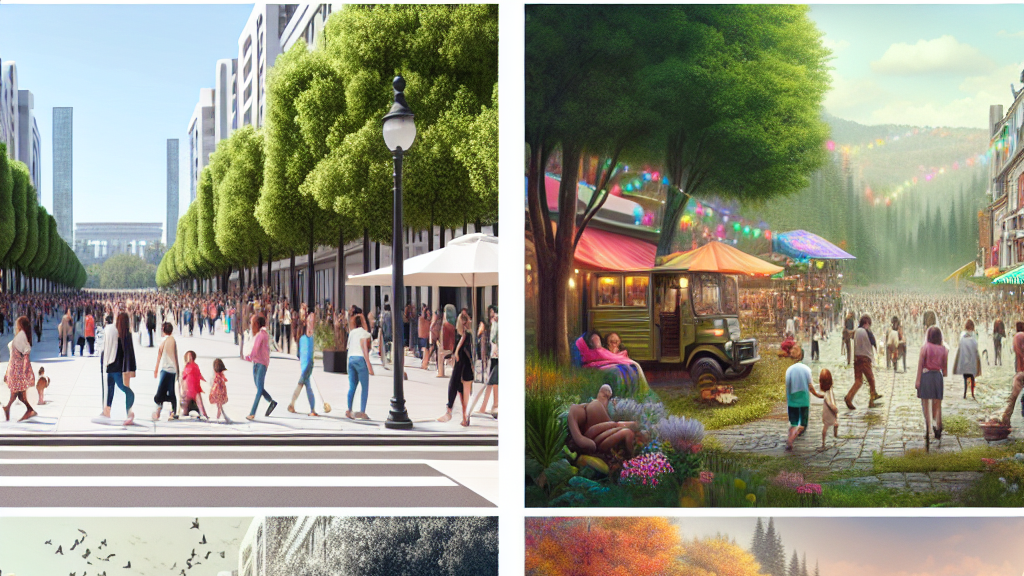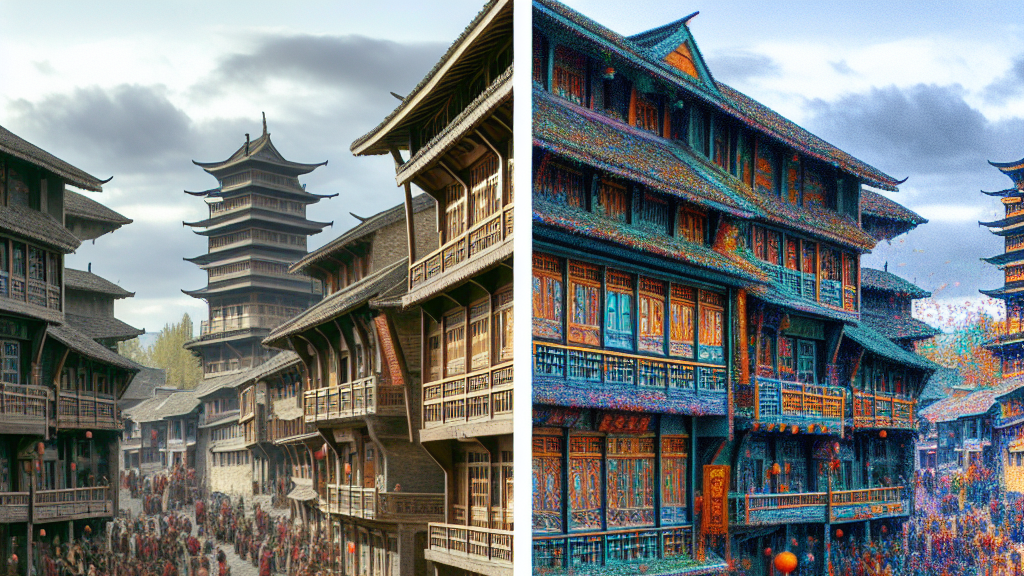
Imagine if you could tell a computer exactly what you want it to paint, and it would do just that, perfectly matching your imagination! That’s what AI art technology tries to achieve. This groundbreaking research is all about making those computer-generated images look even more stunning and true to our descriptions by optimizing the way we instruct AI art tools, similar to giving them a clearer sense of what we mean.
Researchers have developed a new technique called Indirect Prompt Gradient Optimization (IPGO) that enhances the way AI interprets our instructions. By tweaking the starting and ending points of the digital ‘instructions’ we give to AI, they can make it see things the way we do more accurately. This method also focuses on making sure the AI uses its computing power efficiently, saving both time and resources while making fantastic images.
So, what does this mean for us in the real world? Well, think about creating stunning AI-generated visuals for your social media feeds, business ads, or even school projects, with minimal effort on your part! This technology could make it easier for anyone to produce high-quality images without needing to be a tech genius or have access to loads of computing power.
Did you know? AI can now create art that’s so aligned with human preferences, people often can’t tell it apart from human-made art!
FAQs
How does Indirect Prompt Gradient Optimization improve AI-generated images?
Indirect Prompt Gradient Optimization enhances AI-generated images by fine-tuning the way we give instructions or prompts to AI models. This process aligns the generated images more closely with human aesthetics and preferences, leading to better visual outcomes.
What makes this AI art optimization different from previous methods?
This new method uses a unique approach that optimizes prompt instructions by injecting special tokens and uses gradient-based updates. It’s more efficient and requires less computational power compared to other methods, making high-quality image generation accessible to more people.
Why is aligning AI-generated art with human preferences important?
Aligning AI-generated art with human preferences is crucial for creating artwork that resonates with viewers. When AI-generated images match human aesthetics, they are more likely to be appreciated and accepted, enhancing the overall impact and usefulness of AI in art and design.
Background
Text-to-image diffusion models are a type of AI that can create visuals from textual descriptions. They work by mapping words into ’embeddings,’ which the AI interprets to generate images. However, these models often struggle with perfectly capturing the details people want. The technique of injecting continuously differentiable tokens in IPGO helps refine these ’embeddings,’ allowing the AI to better align the image with the prompt’s intent.
History
This study builds on the success of previous AI models like Stable Diffusion and others, which introduced the idea of turning text into images. Earlier methods like DRaFT and Promptist worked on improving image quality through various techniques. IPGO takes these ideas further by optimizing prompts themselves, ensuring that AI can generate even better images with fewer resources.
Based on “IPGO: Indirect Prompt Gradient Optimization on Text-to-Image Generative Models with High Data Efficiency” by Jianping Ye, Michel Wedel, Kunpeng Zhang, available on arXiv (arxiv.org/abs/2503.21812), used under CC BY 4.0 (creativecommons.org/licenses/by/4.0/).