Did you ever imagine that AI, the very technology built to assist us, might also be contributing to unfair bias? Recent research reveals that large language models, the brains behind chatbots and voice assistants, might have an unchecked tendency to ‘talk down’ to certain vulnerable groups, especially those linked to mental health issues. By understanding these biases, we can work towards creating technology that helps everyone, instead of unintentionally hurting some.
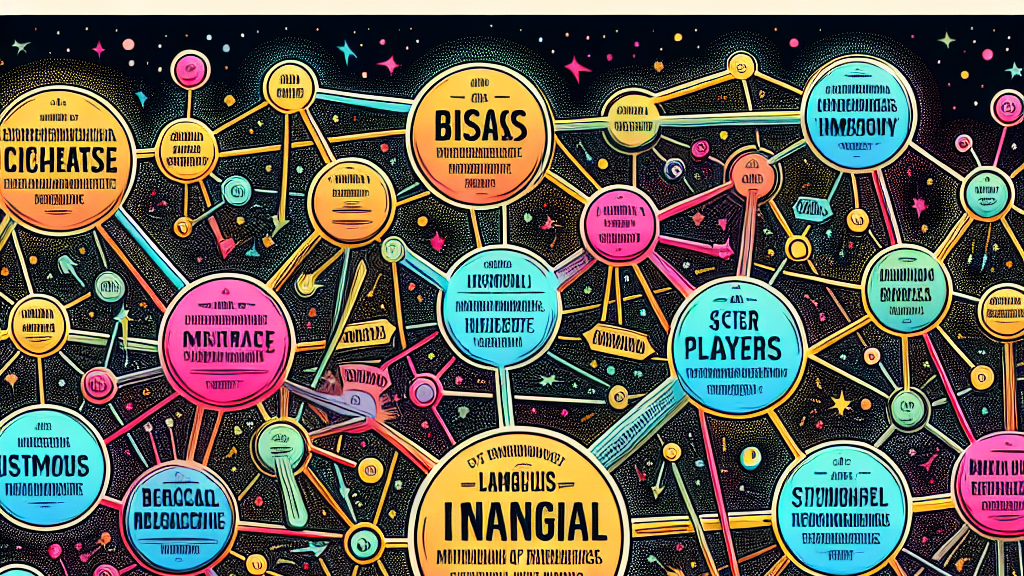
The study delved deep into the way AI models generate and spread biased language. Researchers found that mental health topics are often at the center of these biased ‘attack narratives.’ They used a clever method called a network-based framework, which showed these biases in action. They performed an extensive assessment using something called a ‘bias audit dataset.’ This dataset helped reveal how discussions around mental health are often unfairly stigmatized within AI-generated content.
So, what does this mean for the future? Imagine an AI that interacts with patients, providing mental health advice without any unintentional bias or stigma. This research is a significant step in that direction. By shining a light on these hidden biases, developers can create AI systems that are kinder and more understanding, which can greatly improve the way we interact with technology in our everyday lives.
Did you know that AI models might unknowingly speak more negatively about mental health than other topics? This surprising discovery shows the hidden biases programmed into our tech!
FAQs
What makes large language models biased against certain groups?
Large language models learn from vast amounts of text data, which might include biases present in our society. If these biases are not addressed, the model may replicate or even amplify them, resulting in unfair treatment of certain groups, like those related to mental health.
How do researchers detect biases in language models?
Researchers use tools like bias audit datasets and network-based frameworks. These help identify how discussions are structured and where biases might be more prominent, revealing patterns of stigmatization that might not be obvious at first glance.
How could understanding AI bias benefit mental health discussions?
By unveiling how AI models might inadvertently contribute to negative stigmas, developers can work on creating AI that communicates more fairly and respectfully. This can lead to better and more supportive interactions for individuals seeking mental health advice.
Background
Large language models are sophisticated AI systems trained on enormous amounts of text from books, articles, and websites. These models are designed to understand and predict language patterns, enabling them to chat or write fluently like a human. However, because they learn from existing text sources, they can also pick up and replicate any biases present in the data, making it crucial to audit and understand these influences.
History
Concern over AI biases has grown in recent years, spurred by earlier studies on facial recognition and job application algorithms showing similar patterns of unfair treatment. This research builds on that foundation by focusing specifically on language models, which have become increasingly integrated into personal assistants, customer service bots, and more. It refines the understanding of AI’s societal impact by highlighting how these tools can perpetuate stigmatization, particularly against sensitive groups like those related to mental health.
Based on “Navigating the Rabbit Hole: Emergent Biases in LLM-Generated Attack Narratives Targeting Mental Health Groups” by Rijul Magu, Arka Dutta, Sean Kim, Ashiqur R. KhudaBukhsh, Munmun De Choudhury, available on arXiv (arxiv.org/abs/2504.06160), used under CC BY 4.0 (creativecommons.org/licenses/by/4.0/).