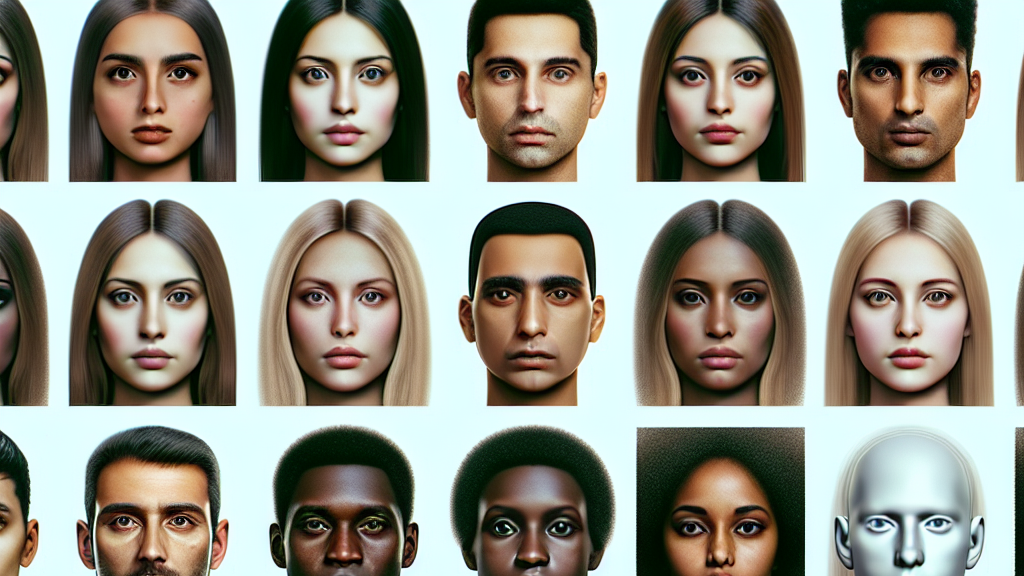
Have you ever felt like your looks affect how you’re treated? Well, it turns out AI might be biased in the same way. Research shows AI systems are more likely to associate attractive faces with positive traits like intelligence and trustworthiness. But the real kicker? When these systems try to identify gender, they make more mistakes on so-called ‘less-attractive’ faces, especially for non-White women.
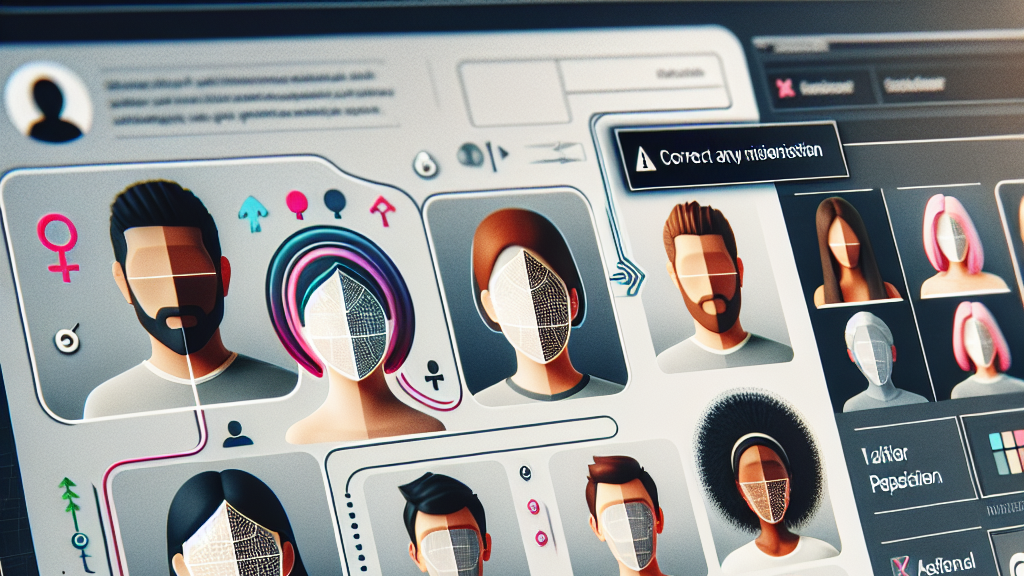
The study put AI to the test with over 13,000 computer-generated faces and found glaring biases. Text-to-image systems, which create images from descriptions, often pair facial attractiveness with unrelated positive qualities. Meanwhile, AI’s gender-identifying algorithms struggle more with faces deemed less attractive or non-White, showing significant errors in understanding these faces accurately.
Imagine applying for a passport online or a job through video interview software, and the AI behind these tools ‘judges’ you based on looks. This research is a call to action for developers to rethink how AI systems process appearance, ensuring fair treatment for everyone, regardless of how their face might be perceived by a computer.
Did you know AI may see a prettier face as more intelligent or trustworthy?
FAQs
How does AI bias affect machine learning gender classification?
AI bias causes gender classification algorithms to have higher error rates when assessing less-attractive faces, especially non-White women, leading to inaccuracies.
What is algorithmic lookism and why does it matter?
Algorithmic lookism refers to AI systems preferring certain appearances. It matters because it can lead to unfair treatment in digital identity systems, affecting real-world opportunities.
How does this research impact non-White women?
This research highlights that non-White women are more likely to face errors in AI-based gender classification, which can perpetuate unfairness and inequality in digital contexts.
Background
AI systems and machine learning algorithms can sometimes reflect human biases, like favoring certain looks. These systems are trained on large datasets, and if the datasets show biases, the AI will, too. This research focuses on ‘algorithmic lookism,’ where AI associates attractiveness with positive traits and struggles to classify gender accurately for less-attractive faces.
History
The conversation about AI’s bias isn’t new but has evolved. Earlier studies focused on racial and gender biases in facial recognition tech. This current study extends the exploration by investigating biases in synthetic images and how AI associates attractiveness with other unrelated traits, showing the breadth of bias in AI systems.
Based on “When Algorithms Play Favorites: Lookism in the Generation and Perception of Faces” by Miriam Doh, Aditya Gulati, Matei Mancas, Nuria Oliver, available on arXiv (arxiv.org/abs/2506.11025), used under CC BY 4.0 (creativecommons.org/licenses/by/4.0/).