Imagine a world where Artificial Intelligence not only helps us solve everyday challenges but does so with our full trust. Sounds intriguing, right? Well, researchers are diving deep into this very topic. They’re exploring how trust and cooperation among AI developers, regulators, and users can transform AI into a more reliable and safe tool for everyone. But here’s the catch: AI needs to learn to be trustworthy first, and that’s where this exciting research comes in.
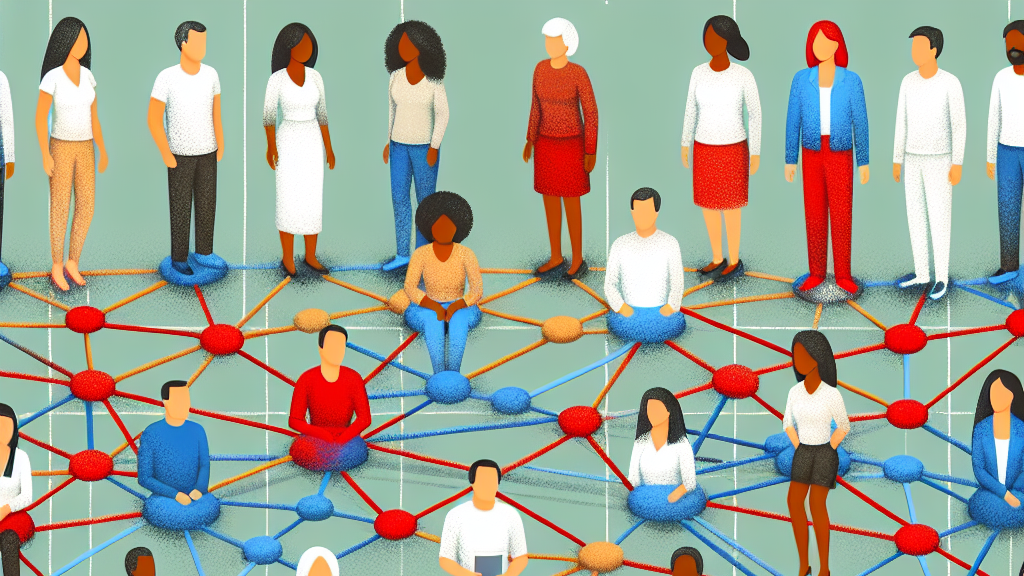
The study uses something called evolutionary game theory, which is a fancy way of saying it’s like a big, ongoing chess game between developers, regulators, and users. It models their decisions and predicts what might happen when different rules and scenarios come into play. By embedding Large Language Models, or smart AI systems that can understand and generate human-like text, into these scenarios, researchers can see how AI might behave. Surprisingly, they found that AI tends to adopt a more ‘pessimistic’ or cautious stance. This means without enough trust from users, even the best regulations might fall short in making AI systems safe and effective.
So, why does this matter to you? Well, think about how much you interact with technology every day—from your smartphone to your online banking. As AI continues to evolve, ensuring that it behaves safely and in your best interest becomes essential. This research shows that creating a feedback loop of trust among users and regulators can nudge developers to craft AI that plays by the rules. So one day, calling on AI to help you with everything from business decisions to daily chores might not only be easy but also completely reliable.
Did you know that AI systems can have ‘personalities’ too? They can mimic human traits to better interact with us!
FAQs
What role does trust play in AI development?
Trust is essential because it ensures that AI systems are used safely and effectively. Without user trust, even the best-designed AI systems may struggle to gain acceptance and be integrated into everyday life.
How are AI systems strategized using game theory?
Researchers use evolutionary game theory to simulate strategic decisions among developers, regulators, and users. This helps predict how AI ecosystems might evolve under different regulatory and trust scenarios.
Why do large language models (LLMs) matter in AI regulation?
Large language models add complexity to AI behavior. By using them in simulations, researchers can explore nuanced scenarios and better understand how AI might react under various conditions.
What happens when AI behaves pessimistically?
When AI takes a cautious stance, it might hinder the effectiveness of regulations. Building trust among users and regulators is crucial to ensure AI systems adopt more balanced and cooperative behaviors.
Why is feedback between users and regulators important for AI safety?
A positive feedback loop between user trust and regulatory actions can guide developers to build safer AI. When users trust the system, it encourages adherence to effective regulations, ensuring AI systems are both safe and useful.
Background
Evolutionary game theory is a method used to model and predict behavior in strategic settings, where different actors (like developers, regulators, and users) make choices that affect one another. In this context, Large Language Models are advanced AI systems capable of understanding and generating text, and they can be used to simulate complex interactions in these models.
History
AI trust and regulation have been subjects of interest for years, stemming from early concerns about machine behavior and ethics. The introduction of Large Language Models has provided more sophisticated tools to probe these interactions, offering a clearer understanding of AI’s potential strategic behaviors and its implications on trustworthiness.
Based on “Do LLMs trust AI regulation? Emerging behaviour of game-theoretic LLM agents” by Alessio Buscemi, Daniele Proverbio, Paolo Bova, Nataliya Balabanova, Adeela Bashir, Theodor Cimpeanu, Henrique Correia da Fonseca, Manh Hong Duong, Elias Fernandez Domingos, Antonio M. Fernandes, Marcus Krellner, Ndidi Bianca Ogbo, Simon T. Powers, Fernando P. Santos, Zia Ush Shamszaman, Zhao Song, Alessandro Di Stefano, The Anh Han, available on arXiv (arxiv.org/abs/2504.08640), used under CC BY 4.0 (creativecommons.org/licenses/by/4.0/).