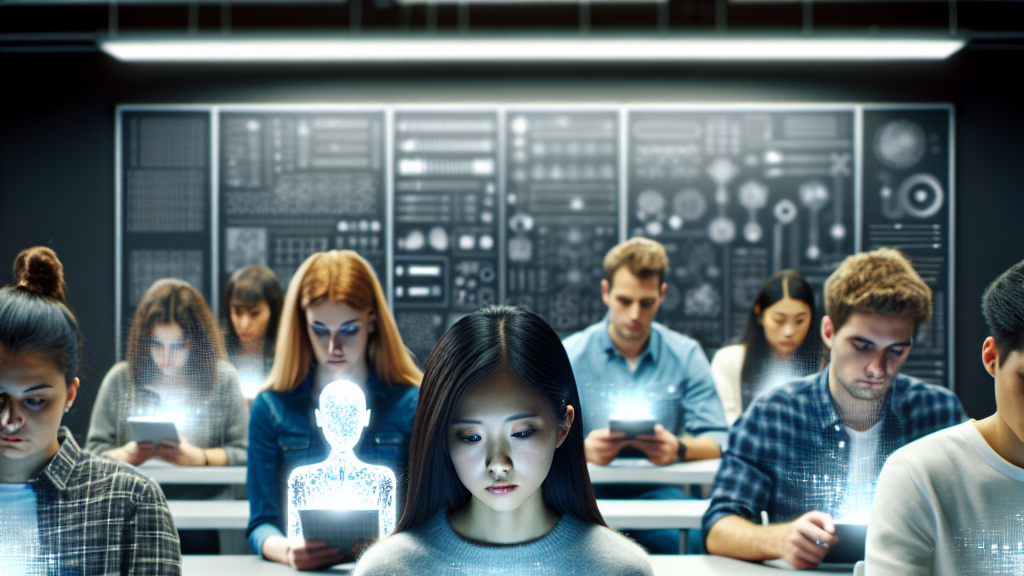
Imagine a world where students, instead of turning to each other for help, ask a computer program their questions. It’s happening right now and dramatically changing the social landscape of learning. While generative AI programs are fantastic for providing instant knowledge and answers, there’s a troubling side effect: students are feeling increasingly lonely and disconnected.
In a recent study conducted with undergrad computing students in North America, researchers found that instead of seeking help from classmates, students now often go straight to generative AI for answers. This shift is reducing peer interactions and makes students feel isolated. This study discovered that the tools designed to help learning might be unintentionally breaking down the support systems that come from chatting, debating, and solving problems together.
Let’s think about the future of learning. If students continue to use AI more than they talk to each other, it could profoundly change how education feels and functions. Imagine a classroom where everyone is facing a screen rather than each other. If we can understand how to balance AI use without losing the essential social aspect of learning, we can create an educational environment where technology and human interaction go hand in hand, fostering a stronger learning community.
Did you know? Over one-third of students now often rely on AI for homework help instead of asking classmates.
FAQs
How does generative AI affect student interactions?
Generative AI is increasingly used by students to find answers, reducing direct peer interactions. This trend contributes to feelings of isolation as students opt for AI over human support.
Why is student isolation a concern?
Social interactions are crucial for developing metacognitive skills, critical thinking, and a sense of belonging. Reduced interaction can negatively impact these essential aspects of learning.
Can generative AI replace peer learning effectively?
While generative AI provides quick answers, it lacks the collaborative aspect of peer learning that encourages discussion, explanation, and deeper understanding. Peer learning fosters skills that AI alone cannot develop.
What potential solutions exist to balance AI use and peer interaction?
Establishing guidelines for AI usage in educational settings and encouraging collaborative activities can help maintain social interactions and preserve peer learning benefits.
Is there a positive side to using generative AI for learning?
Yes, generative AI can offer instant information, personalized learning, and aid in understanding complex topics, but it should complement, not replace, human interactions.
Background
Generative AI tools, like chatbots and machine learning programs, are gaining popularity among students for quick information retrieval and problem-solving. However, these tools, while efficient, can lead to decreased human interaction if students rely on them excessively. Social interaction is a key component of effective learning, allowing students to develop critical thinking and problem-solving skills through discussion and collaboration.
History
The rise of generative AI in education marks a new chapter following the digital learning revolution that introduced computers and online resources into classrooms. Previous studies focused on the potential of AI to enhance learning; however, recent research raises concerns about its impact on vital social interactions. This study builds on these discussions by highlighting the changing dynamics in student help-seeking behavior and the potential decline in peer interactions.
Based on “’All Roads Lead to ChatGPT’: How Generative AI is Eroding Social Interactions and Student Learning Communities” by Irene Hou, Owen Man, Kate Hamilton, Srishty Muthusekaran, Jeffin Johnykutty, Leili Zadeh, Stephen MacNeil, available on arXiv (arxiv.org/abs/2504.09779), used under CC BY 4.0 (creativecommons.org/licenses/by/4.0/).