Connect with us

Search by keyword

Space

What Causes Cosmic Star Explosions?

Scientists have identified gravitational encounters as a possible cause for star explosions, which not only helps us understand space better but could also unlock new cosmic secrets.

What Causes Cosmic Star Explosions
✨Researched by humans. Explained by robots. Learn more.

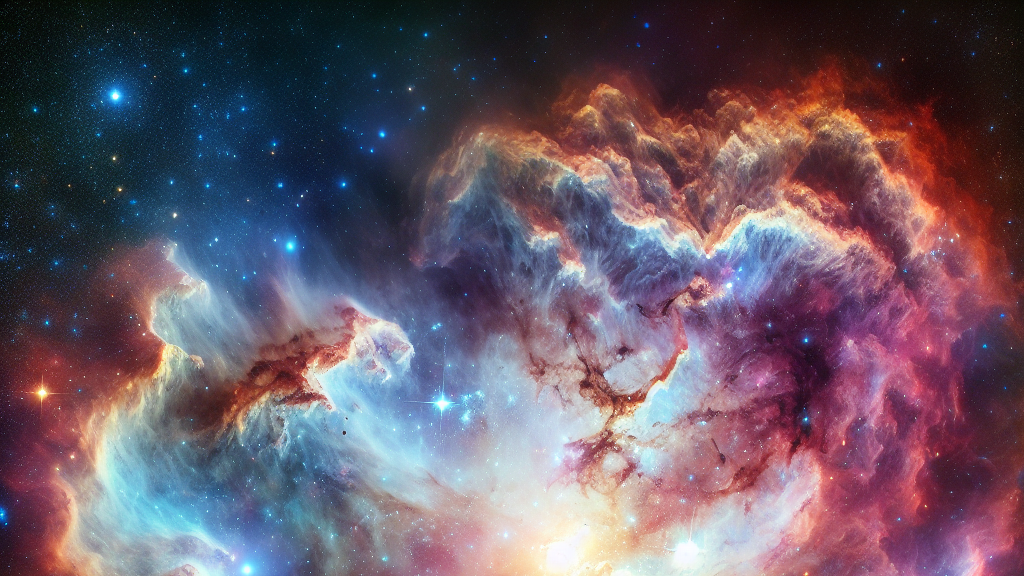
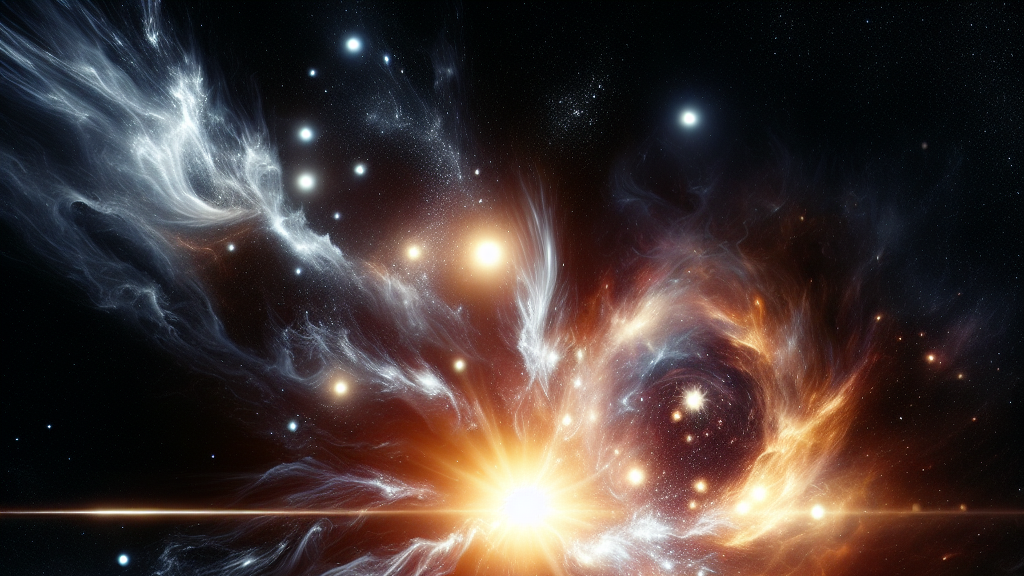
Have you ever wondered what causes those dazzling, explosive outbursts in space, making us marvel at the night sky? Scientists believe they might have uncovered a fascinating piece of the cosmic puzzle! It turns out, these cosmic fireworks could be the result of a gravitational dance between runaway stars and star clusters, potentially unraveling some of space’s most captivating mysteries.

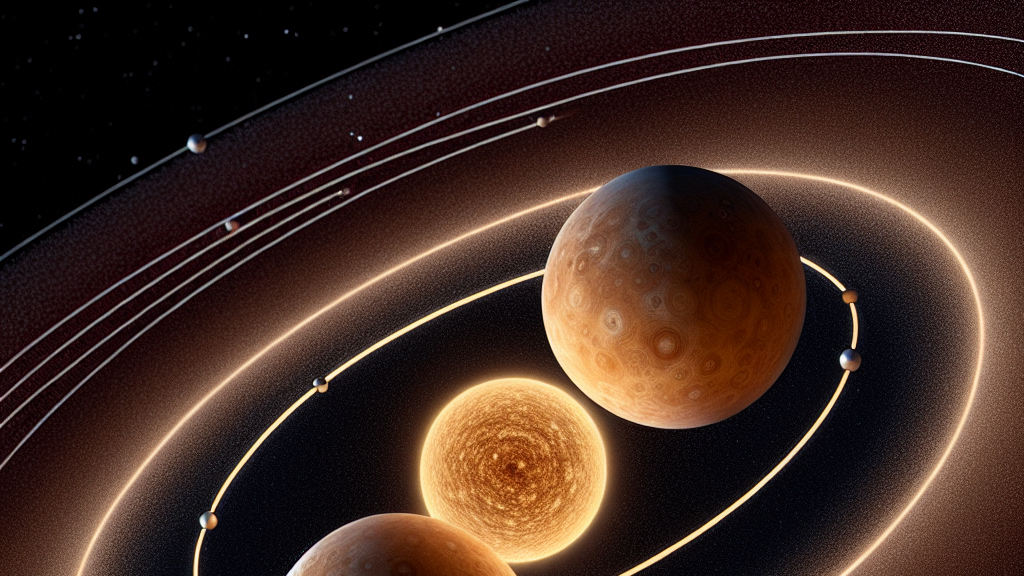
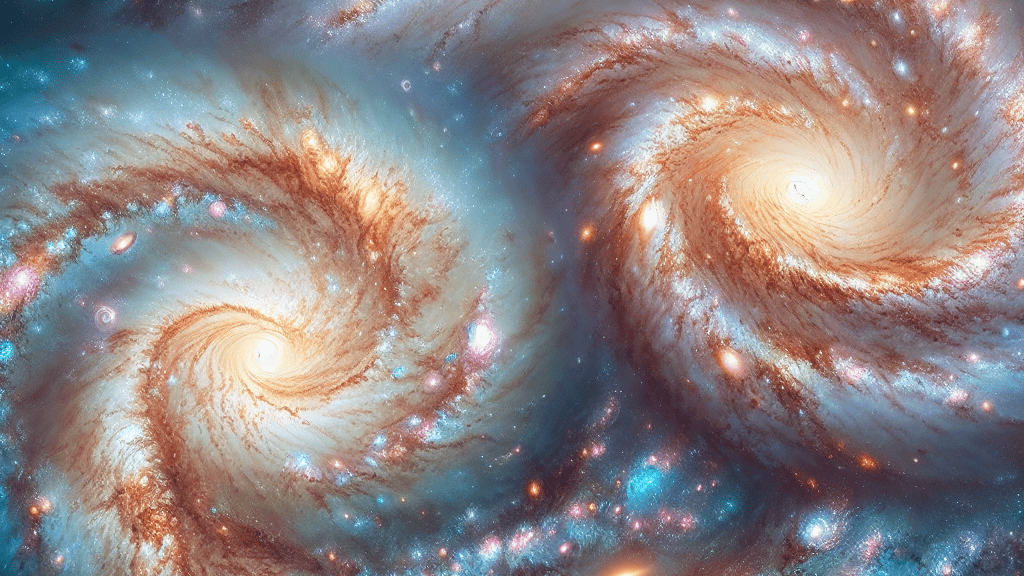
In recent studies, researchers have simulated these interactions to understand how they might trigger explosive outflows. By examining the collision between a massive star and a cluster of smaller stars, scientists were able to determine that when the cluster’s mass is similar to the massive star, a brilliant and powerful burst can occur. This outburst, or explosive outflow, throws stars out of their cluster at impressive speeds, captivating astronomers and stargazers alike.

Imagine this: in the near future, by understanding these cosmic explosions better, scientists could predict when and where they will occur next, offering the potential for awe-inspiring space shows. Furthermore, the research might help us answer more profound questions about how stars and galaxies evolve over time. The universe, it seems, still holds many secrets waiting to unveil themselves to our curious minds.

A runaway star colliding with a cluster can eject stars at speeds faster than the collision itself!

FAQs

What role do runaway stars play in cosmic explosions?

Runaway stars can collide with star clusters, creating gravitational interactions that result in explosive outflows, ejecting stars at high velocities.

How does the mass of a star cluster influence explosive outflows?

When a star cluster’s mass is close to or slightly more than the impacting star’s mass, it can lead to significant explosive outflows, launching stars with high velocities.

Why is understanding explosive outflows important in astronomy?

Explosive outflows provide insights into the dynamics of star formation and galaxy evolution, helping scientists piece together the cosmic story of our universe.

Background

Stars form in clusters, surrounded by gas and dust, where their interactions can lead to dynamic events. When two celestial bodies interact gravitationally, especially if one is a massive runaway star, the energy from their encounter can trigger spectacular outflows. Understanding these gravitational interactions helps us model and predict behaviors in star-forming regions.

History

The study of star formation and explosive outflows dates back to observations of star clusters and nebulae. Over time, scientists have developed models to understand these phenomena, with recent advancements in computer simulations allowing us to explore complex gravitational dynamics. This study builds on decades of astrophysical research, focusing on the potential role of runaway stars in triggering such cosmic displays.

Based on “Gravitationally Induced Explosive Outflows” by Pedro Ruben Rivera-Ortiz, Ary Rodríguez-González, Jorge Cantó, Luis Alberto Zapata, Liliana Hernández-Martínez, Estrella Guzmán Ccolque, Manuel Fernández-López, available on arXiv (arxiv.org/abs/2504.11252), used under CC BY 4.0 (creativecommons.org/licenses/by/4.0/).

Trending

Latest

Can AI Save Water Discover How

Computers

AI is transforming the tech world, but it uses lots of water! A new tool, SCARF, helps us measure and reduce AI's water footprint,...

Whats a Forbush Decrease and Why Should We Care Whats a Forbush Decrease and Why Should We Care

Space

Scientists just observed the biggest solar storm event in years, revealing unexpected cosmic ray patterns. Understanding these changes could help us protect our technology...

Can Cars Spot Danger Faster Than Humans Can Cars Spot Danger Faster Than Humans

Computers

Think about how quickly you react when something unexpected happens on the road. This research brings us closer to creating self-driving cars that can...

Can Fear of the Other Stop Social Harmony Can Fear of the Other Stop Social Harmony

Physics

Fear of the unknown might make it harder for people to agree and get along. This study shows that when people have strong xenophobic...

Can AI Revolutionize Breast Cancer Diagnosis Can AI Revolutionize Breast Cancer Diagnosis

Electricity

This research introduces a groundbreaking AI model that can accurately assess HER2-positive breast cancer using widely accessible staining methods, potentially revolutionizing how we diagnose...

Can AI Transform Your Singing into a Choir Can AI Transform Your Singing into a Choir

Computers

Imagine singing solo and having AI turn you into a choir. This research unveils a groundbreaking AI tool that transforms your voice into rich...

You May Also Like

Space

The Sun's journey from a bustling star cluster might hold clues to its past, revealed by studying the Oort cloud—an outer space region filled...

Space

Scientists simulate cosmic winds blowing stars out of galaxies to understand how these spectacular trails reveal secrets about the universe's workings and our own...

Space

This research sheds light on the enigmatic 'blue straggler' stars found in some star clusters. By understanding how these stars form, scientists can unlock...

Space

Primordial black holes may have played a surprising role in forming the early universe, possibly explaining how some massive black holes came to be....

Space

Scientists found a strange cosmic object that might explain how supermassive black holes formed so rapidly after the Big Bang. Understanding this could change...

Space

Scientists have discovered a massive cloud of material in the middle of the Milky Way that could be a new site for star formation....

Space

Discover two unusual brown dwarfs—those mysterious space objects between stars and planets—and what they reveal about the universe’s hidden secrets.

Space

A new scientific model connects the brightness of galaxies to their dark matter surroundings, offering a clearer view of how galaxies like the Milky...

Space

This research reveals how scientists can map the location of stars and dust in spiral galaxies using light from space telescopes, leading to better...

Copyright © 2024 8ig8rain.

Disclaimer: The content on 8ig8rain.com consists of AI-generated summaries of scientific abstracts from arXiv. Please note that most arXiv abstracts are preprints and may not have undergone formal peer review. While these summaries aim to convey key ideas and potential applications, they are provided for informational purposes only and should not be interpreted as validated scientific findings or professional advice. The summaries are intended to educate, spark curiosity, and inspire further exploration of science.