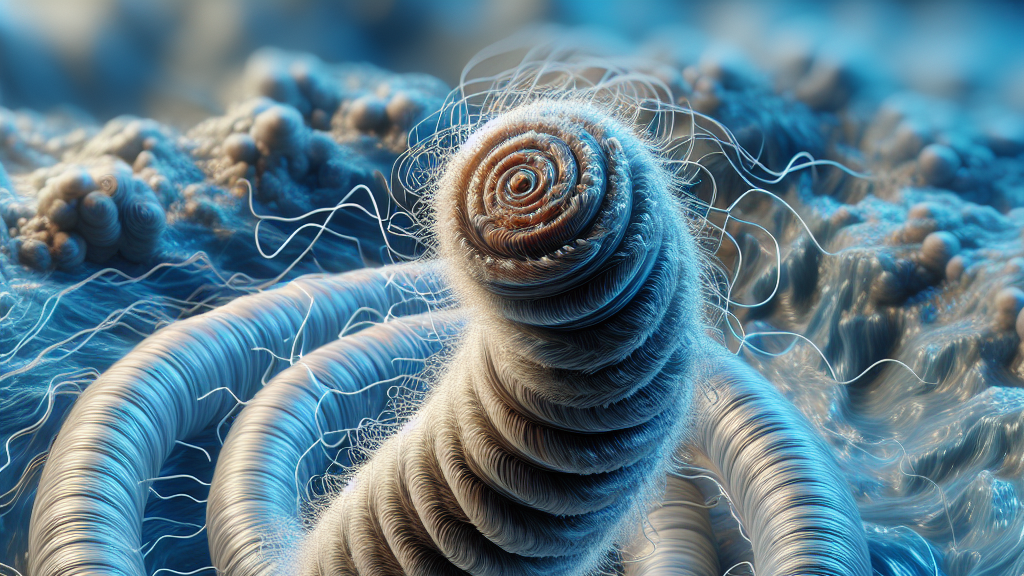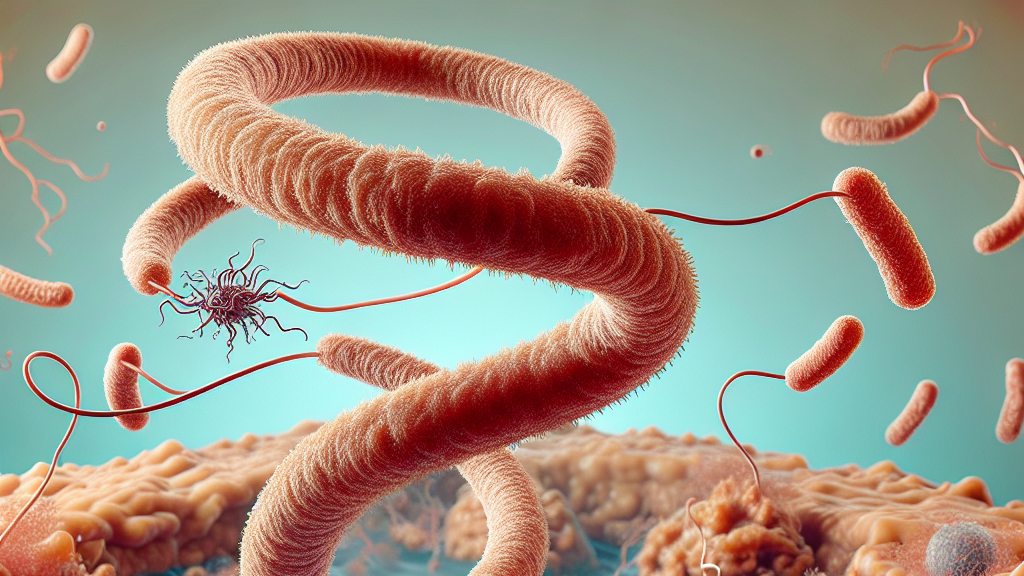
Imagine bacteria as tiny superheroes with the ability to twist and turn through thick, gooey environments. What makes them special is their newfound knack for wrapping their flagella, or tails, around themselves like corkscrews. This unique mode of movement helps them navigate tough terrains, which is crucial for their survival and adaptation.
Recent research has unveiled how bacteria achieve this incredible feat. When a bacterium decides to take the corkscrew approach, its tail undergoes a dramatic transformation. Instead of sticking straight out, it wraps around the bacterium’s body, driven by a fascinating interplay of forces. Scientists have delved into this by running physical experiments and simulations, discovering that the motor inside the bacterium creates a torque that makes the flagellum buckle and twist, propelling the bacteria forward.
This discovery opens up exciting possibilities for medicine. By understanding how bacteria move like this, researchers can potentially devise new ways to prevent bacterial infections or foster beneficial symbiotic relationships. Imagine treatments that could either block harmful bacteria from reaching their destination or encourage helpful bacteria to thrive in our bodies. This could change how we tackle diseases and improve health at the microscopic level.
Some bacteria can wrap their tails and move faster in sticky or confined spaces than in water!
FAQs
What is flagellar wrapping in bacteria?
Flagellar wrapping is a phenomenon where a bacterium wraps its flagellum around its cell body, allowing it to move efficiently through viscous or confined environments. This movement resembles a corkscrew motion.
How does flagellar wrapping help bacteria?
Flagellar wrapping helps bacteria by enabling them to move through thick or tight spaces. This is essential for survival, symbiotic relationships, and even infections, as it helps bacteria reach their desired location.
What role does flagellar wrapping play in infections?
In infections, flagellar wrapping allows bacteria to penetrate dense tissues or mucus layers, reaching their target sites more effectively. By understanding this, we could develop new strategies to prevent infections.
How was the flagellar wrapping phenomenon discovered?
The phenomenon was discovered through advanced microscopy techniques that allowed researchers to observe bacteria’s unique movement. This led to a deeper investigation using physical experiments and simulations to understand the underlying mechanics.
Can understanding flagellar wrapping lead to medical breakthroughs?
Yes, understanding flagellar wrapping can lead to breakthroughs in medicine by providing insights into preventing bacterial infections and fostering beneficial bacterial relationships, potentially changing how we approach microbial treatments.
Background
Bacteria use flagella to move. These are long, whip-like structures that rotate like tiny propellers, pushing the bacterium forward. In specific environments, this movement isn’t efficient, so some bacteria have evolved to wrap their flagella around their bodies like a corkscrew, allowing them to move more effectively through dense or challenging terrains.
History
In the past, scientists mainly understood bacteria as using their flagella as propellers to move efficiently in liquid environments. However, advances in microscopy have unveiled a more complex picture, revealing that bacteria can also use their flagella to wrap around themselves in a corkscrew fashion. This discovery builds on past research by providing a deeper understanding of bacterial motility and revealing new mechanisms that are crucial for bacterial survival and interaction with hosts.
Based on “Bacteria exploit torque-induced buckling instability for flagellar wrapping” by Takuro Kataoka, Taiju Yoneda, Daisuke Nakane, Hirofumi Wada, available on arXiv (arxiv.org/abs/2504.14207), used under CC BY 4.0 (creativecommons.org/licenses/by/4.0/).