Connect with us

Search by keyword

Computers

Do AI Bots Play Favorites? Investigating Bias

This research uncovers hidden biases in AI language models, showing they often favor certain demographics and struggle in scenarios with power differences. Understanding these biases is key to ensuring fairness and equality in technology.

Do AI Bots Play Favorites Investigating Bias
✨Researched by humans. Explained by robots. Learn more.

Imagine your phone being biased against you just because of who you are! That’s what scientists are discovering about large language models, the technology behind AI chatbots and virtual assistants. They’re finding these AI systems might not treat everyone equally, showing preferences or biases based on age, race, or other factors.

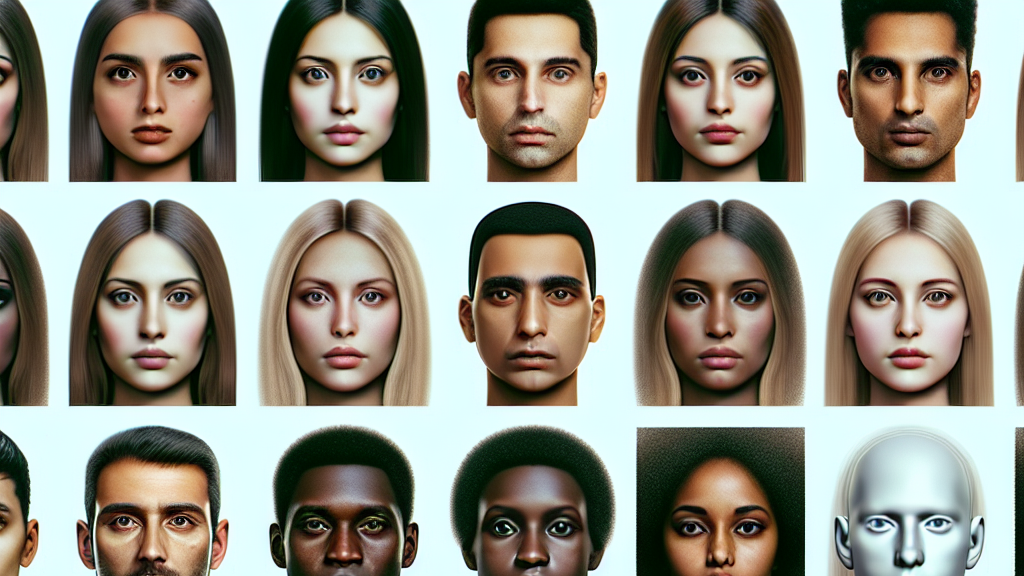
The research looked at AI’s responses to different people and found that these responses often favor certain groups over others. For example, responses tend to align more closely with a ‘default persona’ that mirrors a middle-aged, able-bodied individual from a dominant culture. The team also discovered that when power imbalances are at play—like when one group historically holds more power than another—the bias becomes more pronounced, affecting the quality of AI interactions.

So, what’s the real-world impact here? Well, it means if you’re developing AI tools, considering these biases is crucial to creating fairer, more inclusive technology. Imagine a future where AI can interact seamlessly with everyone, respecting diversity and individuality, and serving as a tool for equality rather than division!

AI language models can inadvertently favor certain demographics, impacting fairness!

FAQs

What does this research reveal about AI language model biases?

This study reveals that AI language models often favor certain demographics, such as middle-aged, able-bodied individuals from dominant cultures, which can impact fairness in technology applications.

How were biases in AI language models measured in this research?

Researchers used a new framework involving cosine distance and Preference Win Rate to evaluate how demographic prompts influence the quality and semantics of responses across various social scenarios.

Why is understanding AI biases important for everyday technology users?

Recognizing AI biases ensures technology can be developed to treat all users equally, offering fair and unbiased interactions regardless of one’s demographic background.

Which demographic was found to be favored by AI language models?

The research suggests a bias toward a ‘default persona’ typically aligned with middle-aged, able-bodied, native-born, Caucasian males with centrist views.

How can this research impact the future development of AI technologies?

By understanding and addressing existing biases, developers can create fairer, more inclusive AI systems that better reflect the diversity of human users.

Background

Large language models (LLMs) are the backbone of many technologies, from your smartphone’s voice assistant to online chatbots. These models are trained on massive amounts of text data to understand and generate human-like language. However, the way they process this data can introduce biases, meaning the models might unknowingly favor certain demographics or ways of thinking over others.

History

The conversation around AI bias began with early machine learning models that showed discrepancies in how they processed input from diverse groups. Over time, researchers found that these models, often trained on unbalanced data, mirrored societal biases present in their training sets. Recent studies have aimed to quantify and mitigate these biases, with newer research, like this one, finding innovative ways to measure and assess them to push for more equitable AI.

Based on “Unmasking Implicit Bias: Evaluating Persona-Prompted LLM Responses in Power-Disparate Social Scenarios” by Bryan Chen Zhengyu Tan, Roy Ka-Wei Lee, available on arXiv (arxiv.org/abs/2503.01532), used under CC BY 4.0 (creativecommons.org/licenses/by/4.0/).


Trending

Latest

Can AI Save Water Discover How

Computers

AI is transforming the tech world, but it uses lots of water! A new tool, SCARF, helps us measure and reduce AI's water footprint,...

Whats a Forbush Decrease and Why Should We Care Whats a Forbush Decrease and Why Should We Care

Space

Scientists just observed the biggest solar storm event in years, revealing unexpected cosmic ray patterns. Understanding these changes could help us protect our technology...

Can Cars Spot Danger Faster Than Humans Can Cars Spot Danger Faster Than Humans

Computers

Think about how quickly you react when something unexpected happens on the road. This research brings us closer to creating self-driving cars that can...

Can Fear of the Other Stop Social Harmony Can Fear of the Other Stop Social Harmony

Physics

Fear of the unknown might make it harder for people to agree and get along. This study shows that when people have strong xenophobic...

Can AI Revolutionize Breast Cancer Diagnosis Can AI Revolutionize Breast Cancer Diagnosis

Electricity

This research introduces a groundbreaking AI model that can accurately assess HER2-positive breast cancer using widely accessible staining methods, potentially revolutionizing how we diagnose...

Can AI Transform Your Singing into a Choir Can AI Transform Your Singing into a Choir

Computers

Imagine singing solo and having AI turn you into a choir. This research unveils a groundbreaking AI tool that transforms your voice into rich...

You May Also Like

Computers

This research explores how AI models designed to understand both images and words might improve their performance simply by teaching themselves to think better....

Computers

Imagine if playing games could make a computer program better at understanding and creating text! This research suggests that by using creative tasks like...

Computers

Imagine a super-smart AI that can watch your daily life in real-time and remember everything without taking up much space. This research shows how...

Computers

This research explores how artificial intelligence language-powered robots might think they're seeing things that aren't actually there. Investigating this quirk could lead to more...

Computers

This research delves into how AI-generated images can reinforce societal biases, urging for more inclusive practices to ensure fair and diverse representation. It examines...

Computers

This exciting study reveals that just like us, AI has its own biases that can skew its thinking, especially when solving problems. Understanding and...

Computers

Artificial intelligence systems favor attractive faces, linking them to traits like intelligence, and struggle more to accurately classify less-attractive, non-White female faces. This raises...

Computers

This research uncovers vulnerabilities in AI that could expose private and sensitive data while fine-tuning these models for specific fields like healthcare. By understanding...

Computers

Discover how language models might not be as random as we thought! By examining their decision-making processes, researchers found that these models can sometimes...

Copyright © 2024 8ig8rain.

Disclaimer: The content on 8ig8rain.com consists of AI-generated summaries of scientific abstracts from arXiv. Please note that most arXiv abstracts are preprints and may not have undergone formal peer review. While these summaries aim to convey key ideas and potential applications, they are provided for informational purposes only and should not be interpreted as validated scientific findings or professional advice. The summaries are intended to educate, spark curiosity, and inspire further exploration of science.