Cracks in materials can be a real headache, leading to everything from minor repairs to catastrophic failures. Traditionally, predicting how and where these cracks will form has been a tricky business, often resulting in over-engineered solutions that waste time and money. But what if we could get it just right? Enter the world of phase-field fracture models, where complex patterns of crack growth can be predicted with precision, potentially transforming fields like construction, aerospace, and beyond.
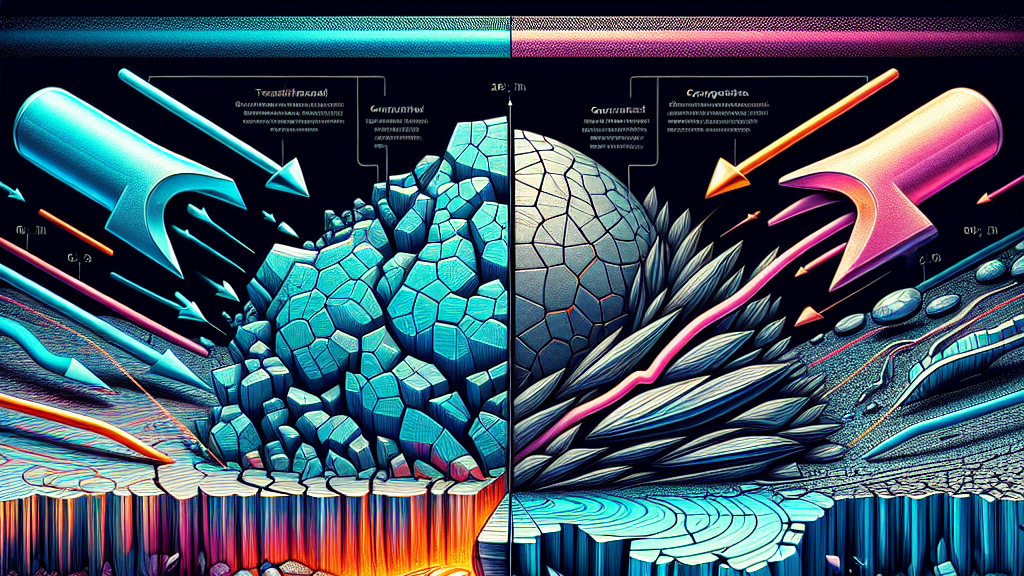
This research delves into the nitty-gritty of making fracture models more accurate by addressing a common oversight: failing to consider crack direction. Current models don’t distinguish between the stresses that should and shouldn’t affect crack growth, leading to unnecessary, unexpected cracks. This new approach uses the direction of the crack to separate stresses that promote growth from those that don’t. The result? A model that treats the material correctly based on whether crack faces open, slide, or contact under stress.
Imagine you’re designing a bridge, and instead of guessing where cracks might form or overbuilding for safety, you can shape your decisions based on precise predictions. This method not only saves resources but enhances safety, reducing the risk of sudden material failure. By applying these novel models, the future of engineering could be smarter, safer, and more efficient. Think of it like having a crystal ball for crack prevention in structures, taking the guesswork out of structural integrity.
Cracks can propagate through a structure at speeds up to 3,500 meters per second, faster than the speed of sound in some materials!
FAQs
How do phase-field fracture models improve crack growth prediction?
Phase-field fracture models improve prediction by accurately distinguishing between crack-normal and crack-parallel stresses, which allows them to predict crack growth more accurately and prevent errors from arising due to misinterpretation of stress.
Why is it important to distinguish between crack-normal and crack-parallel stresses?
Distinguishing between these stresses is crucial because only crack-normal stresses drive crack growth, while crack-parallel stresses do not, preventing misleading predictions of material failure.
How could this research impact real-world engineering projects?
This research could lead to more efficient designs and safer structures by providing engineers with precise information about potential crack growth, removing the need for over-engineering and reducing the risk of unforeseen material failures.
What makes the new fracture modeling approach unique compared to previous models?
The new approach is unique because it incorporates crack direction into its calculations, which effectively differentiates between stress types, resolving issues with unphysical predictions found in older models.
What industries could benefit the most from these advanced fracture models?
Industries such as construction, aerospace, automotive, and any field involving material durability and longevity could significantly benefit from applying these advanced fracture models.
Background
Phase-field fracture models are a type of mathematical model used in material science to simulate crack formation and propagation in materials. Traditional models often do not adequately consider the direction of applied stresses, which can lead to incorrect predictions of material behavior under load. By incorporating crack direction into these models, researchers can more accurately predict how materials will respond to stress, particularly distinguishing the stresses that contribute to crack growth from those that do not.
History
The study of fracture mechanics has evolved significantly from simple empirical methods to complex simulations. Early models focused on basic stress and strain relationships, but as computational power increased, more advanced techniques like phase-field modeling emerged. This specific study builds on past work by addressing the limitations of earlier models that failed to account for the directionality of stresses relative to the crack itself.
Based on “Crack Face Contact Modeling is Essential to Predict Crack-Parallel Stresses” by Maryam Hakimzadeh, Noel Walkington, Carlos Mora-Corral, George Gazonas, Kaushik Dayal, available on arXiv (arxiv.org/abs/2504.16794), used under CC BY 4.0 (creativecommons.org/licenses/by/4.0/).