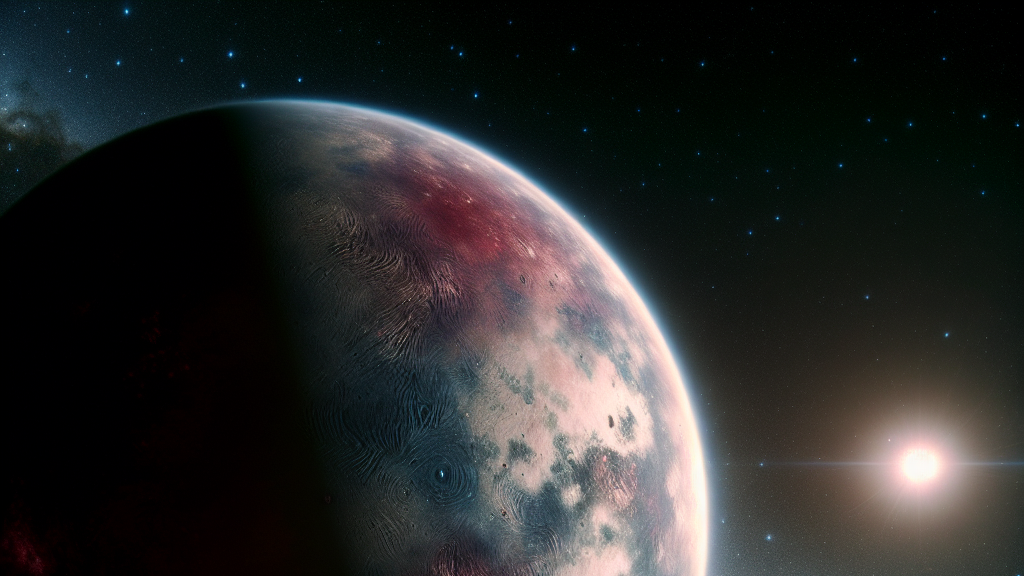
Imagine if I told you that the best place to find aliens isn’t the classic alien-hunting spots we’ve been scoping out, but rather in the places we least expect? Welcome to a new way of thinking about where extraterrestrial life might be hiding. By using probability theory, scientists are suggesting that we shift our cosmic search zones.
This research dives into the concept of ‘peribiosignatures,’ which are signs of life found in places where we didn’t expect life to exist. Think of it like finding a cactus in an icy desert! Using the principles of Gaia theory, which looks at Earth as one living organism, researchers propose that habitability itself could act as a ‘peribiosignature.’ So, why not peek at those less obvious, more mysterious planetary spots?
So what does this mean for us Earthlings? Well, if space scientists start looking in these unusual places, we might get answers to the age-old question: are we alone in the universe? One day, this could mean new telescopes focusing on the fringes of habitable zones where life could lurk, far from the cozy, sunny belts we’ve been dreaming about. Imagine the thrill of finding life where we presumed it was impossible!
Did you know planets on the edge of the habitable zone might be the best places to find aliens?
FAQs
What are biosignatures and why are they important in space research?
Biosignatures are chemical, physical, or biological indicators that suggest the presence of life. They are vital in space research because they help scientists detect potential signs of life on other planets, advancing our understanding of life beyond Earth.
How does Gaia theory relate to the search for extraterrestrial life?
Gaia theory suggests that Earth acts like a single, living organism where life significantly alters its environment. Applying this to space research, it implies that planets may show signs of life differently based on their unique environments, leading researchers to consider habitability as a peribiosignature.
What makes searching the edges of habitable zones promising for finding life?
Searching the edges of habitable zones might reveal life in places we’ve overlooked, as conditions here can still sustain life, perhaps even better than the ‘Goldilocks’ zones we’ve typically explored. This approach could unravel new secrets about where life could exist in the universe.
Why are ‘peribiosignatures’ significant in the study of extraterrestrial life?
‘Peribiosignatures’ suggest potential life in unlikely places, urging researchers to expand their investigations beyond traditional habitable zones. This could lead to discovering life forms we hadn’t considered before, fundamentally shifting our perspective on the universe.
How can probability theory enhance the search for alien life?
Probability theory helps in assessing the likelihood of discovering biosignatures across different environments. By evaluating where life is probable or improbable, scientists can better plan their exploration, potentially increasing the chances of finding convincing evidence of alien life.
Background
In space exploration, scientists really want to find signs of life, or biosignatures, on other planets. Probability theory helps them figure out the best places to look. Using Gaia theory, which thinks of Earth as one big organism, they suggest that areas traditionally not considered might actually hold signs of life. It’s like thinking outside the box when it comes to hunting for aliens.
History
Historically, space exploration focused on finding life in zones similar to Earth’s environment, which we call the ‘habitable zone’ or ‘Goldilocks zone.’ But recent studies, like this one, argue that’s too limiting. Past research established the idea of biosignatures, but now scientists are branching out, suggesting new areas to explore based on unique planetary contexts, supported by theories of planetary habitability.
Based on “Life on the Edge: Using Planetary Context to Enhance Biosignatures and Avoid False Positives” by Rudy Arthur, Arwen E. Nicholson, Nathan J. Mayne, available on arXiv (arxiv.org/abs/2504.18431), used under CC BY 4.0 (creativecommons.org/licenses/by/4.0/).