Connect with us

Search by keyword

Space

What Happens When Stars Dance with Black Holes?

Stars near black holes might change dramatically due to cosmic forces, leading to fascinating cosmic events and possibly even new discoveries of faint celestial phenomena.

What Happens When Stars Dance with Black Holes
✨Researched by humans. Explained by robots. Learn more.

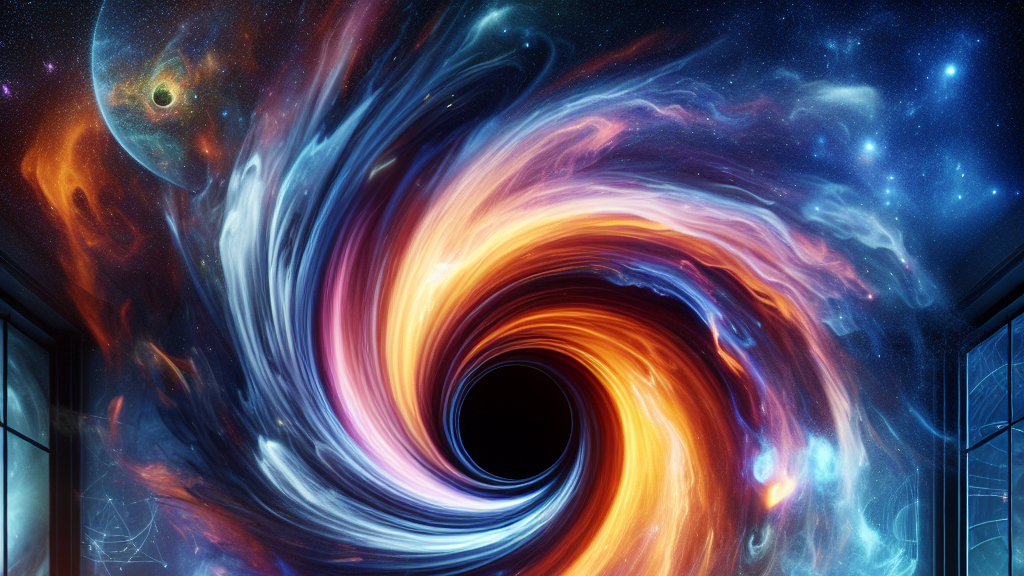
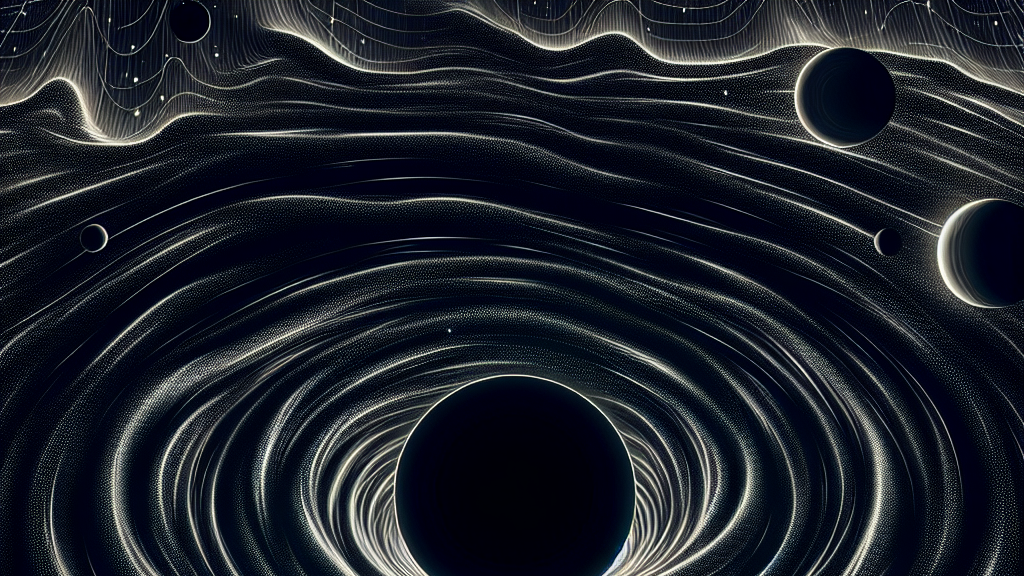
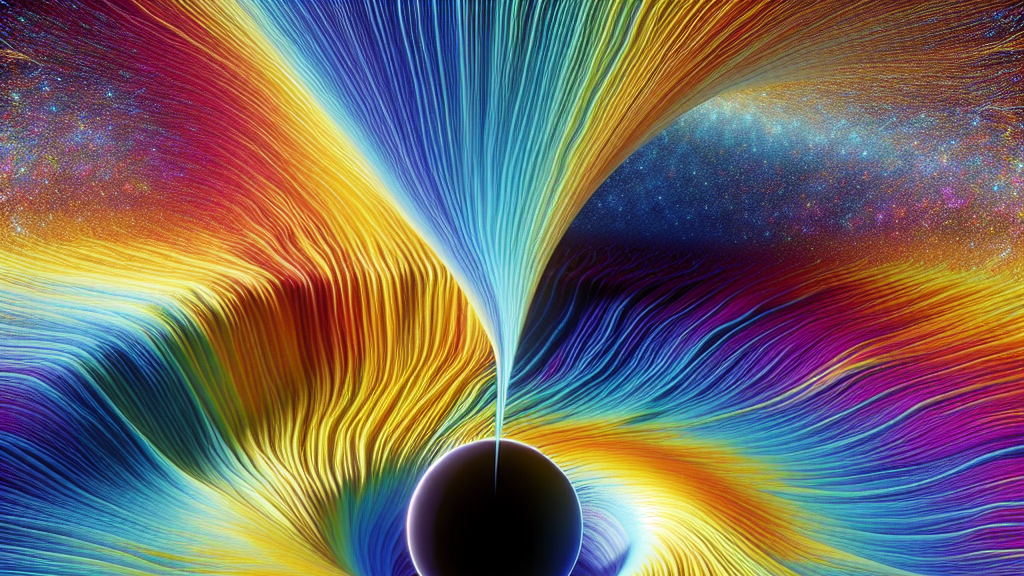
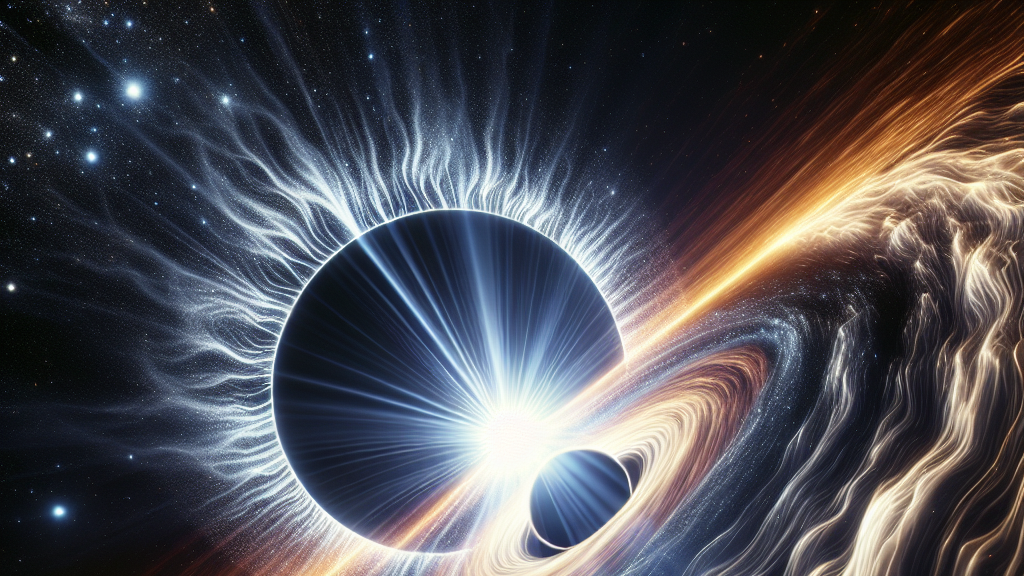
Imagine gazing up into the night sky and knowing that deep within some galaxies, stars are twisting and transforming in ways we can barely comprehend. These extraordinary dances occur when stars orbit close to supermassive black holes. The intense gravitational pull and tidal forces from the black hole can stretch the star like a piece of cosmic taffy, altering its very structure and potentially causing it to lose mass in a spectacular manner.

Researchers using advanced models have uncovered that this interaction causes a process known as tidal heating, where the star’s internal structure heats up and expands due to the gravitational forces. This heating can lead to mass transfer—the star sheds its outer layers, creating what we might detect as low-luminosity galactic nuclei. This is fascinating because it suggests many galaxies could host these quietly active centers, reshaping our understanding of cosmic life cycles.

In the future, these insights could help us spot new, faint cosmic phenomena—like previously undetected galactic centers that are not as bright as known ones. It may also help explain mysterious cosmic eruptions and stellar behaviors observed from Earth. By studying these unique stellar interactions, scientists hope to map out the hidden dynamics of the universe and perhaps predict cosmic events before they happen!

Some stars near black holes may lose mass about 100,000 times the mass of Earth every year!

FAQs

What happens to stars near supermassive black holes?

Stars near supermassive black holes can experience tidal heating, transforming their structure and potentially causing them to lose mass in spectacular cosmic events.

Can these changes in stars create new cosmic phenomena?

Yes, the mass transfer from stars near black holes can lead to low-luminosity active galactic nuclei and possibly explain certain cosmic eruptions and behaviors observed from Earth.

Why is tidal heating important for stars near black holes?

Tidal heating is important because it influences the rate of mass transfer from stars, affecting the stability and outcome of their interactions with black holes.

What real-world discoveries could this research lead to?

This research might reveal new faint cosmic phenomena, improve our understanding of galaxy dynamics, and help predict cosmic events.

How do gravitational waves factor into this research?

Gravitational waves play a role in the orbital decay of stars around black holes, but the rate of mass transfer is more directly influenced by tidal heating, offering a unique aspect of star-black hole interactions.

Background

Stars are held together by their own gravity, forming a balance between pressure and temperature. When they orbit close to massive entities like supermassive black holes, intense gravitational forces can distort or stretch these stars, causing internal changes. This process of tidal heating involves the star’s energy being redistributed due to these gravitational forces, often causing the star’s structure to expand and alter its evolutionary path.

History

The study of stars interacting with black holes has evolved as our tools for observing the universe have improved. Initially, scientists focused on the gravitational pull of black holes, but over time, they noticed how these forces could also heat and change stars. The discovery of low-luminosity galactic nuclei and tidal disruptions has brought new focus to how these stellar transformations play out, refining our understanding of cosmic events that were once considered isolated or rare.

Based on “Mass Transfer in Tidally Heated Stars Orbiting Massive Black Holes and Implications for Repeating Nuclear Transients” by Philippe Z. Yao, Eliot Quataert, available on arXiv (arxiv.org/abs/2505.10611), used under CC BY 4.0 (creativecommons.org/licenses/by/4.0/).

Trending

Latest

Can AI Save Water Discover How

Computers

AI is transforming the tech world, but it uses lots of water! A new tool, SCARF, helps us measure and reduce AI's water footprint,...

Whats a Forbush Decrease and Why Should We Care Whats a Forbush Decrease and Why Should We Care

Space

Scientists just observed the biggest solar storm event in years, revealing unexpected cosmic ray patterns. Understanding these changes could help us protect our technology...

Can Cars Spot Danger Faster Than Humans Can Cars Spot Danger Faster Than Humans

Computers

Think about how quickly you react when something unexpected happens on the road. This research brings us closer to creating self-driving cars that can...

Can Fear of the Other Stop Social Harmony Can Fear of the Other Stop Social Harmony

Physics

Fear of the unknown might make it harder for people to agree and get along. This study shows that when people have strong xenophobic...

Can AI Revolutionize Breast Cancer Diagnosis Can AI Revolutionize Breast Cancer Diagnosis

Electricity

This research introduces a groundbreaking AI model that can accurately assess HER2-positive breast cancer using widely accessible staining methods, potentially revolutionizing how we diagnose...

Can AI Transform Your Singing into a Choir Can AI Transform Your Singing into a Choir

Computers

Imagine singing solo and having AI turn you into a choir. This research unveils a groundbreaking AI tool that transforms your voice into rich...

You May Also Like

Space

Scientists have discovered a new way that tiny early-universe structures might grow into massive black holes, potentially changing our understanding of cosmic evolution! This...

General Relativity and Quantum Cosmology

Researchers have uncovered a potential connection between the behavior of black holes and elusive dark matter particles. This exciting discovery may change how we...

General Relativity and Quantum Cosmology

Imagine using a tabletop setup to mimic the intense gravitational effects of a black hole! These 'gravity simulators' are pushing the boundaries of what...

General Relativity and Quantum Cosmology

Scientists are finding that black holes might not be the simple, spherical giants we once thought—they could have fractal edges, with surprising effects on...

Space

Jellyfish galaxies are cosmic wonders where dramatic transformations happen because of their harsh surroundings. This study reveals how their unique 'tails' hint at active,...

General Relativity and Quantum Cosmology

Ever wondered if black holes could be studied right here on Earth? Scientists are using creative lab setups to mimic the strange physics around...

General Relativity and Quantum Cosmology

Scientists are bringing the mysteries of black holes into the lab by creating small-scale experiments that simulate their incredible gravitational forces. This means we...

Space

Dark matter around black holes might help us detect subtle cosmic signals, leading to new discoveries about the universe with advanced space technology.

Math

Scientists have harnessed AI to model shockwaves around black holes, which could revolutionize our understanding of extreme space environments, potentially impacting future space exploration...

Copyright © 2024 8ig8rain.

Disclaimer: The content on 8ig8rain.com consists of AI-generated summaries of scientific abstracts from arXiv. Please note that most arXiv abstracts are preprints and may not have undergone formal peer review. While these summaries aim to convey key ideas and potential applications, they are provided for informational purposes only and should not be interpreted as validated scientific findings or professional advice. The summaries are intended to educate, spark curiosity, and inspire further exploration of science.