Connect with us

Search by keyword

Computers

Can Machines Learn Like the Human Brain?

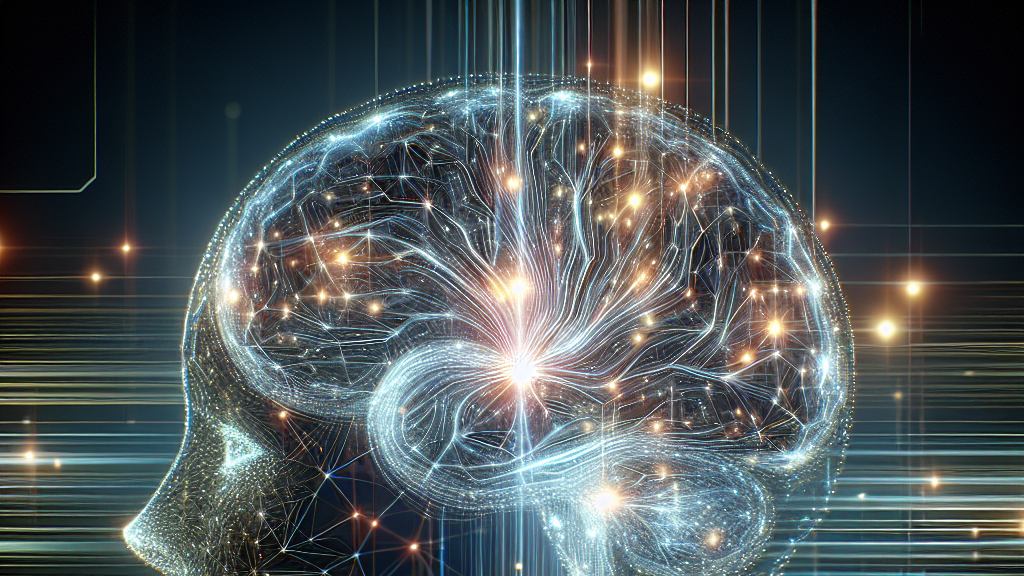
Imagine if computers could learn like our brains do, becoming smarter over generations. Evolutionary conditioning could make artificial neural networks learn faster and with less data, potentially transforming AI as we know it.

Can Machines Learn Like the Human Brain
✨Researched by humans. Explained by robots. Learn more.

Have you ever wondered why it takes AI so long to learn simple tasks compared to how humans or animals pick up new tricks? Well, scientists are diving into how our brains naturally evolve over generations to quickly learn and adapt. They are trying to teach machines to mimic this, essentially giving them a head start by embedding certain ‘instincts’ or setups from the get-go.

This new research shows that instead of starting with a blank slate, like we do with most AI today, allowing them to ‘inherit’ some learnings through a process similar to natural selection could be a game-changer. By merging evolutionary strategies with AI training, scientists are discovering that these systems can show unique learning behaviors and even adapt quicker when fine-tuned for specific tasks.

Imagine a future where your smartphone or computer could learn new features or adapt to your habits in a fraction of the time it takes today! This isn’t just faster computing; it’s about making machines practically intuitive, anticipating our needs with minimal input. This kind of tech could revolutionize personal assistants, self-driving cars, and more, all by taking a page from Mother Nature’s playbook.

Did you know that while a typical AI needs hundreds of thousands of examples to learn something new, humans can learn from just a handful?

FAQs

How does evolutionary conditioning improve learning in artificial neural networks?

Evolutionary conditioning allows artificial neural networks to start with optimized structures derived from simulated natural selection, enabling faster learning with fewer data inputs.

Why is evolutionary conditioning important for AI advancement?

By mimicking the way biological brains evolve, evolutionary conditioning could lead to AI systems that are more adaptive and require less training data, making them more efficient.

What real-world applications could benefit from AI mimicking human brain learning?

Applications like personal digital assistants, self-driving cars, and robotics could greatly benefit, becoming more intuitive and responsive to real-time changes without needing extensive retraining sessions.

Is this approach being used in current AI technologies?

While still in the research phase, evolutionary conditioning for AI is starting to be explored in experimental setups and could be integrated into future AI technologies.

What are the biggest challenges of applying evolutionary conditioning to AI?

The main challenges include developing accurate algorithms to simulate evolutionary processes and ensuring these strategies can be scaled up for complex AI systems.

Background

To understand this research, it’s essential to grasp what neural networks are. They’re like computer-based systems that mimic how our brains work but require a ton of data to learn—unlike humans or animals that learn quicker through evolution. Evolutionary conditioning seeks to bridge this gap, taking cues from how organisms naturally evolve over generations, possessing pre-set structures allowing for rapid learning.

History

The concept of neural networks dates back to the 1940s when scientists first began modeling how neurons in our brains might work using math. Over decades, this evolved into creating artificial networks to replicate these functions. The idea of evolutionary algorithms in AI traces back to the 1960s, inspired by Charles Darwin’s theory of natural selection, and has grown to show potential for enhancing machine learning.

Based on “Evolution imposes an inductive bias that alters and accelerates learning dynamics” by Benjamin Midler, Alejandro Pan Vázquez, available on arXiv (arxiv.org/abs/2505.10651), used under CC BY 4.0 (creativecommons.org/licenses/by/4.0/).

Trending

Latest

Can AI Save Water Discover How

Computers

AI is transforming the tech world, but it uses lots of water! A new tool, SCARF, helps us measure and reduce AI's water footprint,...

Whats a Forbush Decrease and Why Should We Care Whats a Forbush Decrease and Why Should We Care

Space

Scientists just observed the biggest solar storm event in years, revealing unexpected cosmic ray patterns. Understanding these changes could help us protect our technology...

Can Cars Spot Danger Faster Than Humans Can Cars Spot Danger Faster Than Humans

Computers

Think about how quickly you react when something unexpected happens on the road. This research brings us closer to creating self-driving cars that can...

Can Fear of the Other Stop Social Harmony Can Fear of the Other Stop Social Harmony

Physics

Fear of the unknown might make it harder for people to agree and get along. This study shows that when people have strong xenophobic...

Can AI Revolutionize Breast Cancer Diagnosis Can AI Revolutionize Breast Cancer Diagnosis

Electricity

This research introduces a groundbreaking AI model that can accurately assess HER2-positive breast cancer using widely accessible staining methods, potentially revolutionizing how we diagnose...

Can AI Transform Your Singing into a Choir Can AI Transform Your Singing into a Choir

Computers

Imagine singing solo and having AI turn you into a choir. This research unveils a groundbreaking AI tool that transforms your voice into rich...

You May Also Like

Computers

Dive into the world of AI mistrust, where computers don't always know when they're wrong! Discover how teaching AI to see like us might...

Computers

Imagine if AI could 'feel' fear to dodge danger! Researchers are tapping into biological and psychological insights to make machines smarter, using concepts like...

Computers

This research shows how a new AI approach can make detecting hacker attacks more reliable and adaptable, potentially transforming how we keep our digital...

Space

AI is stepping up its game in the hunt for dark matter, using pulsars to decode mysterious cosmic signals that could change how we...

Computers

Ever wondered if we can make AI models smaller without losing any information? This new technique called ZipNN can save a ton of space...

Electricity

Ever wondered if your car could drive perfectly on its own, handling turns and bumps like a pro? This research is taking us a...

Math

Scientists have harnessed AI to model shockwaves around black holes, which could revolutionize our understanding of extreme space environments, potentially impacting future space exploration...

Computers

This research unlocks the potential of teaching AI to learn in a way that mimics human cognition, using a groundbreaking approach that focuses on...

Computers

Zeta Neural Networks could revolutionize tech by improving how digital brains learn and understand complex patterns, potentially reshaping everything from gaming to medical diagnostics.

Copyright © 2024 8ig8rain.

Disclaimer: The content on 8ig8rain.com consists of AI-generated summaries of scientific abstracts from arXiv. Please note that most arXiv abstracts are preprints and may not have undergone formal peer review. While these summaries aim to convey key ideas and potential applications, they are provided for informational purposes only and should not be interpreted as validated scientific findings or professional advice. The summaries are intended to educate, spark curiosity, and inspire further exploration of science.