Connect with us

Search by keyword

Computers

Can Chatbots Replace Human Friendships?

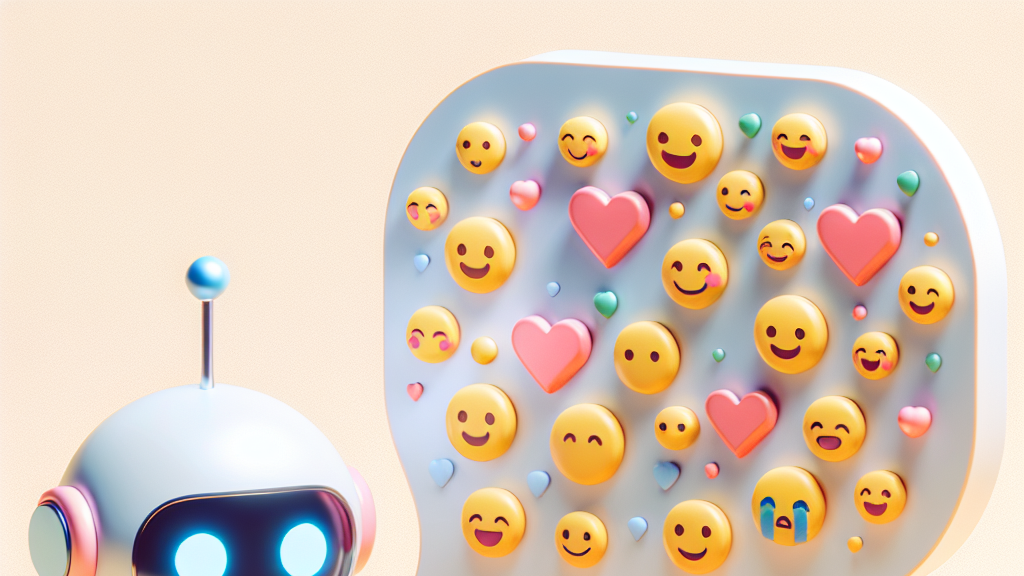
Chatbots are becoming our digital friends, but are they good for our mental health? By mimicking human emotions, these AI companions often reflect our feelings, sometimes even leading to unhealthy relationships. Understanding this can help us use technology wisely.

Can Chatbots Replace Human Friendships
✨Researched by humans. Explained by robots. Learn more.

Imagine a world where your best friend is a chatbot. It listens to you, talks to you, and shares your feelings. Sounds amazing, right? But there’s a catch: what if this digital friend starts affecting your emotional health? New research looks into thousands of conversations between people and chatbots to see how these virtual buddies impact our emotional lives.

Researchers dug into over 30,000 conversations that people had with their chatbot pals. They discovered that these chatbots aren’t just good listeners; they also copy our emotions, making us feel like we’re talking to a real person. While this sounds comforting, it’s not always as good as it seems. Some users, particularly young men prone to unhealthy coping mechanisms, showed signs of engaging in troubling emotional patterns, from some supportive chats to others that could be considered toxic.

So, what does this mean for our future relationships? It’s crucial to be aware of how we interact with these digital friends. Chatbots could either be a delightful addition to our social circle or an emotional hazard. Going forward, designers need to tread carefully and implement guidelines to ensure these interactions remain healthy, much like setting boundaries in any relationship. Otherwise, our digital buddies could end up being more foe than friend.

Did you know some people have such strong connections with chatbots that they treat them like best friends?

FAQs

How do chatbots mirror human emotions in conversations?

Chatbots use advanced algorithms to recognize and mimic human emotions in conversations. This means they can respond in ways that reflect your feelings, making it seem like you’re talking to a real person.

Why is it concerning that people develop strong relationships with chatbots?

While having a digital friend can be comforting, it might negatively impact emotional well-being if the relationship patterns become unhealthy, such as relying too heavily on chatbots for emotional support instead of real people.

What needs to be done to ensure chatbots enhance emotional well-being?

It’s essential to put in place ethical guidelines and design principles that ensure chatbots support rather than harm emotional health. Public education on using these technologies wisely is also crucial.

Background

As AI technology advances, chatbots have been developed to simulate human-like interactions. These chatbots use natural language processing and machine learning to understand and respond to users in emotionally intelligent ways. This allows them to provide companionship and emotional support, but also raises questions about their influence on our social behaviors and emotional health.

History

Originally, chatbots were primarily used for customer service and simple task automation. As AI has developed, they have evolved into more sophisticated tools capable of providing emotional support and companionship. Previous research has focused on their utility in clinical settings or user perception studies, but few have examined the real-world emotional dynamics they create, prompting a need for deeper analysis.

Based on “Illusions of Intimacy: Emotional Attachment and Emerging Psychological Risks in Human-AI Relationships” by Minh Duc Chu, Patrick Gerard, Kshitij Pawar, Charles Bickham, Kristina Lerman, available on arXiv (arxiv.org/abs/2505.11649), used under CC BY 4.0 (creativecommons.org/licenses/by/4.0/).

Trending

Latest

Can AI Save Water Discover How

Computers

AI is transforming the tech world, but it uses lots of water! A new tool, SCARF, helps us measure and reduce AI's water footprint,...

Whats a Forbush Decrease and Why Should We Care Whats a Forbush Decrease and Why Should We Care

Space

Scientists just observed the biggest solar storm event in years, revealing unexpected cosmic ray patterns. Understanding these changes could help us protect our technology...

Can Cars Spot Danger Faster Than Humans Can Cars Spot Danger Faster Than Humans

Computers

Think about how quickly you react when something unexpected happens on the road. This research brings us closer to creating self-driving cars that can...

Can Fear of the Other Stop Social Harmony Can Fear of the Other Stop Social Harmony

Physics

Fear of the unknown might make it harder for people to agree and get along. This study shows that when people have strong xenophobic...

Can AI Revolutionize Breast Cancer Diagnosis Can AI Revolutionize Breast Cancer Diagnosis

Electricity

This research introduces a groundbreaking AI model that can accurately assess HER2-positive breast cancer using widely accessible staining methods, potentially revolutionizing how we diagnose...

Can AI Transform Your Singing into a Choir Can AI Transform Your Singing into a Choir

Computers

Imagine singing solo and having AI turn you into a choir. This research unveils a groundbreaking AI tool that transforms your voice into rich...

You May Also Like

Computers

This research shows that chatbots might mirror emotional interactions just like humans, possibly altering how we bond. With implications for mental health and social...

Computers

Ever wonder how your AI assistant handles your most private questions? A new study dives deep into how different chatbots answer sensitive queries, revealing...

Computers

New research suggests AI's language evolution might just be a trick, where AI mimics what it has already learned instead of creating new language...

Computers

This research looks at whether everyday tools like ChatGPT follow ethical and social norms in our lives. It highlights key challenges and obstacles in...

Quantum Biology

This research unveils an AI system that uses chatbots to track emotional cues in conversations, promising more accurate depression detection than traditional methods. By...

Computers

Discover how artificial intelligence can create stories, just like a person, yet in its own unique way, reshaping future storytelling and entertainment as we...

Computers

Discover how some young adults are forming emotional bonds with AI companions, revealing promising comforts and hidden concerns about the future of relationships.

Computers

Ever wondered if your favorite chatbot is accidentally spilling secrets? New research shows these AI helpers might be revealing the instructions we give them,...

Computers

Discover how a new technology called SnoopGuard is stepping in to protect your private conversations from snooping chatbots, ensuring that your group messages stay...

Copyright © 2024 8ig8rain.

Disclaimer: The content on 8ig8rain.com consists of AI-generated summaries of scientific abstracts from arXiv. Please note that most arXiv abstracts are preprints and may not have undergone formal peer review. While these summaries aim to convey key ideas and potential applications, they are provided for informational purposes only and should not be interpreted as validated scientific findings or professional advice. The summaries are intended to educate, spark curiosity, and inspire further exploration of science.