Imagine a world where machines can turn chaos into order—where they can take a random jumble of noise and morph it into something structured and meaningful. This isn’t science fiction; it’s what cutting-edge AI models known as diffusion models are starting to achieve. By leveraging the link between deep learning and information theory, these models restore order to chaos, much like turning a cloudy sky into a tapestry of constellations.
At the heart of this research is a concept called neural entropy. Think of it as a measure of how efficiently these models can compress and organize data. Diffusion models work by first diffusing structured data into noise, like scrambling a picture into static. During training, the model learns to reverse this process, effectively memorizing the pattern to recreate the original data from the chaos. This remarkable technique reveals the potential of these models to handle and analyze vast amounts of unstructured data, with applications ranging from image classification to enhancing communication systems.
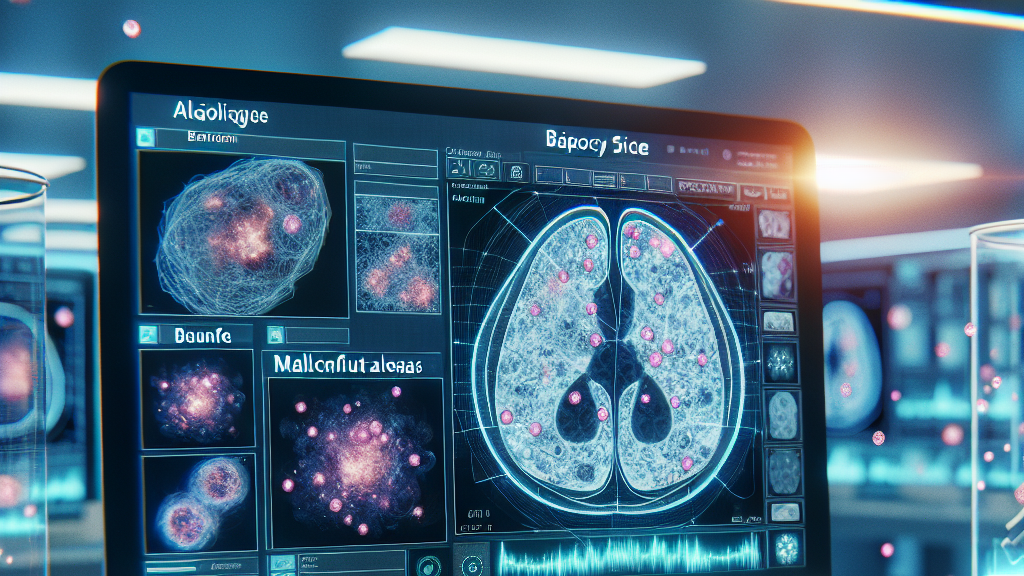
So how can this be practical for you? Imagine your smartphone getting even smarter, seamlessly compressing and organizing photos, videos, and messages, making room for more memories without losing quality. Or consider medical imaging systems that can more effectively analyze and interpret data from blurry scans, leading to faster and more accurate diagnoses. The possibilities of this technology are vast, paving the way for future innovations that make our digital lives more efficient and robust.
Did you know? These AI models can compress and restore data as if they were magic filtering systems, turning random static into clear pictures!
FAQs
What is neural entropy in diffusion models?
Neural entropy quantifies how efficiently artificial intelligence models, specifically diffusion models, can compress and organize structured data into patterns, helping reverse the noise back into its original form.
How do diffusion models transform noise into structured data?
Diffusion models first diffuse the original structured data into noise. During training, they learn to recreate this structure from the noise by memorizing the lost patterns, enabling the transformation of noise back into organized data.
What are potential real-world applications of diffusion models?
Diffusion models could revolutionize data management by making smartphones more efficient in handling photos and videos and improving medical imaging systems for better data interpretation and diagnoses.
Why is this research important for deep learning and information theory?
This research is crucial as it harnesses the synergy between deep learning and information theory, enhancing our understanding of how to efficiently process and utilize vast amounts of data using artificial intelligence.
How does this study impact the future of technological advancements?
By proving the efficiency of diffusion models in data compression and organization, this study lays the groundwork for future technological innovations that could transform data management and processing across various fields.
Background
Deep learning and diffusion models are complex AI systems that mimic how the brain processes information. In this study, diffusion models are used to convert scattered, noisy data back into a comprehensible format by reversing the chaos. Information theory, a branch of applied mathematics, helps us understand the limits of compressing and transferring information efficiently, providing a framework to measure and improve the abilities of these models.
History
The relationship between deep learning and information theory has been a long-standing area of interest in artificial intelligence research. Over the years, researchers have developed various models to improve data handling and processing. This study stands out by integrating diffusion models, a newer approach, to show exceptional efficiency in data compression, potentially leading to breakthroughs in how AI technologies are applied.
Based on “Neural Entropy” by Akhil Premkumar, available on arXiv (arxiv.org/abs/2409.03817), used under CC BY 4.0 (creativecommons.org/licenses/by/4.0/).