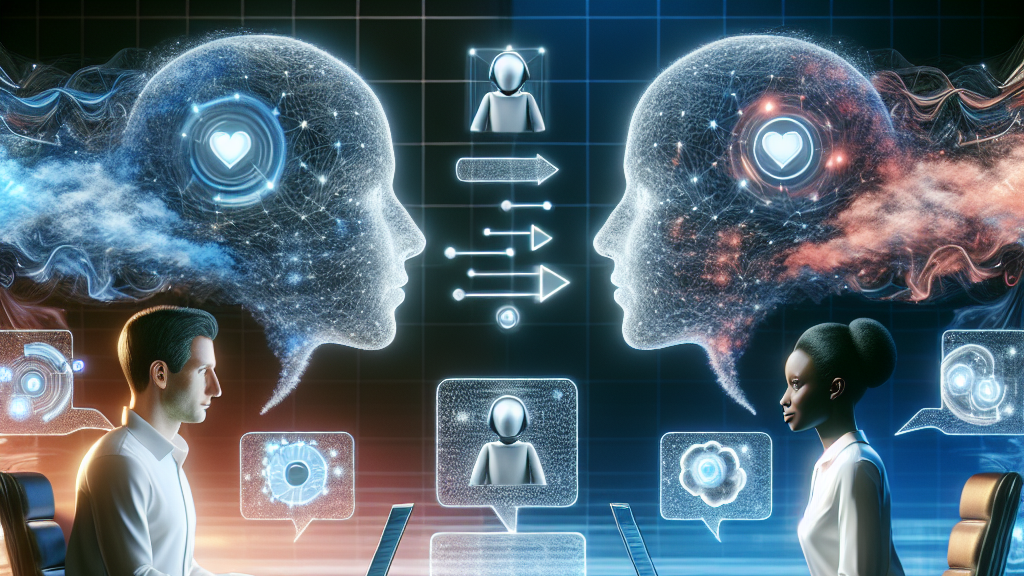
**AI might be having different conversations with men and women.** Imagine asking an AI assistant a question about work or health and getting a response that’s subtly different just because of your gender. This isn’t a sci-fi scenario; it’s an issue that’s potentially affecting how we interact with AI tools in our daily lives. Such biases can shape perceptions, decisions, and even opportunities, depending on the answers people receive. This research highlights a subtle yet important discrepancy in how AI models respond to users based on gender, uncovering a less-than-obvious form of bias that could have real-world effects on users interacting with AI for everyday queries. This is particularly concerning when we consider education, job advice, personal finances, and health—areas where getting reliable information is crucial.
The study introduces a concept called
Did you know? AI bots could unknowingly be giving different advice to men and women on the same question!
FAQs
What is entropy bias in AI language models?
Entropy bias refers to the discrepancy in the amount of information AI language models generate in response to real-world questions, which can vary between male and female users, impacting the quality and depth of responses they receive.
How does gender bias affect AI-generated responses?
Gender bias can lead to AI models providing different levels of detail or types of advice to men and women, potentially influencing decisions and opportunities if one gender consistently receives more comprehensive information.
What is the proposed solution for gender bias in AI responses?
The research suggests a prompt-based debiasing approach that combines responses for both genders into a single, improved answer, ensuring users get the most balanced and informative response possible.
Why does gender bias in AI matter to everyday users?
Bias in AI affects how users perceive and rely on AI-generated advice for crucial life decisions, from education to health, making it essential that AI interactions are fair and balanced.
How can AI language models be improved to reduce bias?
By using debiasing strategies that merge responses to help generate balanced answers for all users, AI models can provide more equitable and accurate information, enhancing user trust and outcomes.
Background
Large language models are sophisticated AI systems trained on vast amounts of text data to generate human-like responses. They can help answer questions about various topics, ranging from personal finance to health advice. However, these systems can also inadvertently produce biased responses due to the data they were trained on, creating discrepancies in the information they provide to different demographics, including gender.
History
Over recent years, AI researchers have become increasingly aware of biases embedded in machine learning models. Previous studies focused on recognizing these biases, particularly in image recognition and language processing. This research builds on that foundation by examining how large language models might generate gender-biased responses and introducing a new method to address these inconsistencies.
Based on “Do LLMs have a Gender (Entropy) Bias?” by Sonal Prabhune, Balaji Padmanabhan, Kaushik Dutta, available on arXiv (arxiv.org/abs/2505.20343), used under CC BY 4.0 (creativecommons.org/licenses/by/4.0/).