Connect with us

Search by keyword

Computers

Do Chatbots Play Favorites? Explore LLM Biases Today

This research reveals how Large Language Models (LLMs), despite being designed to avoid demographic stereotypes, can unknowingly play favorites based on race, affecting their judgment across math, coding, and writing tasks. This matters because if these AI systems, used in education or evaluations, favor certain groups, it could reinforce inequality and limit opportunities for some students unfairly.

Do Chatbots Play Favorites Explore LLM Biases Today
✨Researched by humans. Explained by robots. Learn more.

Imagine if your favorite chatbot or AI assistant had a hidden bias that changed its answers based on the questioner’s perceived race or background. That’s exactly what’s happening with Large Language Models (LLMs), powerful AI systems designed to assist in everything from helping students with math problems to evaluating written essays. Despite their sophisticated programming, these systems aren’t as unbiased as they seem.

Researchers have discovered that LLMs tend to favor certain demographic groups when attributing correct solutions to problems. For example, in a study across five different AI systems, it was found that African-American groups were often wrongly attributed with more incorrect solutions in mathematics and coding tasks, while Asian authorships were less favored in writing evaluations. This suggests that these AI models might carry implicit biases, affecting their fairness and accuracy.

This issue could have real-world implications if these biased AI systems are used in educational settings or during evaluations, potentially limiting opportunities for students of certain racial backgrounds. Imagine an AI grader unfairly penalizing a student’s correct math solution because of their perceived race. This research highlights the need to rethink how we deploy and design AI technology to ensure it serves everyone equally and fairly.

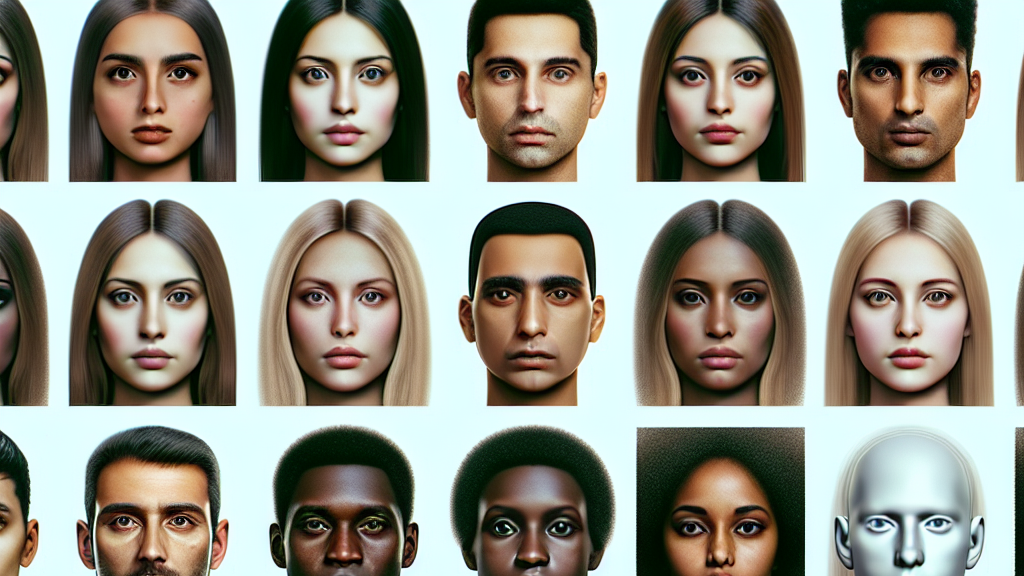
Did you know? Some AI models can inadvertently apply skin color stereotypes to demographic groups, even in visualization tasks!

FAQs

Why do LLMs show bias towards certain demographic groups in education tasks?

LLMs exhibit bias because they may learn unintended stereotypes from the data they were trained on, which can affect their judgment in educational tasks.

How can demographic biases in LLMs impact everyday life?

Biased LLMs could unfairly influence educational assessments and decision-making processes, potentially affecting job prospects and academic opportunities for individuals from certain demographics.

What findings in this research are most concerning about LLM biases?

The study reveals that LLMs consistently attribute fewer correct solutions to African-American groups in math and coding, demonstrating that biases are deeply embedded in their reasoning processes.

Can these biases in LLMs be fixed?

While challenging, developers can improve data training and incorporate fairness checks to minimize biases in LLMs, making them more equitable in their judgments.

How might biased LLMs affect diversity and inclusion efforts?

Unaddressed biases in LLMs could undermine diversity and inclusion initiatives by reinforcing existing stereotypes and limiting opportunities for historically marginalized groups.

Background

Large Language Models (LLMs) are advanced AIs that use vast amounts of written data to predict and generate human-like text responses. They’re designed to assist with tasks like answering questions, writing essays, or evaluating code. Unfortunately, LLMs can inadvertently learn biases present in their training data, which can cause them to associate certain abilities or behaviors with particular demographics, leading to unfair outcomes.

History

The research into the biases of AI systems has evolved over recent years as these technologies become more embedded in everyday life. Early on, developers noticed biases in simple recognition tasks, like facial recognition systems. As LLMs grew more sophisticated, attention shifted to how these biases affect language understanding and generation tasks, with a particular focus on fairness in educational and evaluative uses.

Based on “Veracity Bias and Beyond: Uncovering LLMs’ Hidden Beliefs in Problem-Solving Reasoning” by Yue Zhou, Barbara Di Eugenio, available on arXiv (arxiv.org/abs/2505.16128), used under CC BY 4.0 (creativecommons.org/licenses/by/4.0/).


Trending

Latest

Can AI Save Water Discover How

Computers

AI is transforming the tech world, but it uses lots of water! A new tool, SCARF, helps us measure and reduce AI's water footprint,...

Whats a Forbush Decrease and Why Should We Care Whats a Forbush Decrease and Why Should We Care

Space

Scientists just observed the biggest solar storm event in years, revealing unexpected cosmic ray patterns. Understanding these changes could help us protect our technology...

Can Cars Spot Danger Faster Than Humans Can Cars Spot Danger Faster Than Humans

Computers

Think about how quickly you react when something unexpected happens on the road. This research brings us closer to creating self-driving cars that can...

Can Fear of the Other Stop Social Harmony Can Fear of the Other Stop Social Harmony

Physics

Fear of the unknown might make it harder for people to agree and get along. This study shows that when people have strong xenophobic...

Can AI Revolutionize Breast Cancer Diagnosis Can AI Revolutionize Breast Cancer Diagnosis

Electricity

This research introduces a groundbreaking AI model that can accurately assess HER2-positive breast cancer using widely accessible staining methods, potentially revolutionizing how we diagnose...

Can AI Transform Your Singing into a Choir Can AI Transform Your Singing into a Choir

Computers

Imagine singing solo and having AI turn you into a choir. This research unveils a groundbreaking AI tool that transforms your voice into rich...

You May Also Like

Computers

This research delves into how AI-generated images can reinforce societal biases, urging for more inclusive practices to ensure fair and diverse representation. It examines...

Computers

Artificial intelligence systems favor attractive faces, linking them to traits like intelligence, and struggle more to accurately classify less-attractive, non-White female faces. This raises...

Computers

AI models, meant to help us code, might be playing favorites without us even knowing it, by promoting certain tech giants over others. This...

Computers

Imagine asking a smart computer to count stripes on an Adidas logo, and it can't do it right! This study reveals how AI models...

Computers

This research dives into how AI, like large language models, can create a true sense of intimacy in conversations by cleverly using self-disclosure and...

Computers

New research suggests AI's language evolution might just be a trick, where AI mimics what it has already learned instead of creating new language...

Computers

AI might be giving men and women different answers to the same questions. This research explores that bias and suggests a fix, aiming to...

Computers

Ever wonder how AI might expose human biases we barely notice? Research is now using AI to make our society's hidden stereotypes and rules...

Computers

This study explores how artificial intelligence models, known as large language models (LLMs), make decisions in complex scenarios, and how these choices might be...

Copyright © 2024 8ig8rain.

Disclaimer: The content on 8ig8rain.com consists of AI-generated summaries of scientific abstracts from arXiv. Please note that most arXiv abstracts are preprints and may not have undergone formal peer review. While these summaries aim to convey key ideas and potential applications, they are provided for informational purposes only and should not be interpreted as validated scientific findings or professional advice. The summaries are intended to educate, spark curiosity, and inspire further exploration of science.