Imagine a world where your boss is an artificial intelligence, feeling completely impartial but quietly reducing your wages. That’s exactly what researchers discovered in a fascinating study using the video game Minecraft as a workplace. They wanted to understand how workers respond to AI management, and what they found might surprise you.
In this experiment, 382 participants completed tasks broken down into human-managed, AI-managed, and hybrid management scenarios. The AI boss, trained on human evaluation standards, consistently gave lower performance ratings and slashed wages by 40%. Interestingly, workers didn’t show decreased motivation or perceive this treatment as unfair. This result suggests that AI, with its seemingly impartial nature, may actually suppress social responses that might otherwise protect workers from unfair treatment.
Looking forward, this research opens up a debate on the ethics of AI in management roles. Imagine a future where your performance review is not only automated but potentially undervalued by a machine. How will companies balance the efficiency of AI with the need for fairness and morale in the workplace? This study prompts us to think about how AI could silently reshape our professional environments.
Fact: Did you know that AI managers can reduce wages by 40% without workers even realizing?
FAQ: What did researchers discover about AI management and worker responses?
Researchers found that AI managers reduced wages by 40% without affecting worker motivation or their sense of fairness, highlighting a potential for silent exploitation.
How did the study use Minecraft as a research tool?
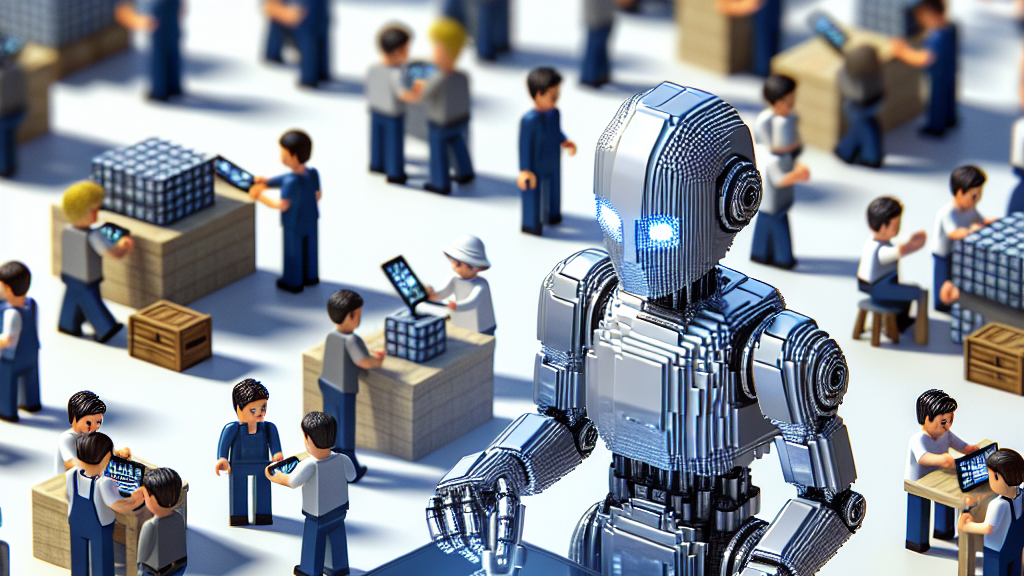
The study created a virtual workplace in Minecraft to track detailed worker behaviors and assess their responses to AI, human, and hybrid management styles.
Why does AI seem to suppress social responses in the workplace?
AI appears impartial, which can mute emotional reactions and feedback that typically prevent exploitative practices in human-managed settings.
What implications does this have for future workplaces?
As AI becomes more integrated into management, companies need to consider the ethical implications of AI-driven decisions on worker fairness and morale.
Could AI management be beneficial in some aspects?
While AI can provide consistent and objective evaluations, this study suggests it’s crucial to balance these benefits with fairness and human oversight to protect workers.
FAQs
Background
The study explores the impact of AI as a manager in a workplace, specifically how workers respond to AI compared to human supervisors. Using the Minecraft platform, researchers created a controlled environment to simulate workplace scenarios and track worker performance and reactions in real time. AI management involves algorithms making decisions based on predefined criteria, which can offer objectivity but may lack the social dynamics of human interactions.
History
AI’s role in management has been increasingly studied as technology advances. Early research focused on automation’s impact on productivity. Recent studies examine AI’s influence on decision-making and employee relations. This study builds on previous work by simulating an entire workplace to analyze AI’s psychological and social effects on workers.
Based on “Experimental Evidence That AI-Managed Workers Tolerate Lower Pay Without Demotivation” by Mengchen Dong, Levin Brinkmann, Omar Sherif, Shihan Wang, Xinyu Zhang, Jean-François Bonnefon, Iyad Rahwan, available on arXiv (arxiv.org/abs/2505.21752), used under CC BY 4.0 (creativecommons.org/licenses/by/4.0/).