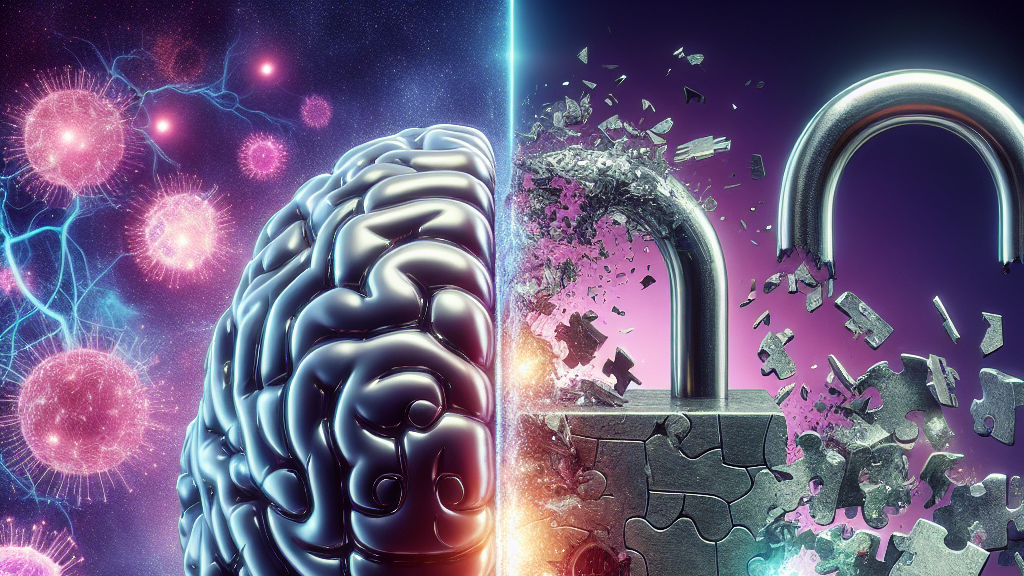
Imagine if we could tackle two big problems in AI with one clever solution! That’s exactly what this new research suggests about large AI models. These models often fall prey to hallucinations—where they make stuff up—and jailbreak attacks, which bypass their safety mechanisms. What if a fix for one could actually help solve the other? Stopping hallucinations could keep jailbreaks in check, and vice versa.
The researchers propose a fresh perspective by showing that these two vulnerabilities share similar underlying characteristics. They looked at how AI models like LLaVA-1.5 and MiniGPT-4 deal with these issues and found intriguing patterns. Both problems respond to changes in how the models focus on information, or ‘attention dynamics.’ And when they tried to solve one vulnerability, they noticed improvements in the other as well.
What does this mean for us? Think of it like getting a two-for-one deal in technology. By targeting these shared issues in AI, developers could soon have a robust way to make AI systems more secure and reliable. Imagine future AI tools that are less likely to make stuff up or get tricked—leading to smarter, safer, and more trustworthy tech in our daily lives!
Did you know? AI hallucinations can lead AIs to confidently provide false information, a bit like confidently claiming that the sky is green!
FAQs
What are AI hallucinations?
AI hallucinations occur when artificial intelligence systems generate incorrect or misleading information with high confidence. It’s like when a chatbot tells you a made-up fact, thinking it’s true.
How does the connection between hallucinations and jailbreaks improve AI security?
By identifying that both vulnerabilities share similar traits, fixes for one can potentially make the system more resistant to the other. This means enhanced security with less effort!
How can this research affect everyday tech users?
This research can lead to more reliable AI systems, reducing instances of misinformation and making user interactions with tech safer and more trustworthy.
Background
Large foundation models, like the ones powering your favorite AI assistants, are prone to messing up in two big ways: hallucinations and jailbreak attacks. Hallucinations happen when AI confidently makes something up, while jailbreaks trick AI into doing or saying things it shouldn’t. These researchers explored how both issues are tackled on different levels: hallucinations at the attention level and jailbreaks at the token level.
History
AI has been woven into our technology for years now, starting with simple chatbots to today’s complex models like LLaVA-1.5 and MiniGPT-4. Previously, researchers mainly studied hallucinations and jailbreaks separately, but this study shows they might be two sides of the same coin and suggests a unified approach to addressing them.
Based on “From Hallucinations to Jailbreaks: Rethinking the Vulnerability of Large Foundation Models” by Haibo Jin, Peiyan Zhang, Peiran Wang, Man Luo, Haohan Wang, available on arXiv (arxiv.org/abs/2505.24232), used under CC BY 4.0 (creativecommons.org/licenses/by/4.0/).