Imagine trying to tell the difference between two birds that look almost identical. It’s tricky, right? That’s the challenge scientists face with what they call ‘cryptic species’ – animals or plants that are so similar they confuse even experienced observers. To help solve this problem, researchers have created CrypticBio, a massive dataset designed to train AI models to spot these subtle differences. It’s like giving a computer the superpower of a seasoned naturalist!
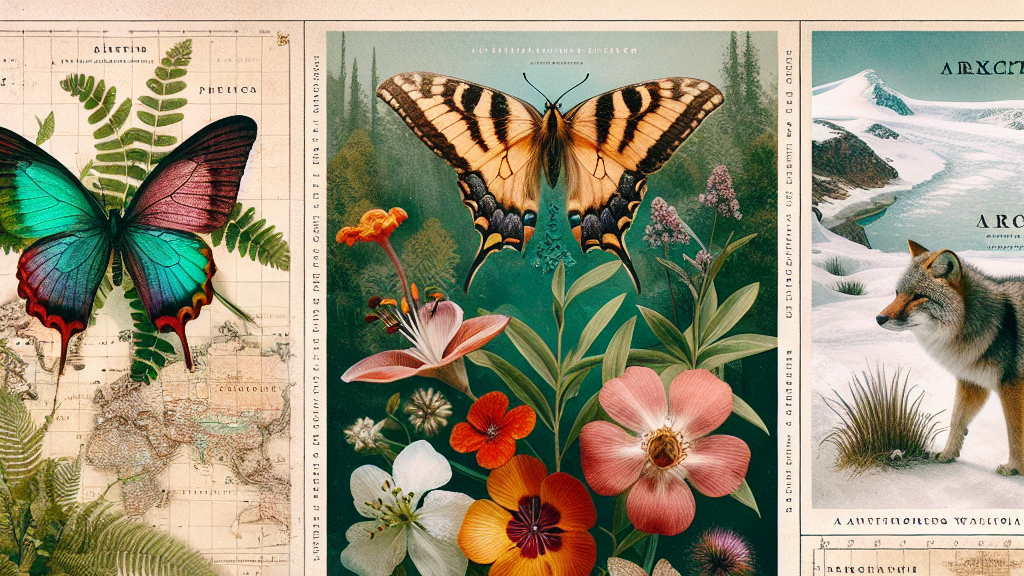
CrypticBio is an incredible treasure trove containing 166 million images of 67,000 confusingly similar species. The dataset is enriched with scientific, cultural, and geographical insights to help AI make more informed guesses about species identity. Unlike older collections that only focus on a single species type, this dataset spans a wide array sure to stump even the best minds – and now, AI is entering the fray to learn from its wealth of information.
In the future, these AI models could dramatically impact conservation efforts. Imagine a tool that could quickly survey an area and accurately identify endangered creatures hidden among common ones. This capability would be a game-changer for preserving biodiversity, enabling rapid and precise action to protect habitats and species. So the next time you’re on a nature walk, think of how AI might soon be your best friend in spotting the rare gems of the natural world.
There are species that look so alike that even trained humans struggle to tell them apart, yet AI can use subtle clues to distinguish them!
FAQs
What are cryptic species, and why are they important?
Cryptic species are groups of organisms that are morphologically similar to the point of confusion, even among advanced observers. Understanding them is crucial because misidentifications can affect biodiversity research and conservation efforts.
How does the CrypticBio dataset help in identifying cryptic species?
CrypticBio provides a vast collection of images and detailed annotations, helping AI models learn to distinguish between visually similar species using additional data like geographical and temporal information.
How might AI improve biodiversity conservation with this research?
AI, trained with datasets like CrypticBio, could rapidly identify cryptic species in the wild, accelerating conservation efforts and enabling more precise protection of endangered species and their habitats.
What makes CrypticBio different from other species datasets?
Unlike previous datasets that focus on a single species type, CrypticBio encompasses a diverse range of taxa and incorporates rich contextual data, allowing for more comprehensive AI training in biodiversity applications.
What practical applications can come from this research in everyday life?
Beyond conservation, this research could enhance public understanding of biodiversity, promote environmental awareness, and even inspire the development of educational tools or apps for nature enthusiasts.
Background
Cryptic species are those that are nearly indistinguishable by appearance alone, posing a challenge for scientists who wish to catalog and protect biodiversity. Traditional methods of species identification often rely on visual cues, but these are ineffective for cryptic species due to their visual similarities. By leveraging AI, researchers can analyze additional data beyond just appearance, such as geographical location and time of year, to improve identification accuracy.
History
The study of cryptic species has been a growing area of interest in the field of biodiversity, with earlier research often limited by small datasets and manual identification methods. As AI technology progressed, researchers saw an opportunity to enhance species identification by integrating data-rich approaches that include geographical and temporal contexts. CrypticBio is a significant step forward, offering the largest collection of its kind to date.
Based on “CrypticBio: A Large Multimodal Dataset for Visually Confusing Biodiversity” by Georgiana Manolache, Gerard Schouten, Joaquin Vanschoren, available on arXiv (arxiv.org/abs/2505.14707), used under CC BY 4.0 (creativecommons.org/licenses/by/4.0/).