Connect with us

Search by keyword

Computers

Can AI Unravel Nature’s Camouflage Puzzles?

CrypticBio, a massive dataset of visually confusing species, is set to revolutionize AI models by helping them identify species that look nearly identical. This could drastically improve biodiversity studies and conservation efforts, influencing how we protect our planet’s most vulnerable creatures.

Can AI Unravel Natures Camouflage Puzzles
✨Researched by humans. Explained by robots. Learn more.

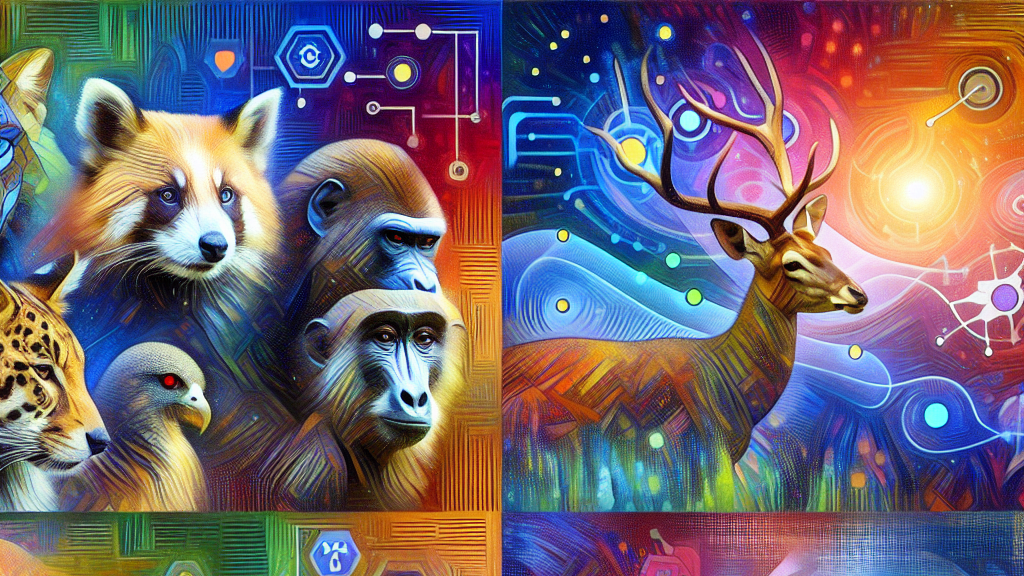
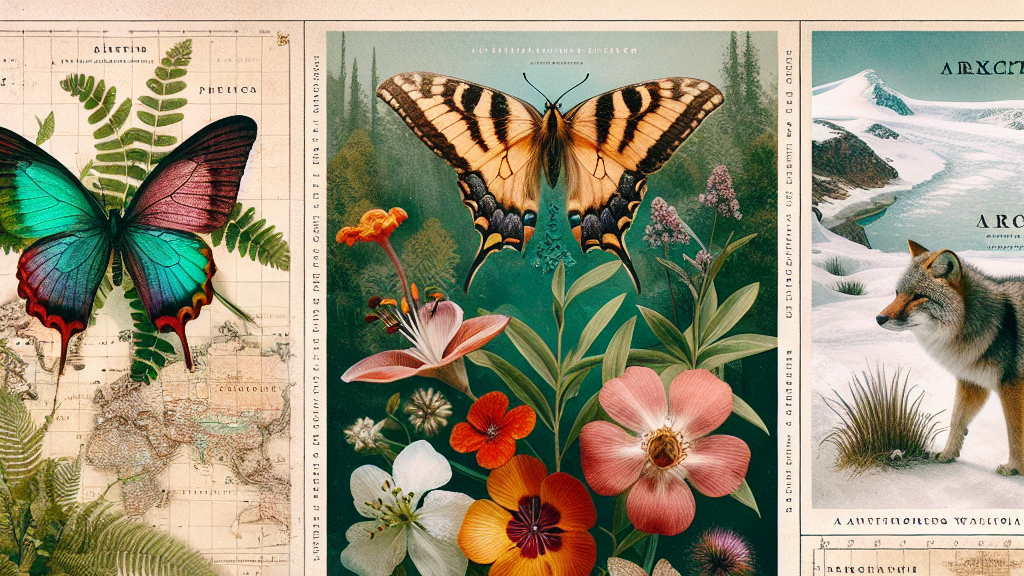
Imagine trying to tell apart twins dressed identically in a bustling crowd—impossible, right? Yet, that’s the challenge scientists face with cryptic species, animals, and plants that look so alike that even experts can mistake one for another. Enter CrypticBio, a massive new dataset that’s teaching AI to be better than human eyes at spotting these natural camouflages.

CrypticBio is a groundbreaking collection of over 166 million images capturing the subtle differences in 67,000 species. It’s like a nature detective toolkit, curated from real-world data where online community users often falsely identify species. This dataset is more than just pretty pictures; it combines geographical and temporal clues to give AI the edge it needs to sort through these cryptic puzzles. This means AI can now learn to recognize these species not just by sight but by understanding where and when they appear.

Picture this: a world where AI can help conservationists quickly identify and protect endangered species before they disappear. Imagine a future where researchers can track invasive species and save ecosystems with just a few clicks. CrypticBio isn’t just a collection of images; it’s a key that unlocks the mysteries of our natural world, helping us conserve its incredible diversity for generations to come.

Over 166 million images in CrypticBio help AI outsmart human eyes by identifying species that look identical.

FAQs

What are cryptic species, and why are they hard to identify?

Cryptic species are groups of animals or plants that look nearly identical but are biologically different, making them exceptionally difficult to identify even for experts.

How does CrypticBio help with biodiversity studies?

CrypticBio provides a massive, curated dataset that aids AI in learning to distinguish these look-alike species, greatly enhancing accuracy in biodiversity research and conservation efforts.

What makes CrypticBio unique compared to other datasets?

Unlike smaller, manually curated datasets, CrypticBio offers a vast collection of 166 million images along with geographical and temporal data, offering a more comprehensive tool for AI development in the context of species identification.

How can AI models trained on CrypticBio impact conservation?

AI models trained on CrypticBio can accurately identify and track endangered and invasive species, supporting conservation measures and ecological studies.

Why include geographical and temporal data in CrypticBio?

Geographical and temporal data provide additional context that AI can use to distinguish species that might look identical visually but differ in their habitats or behavior patterns.

Background

Cryptic species pose a unique challenge because they share almost identical visual traits but belong to different biological groups. These differences can be crucial for ecological studies and conservation efforts, but traditional methods struggle to spot them. Artificial Intelligence, with its pattern recognition capabilities, offers a new way to tackle this challenge but requires extensive data to learn effectively.

History

Studies over the years have highlighted the difficulty of identifying cryptic species, leading to numerous misidentifications that affect biodiversity data and conservation strategies. Previous efforts were limited by smaller datasets that couldn’t address the vast diversity seen in nature. CrypticBio builds on these foundations by offering an unprecedented scale of data, incorporating elements that previous studies did not, like geographical and temporal context.

Based on “CrypticBio: A Large Multimodal Dataset for Visually Confusing Biodiversity” by Georgiana Manolache, Gerard Schouten, Joaquin Vanschoren, available on arXiv (arxiv.org/abs/2505.14707), used under CC BY 4.0 (creativecommons.org/licenses/by/4.0/).

Trending

Latest

Can AI Save Water Discover How

Computers

AI is transforming the tech world, but it uses lots of water! A new tool, SCARF, helps us measure and reduce AI's water footprint,...

Whats a Forbush Decrease and Why Should We Care Whats a Forbush Decrease and Why Should We Care

Space

Scientists just observed the biggest solar storm event in years, revealing unexpected cosmic ray patterns. Understanding these changes could help us protect our technology...

Can Cars Spot Danger Faster Than Humans Can Cars Spot Danger Faster Than Humans

Computers

Think about how quickly you react when something unexpected happens on the road. This research brings us closer to creating self-driving cars that can...

Can Fear of the Other Stop Social Harmony Can Fear of the Other Stop Social Harmony

Physics

Fear of the unknown might make it harder for people to agree and get along. This study shows that when people have strong xenophobic...

Can AI Revolutionize Breast Cancer Diagnosis Can AI Revolutionize Breast Cancer Diagnosis

Electricity

This research introduces a groundbreaking AI model that can accurately assess HER2-positive breast cancer using widely accessible staining methods, potentially revolutionizing how we diagnose...

Can AI Transform Your Singing into a Choir Can AI Transform Your Singing into a Choir

Computers

Imagine singing solo and having AI turn you into a choir. This research unveils a groundbreaking AI tool that transforms your voice into rich...

You May Also Like

Computers

This research explores if AI-created test collections for evaluating search engines can be trusted, especially considering potential biases. Understanding this could change how we...

Materials

Thanks to a new AI approach called LEGO-xtal, creating perfect crystal designs has become way easier and faster than ever before. This breakthrough could...

Computers

This study introduces a new dataset to better identify violent threats on social media. This can lead to more effective tools to keep online...

Computers

Ever wondered if we can make AI models smaller without losing any information? This new technique called ZipNN can save a ton of space...

Computers

Discover how stickers, those tiny digital images that we love to share, could revolutionize communication by making it more expressive and easier to find...

Computers

This research shows that two major risks in AI, hallucinations and jailbreaks, are more connected than we thought, potentially allowing us to fix both...

Computers

AI is being used to tackle the tricky task of identifying species that look almost identical to each other, helping save wildlife and preserve...

Computers

This study reveals how AI models learn and remember information, pulling back the curtain on their decision-making processes and strange behaviors. Unlocking these secrets...

Economics

AI models are great at understanding English health info, but they struggle with other languages. This matters because AI is increasingly used in health...

Copyright © 2024 8ig8rain.

Disclaimer: The content on 8ig8rain.com consists of AI-generated summaries of scientific abstracts from arXiv. Please note that most arXiv abstracts are preprints and may not have undergone formal peer review. While these summaries aim to convey key ideas and potential applications, they are provided for informational purposes only and should not be interpreted as validated scientific findings or professional advice. The summaries are intended to educate, spark curiosity, and inspire further exploration of science.