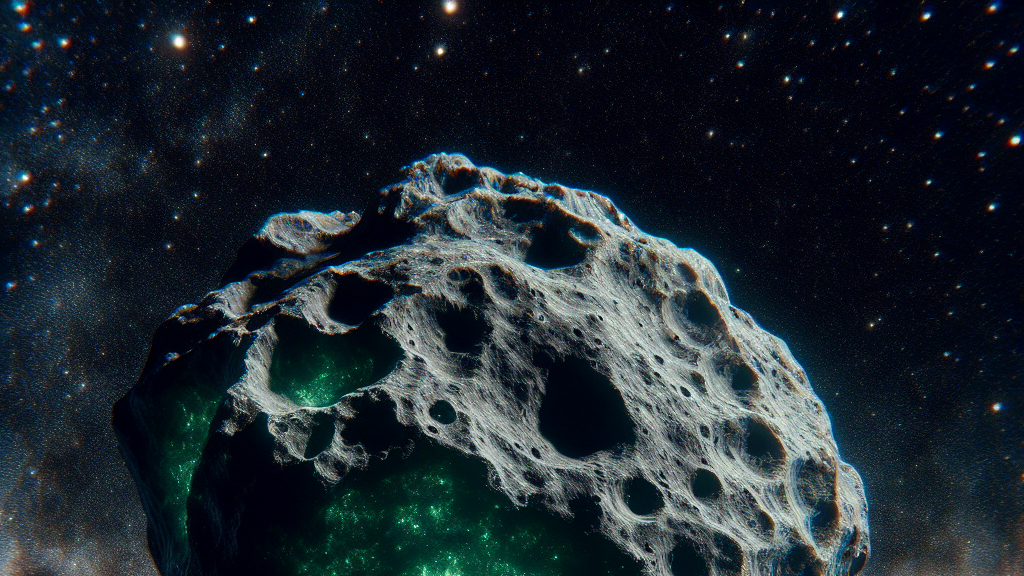
Get ready to be astounded! NASA’s new mission, the Europa Clipper, is set to unravel the mysteries hiding in Europa’s icy shell. While humans have long wondered if life exists elsewhere in the universe, the Europa Clipper mission may soon bring us closer to answering that question. This mission will scan the surface of Jupiter’s moon, Europa, looking for organic compounds in tiny amounts, and shed light on materials that could be key ingredients for life.
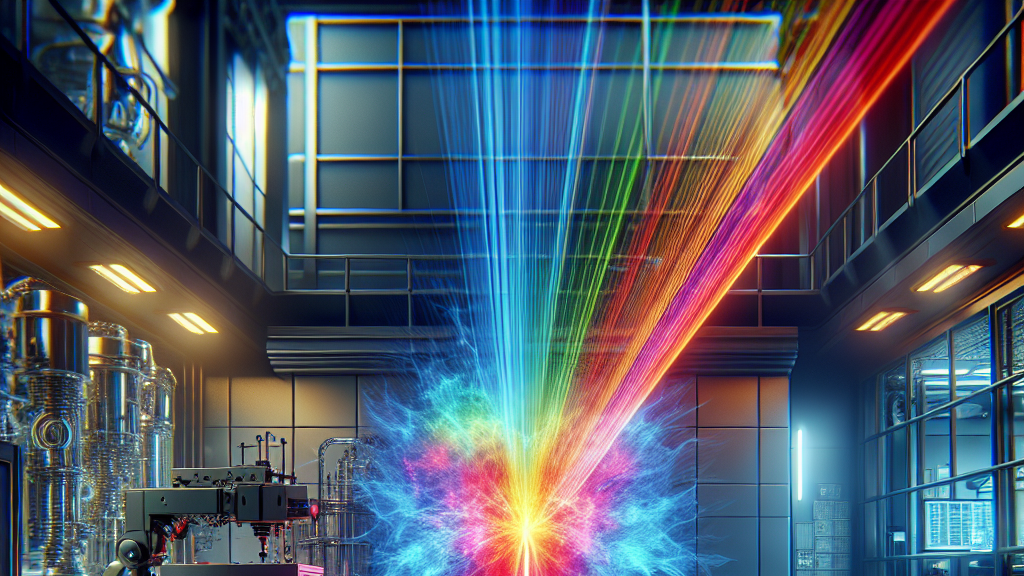
How will it do this? The magic lies in the use of near-infrared spectroscopy, a technique that captures stunningly detailed data about the chemical make-up of Europa’s surface. By analyzing the light reflected off the moon’s surface, scientists can detect the unique signatures of chemical bonds in organic materials, even if they make up less than one percent of the surface! This impressive technology enables the mission to uncover traces of vital compounds like carbon-hydrogen or carbon-oxygen bonds, which are essential to life as we know it.
Imagine if future space travelers could use this information to explore Europa’s geological features and identify areas rich in organic materials. This could be the stepping stone to understanding the potential for life in our solar system and using these insights to guide future explorations. Whether it’s planning the next mission or unraveling the depths of space mysteries, the findings from Europa Clipper could very well change the way we think about life beyond Earth.
Did you know that Europa is believed to have twice as much water as Earth’s oceans combined beneath its icy crust?
FAQs
What is the main goal of the Europa Clipper mission?
The primary goal of the Europa Clipper mission is to study the surface of Jupiter’s moon, Europa, to detect trace amounts of organic compounds using high-quality near-infrared spectroscopy data. This research aims to uncover potential building blocks of life and understand the moon’s potential to support life.
How does infrared spectroscopy help in detecting organic compounds on Europa?
Infrared spectroscopy captures detailed information about the chemical bonds on Europa’s surface by analyzing reflected light. This allows scientists to identify unique spectroscopic features of organic materials, making it possible to detect trace compounds even in minimal amounts.
Why is finding organic compounds on Europa important?
Discovering organic compounds on Europa is crucial because they are considered essential building blocks for life. If these compounds exist on Europa, it could suggest that the moon has the potential to support life, challenging our understanding of life’s existence beyond Earth.
What makes Europa a target for space exploration?
Europa is a target for space exploration due to its extensive icy surface, which may conceal a vast ocean beneath. This environment could be ideal for sustaining life, making Europa one of the most promising places to search for life in our solar system.
What could future missions learn from Europa Clipper’s findings?
Future missions could use Europa Clipper’s findings to identify specific regions rich in organic molecules, guiding further exploration and potentially pinpointing signs of life or areas of scientific interest.
Background
The Europa Clipper mission aims to explore the surface of Jupiter’s moon, Europa, which is believed to have a significant subsurface ocean beneath its icy crust. Organic compounds, which are essential for life, have distinctive chemical bonds that can be detected through spectroscopy. Near-infrared (NIR) spectroscopy is a scientific technique that analyzes light reflected from surfaces to identify chemical compositions. This study utilizes NIR spectroscopy to detect trace amounts of organic compounds on Europa’s surface.
History
Research related to exploring extraterrestrial life has been an ongoing quest within the scientific community. Previous missions to Jupiter and its moons have provided insights into their composition and dynamics. The Galileo spacecraft, which orbited Jupiter from 1995 to 2003, laid the groundwork for understanding Europa’s ice-covered surface and potential subsurface ocean. These early findings paved the way for more advanced missions, like the Europa Clipper, designed to delve deeper into these celestial bodies’ mysteries.
Based on “An Assessment of Organics Detection and Characterization on the Surface of Europa with Infrared Spectroscopy” by Ishan Mishra, Nikole Lewis, Jonathan Lunine, Kevin P. Hand, available on arXiv (arxiv.org/abs/2506.01842), used under CC BY 4.0 (creativecommons.org/licenses/by/4.0/).