Imagine waking up one day to find out that your GPS isn’t working, your TV broadcasts are skipping, and your internet is slow. What could be causing this frustrating chaos? Well, it turns out, energetic events on the sun, like the dramatic coronal mass ejections you might have seen in sci-fi shows, are not just dazzling light shows—they impact our daily lives by regulating the space environment around Earth.
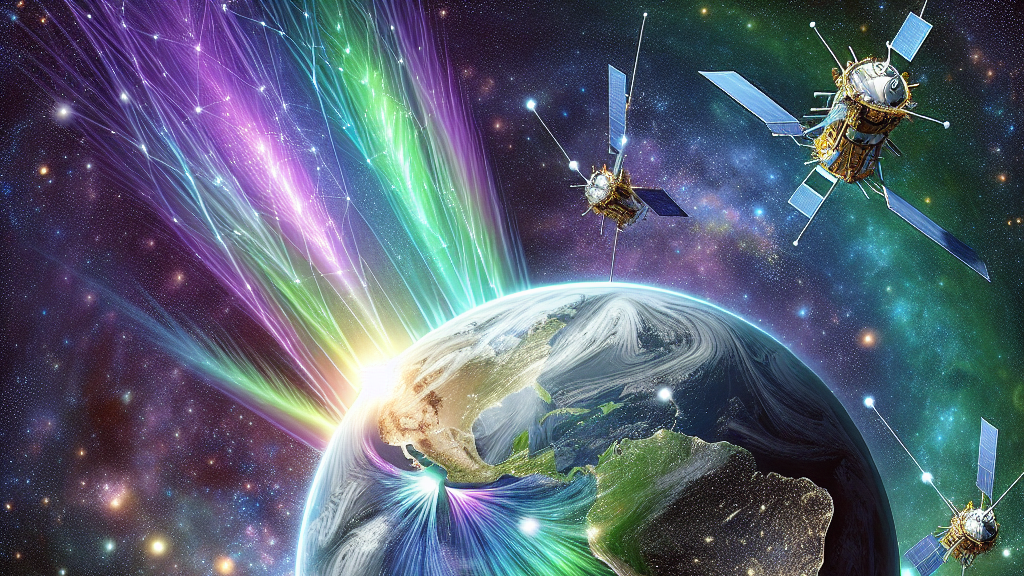
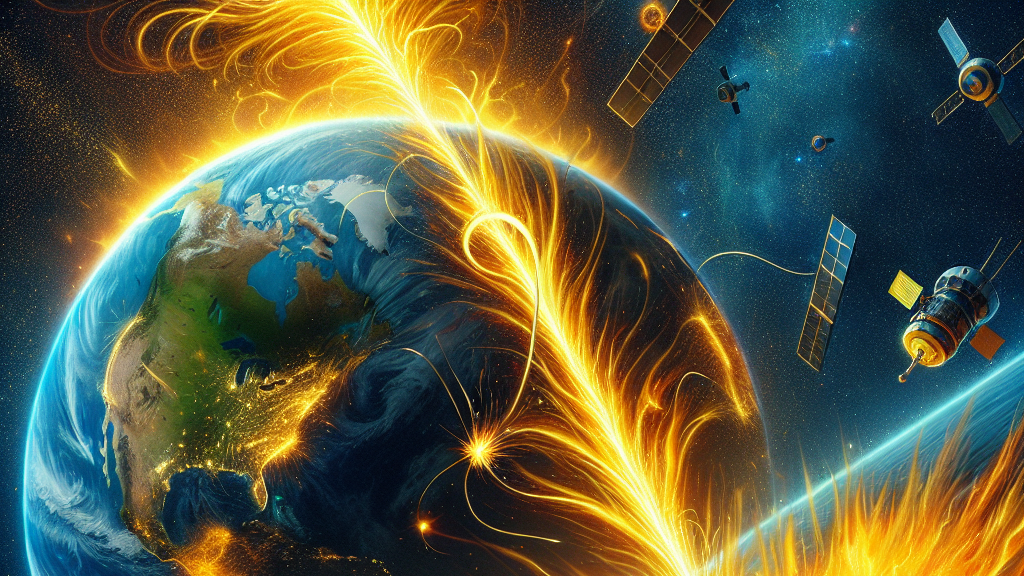
These solar events, when extreme, lead to geomagnetic storms by transferring massive amounts of energy from the solar wind into our atmosphere. This energy can cause the atmosphere to expand, increasing drag on satellites orbiting the Earth. Just like how wind resistance can slow down a car, this increased drag can slow down satellites, reducing their altitude and lifespan unexpectedly. Our research shows how different types of geomagnetic storms can impact satellite orbits, making it important to monitor space weather closely to avoid disruptions to our vital satellite services.
In the future, understanding space weather better could mean stronger and longer-lasting satellites, ensuring they aren’t prematurely pulled out of orbit by these solar tempests. This knowledge could help design more resilient satellites and advance our ability to predict these storms, safeguarding our communications, navigation, and observation capabilities that heavily rely on these space-based technologies.
Did you know? A particularly strong geomagnetic storm in 1859, known as the Carrington Event, caused telegraph systems worldwide to fail and even gave telegraph operators electric shocks!
FAQs
What are geomagnetic storms and how do they affect satellites?
Geomagnetic storms occur when large amounts of energy from the sun interact with Earth’s magnetic field. They can cause Earth’s atmosphere to expand, increasing drag on satellites in low Earth orbit and affecting their trajectories, which can ultimately shorten their operational lifespan.
How does solar activity lead to geomagnetic storms?
Solar activities, like coronal mass ejections or high-speed solar winds, send charged particles toward Earth. When these particles interact with Earth’s magnetic field, they cause disruptions leading to geomagnetic storms.
Why is it important to understand space weather?
Understanding space weather is crucial because it affects the reliability of satellite-based technologies we rely on daily, such as communication, navigation, and weather forecasting systems. Predicting space weather can help mitigate potential damage to these technologies.
Can geomagnetic storms be predicted?
While predicting geomagnetic storms is challenging, advancements in climate science and space monitoring help us foresee these events to some extent. Continuous research is necessary to enhance the accuracy of these predictions.
What can be done to protect satellites from space weather effects?
Designing satellites with better shielding and adaptive technologies, increasing real-time monitoring of space weather, and developing advanced prediction models can help protect satellites from the impacts of space weather.
Background
Energetic events from the sun, like coronal mass ejections, release large amounts of plasma into space. When these interact with Earth’s magnetic field, they can disrupt the near-Earth space environment, leading to geomagnetic storms. These storms influence the thermosphere, causing atmospheric expansion that affects anything in low Earth orbit, such as satellites.
History
The study of space weather and its effects on Earth has evolved significantly over the years. The impact of solar activity on Earth’s environment was first observed in the 19th century during the Carrington Event. Since then, research has advanced, leading to better understanding of how solar phenomena can affect technology, prompting the development of prediction tools and systems for mitigating damage.
Based on “Geomagnetic Storms and Satellite Orbital Decay” by Yoshita Baruah, available on arXiv (arxiv.org/abs/2506.03305), used under CC BY 4.0 (creativecommons.org/licenses/by/4.0/).