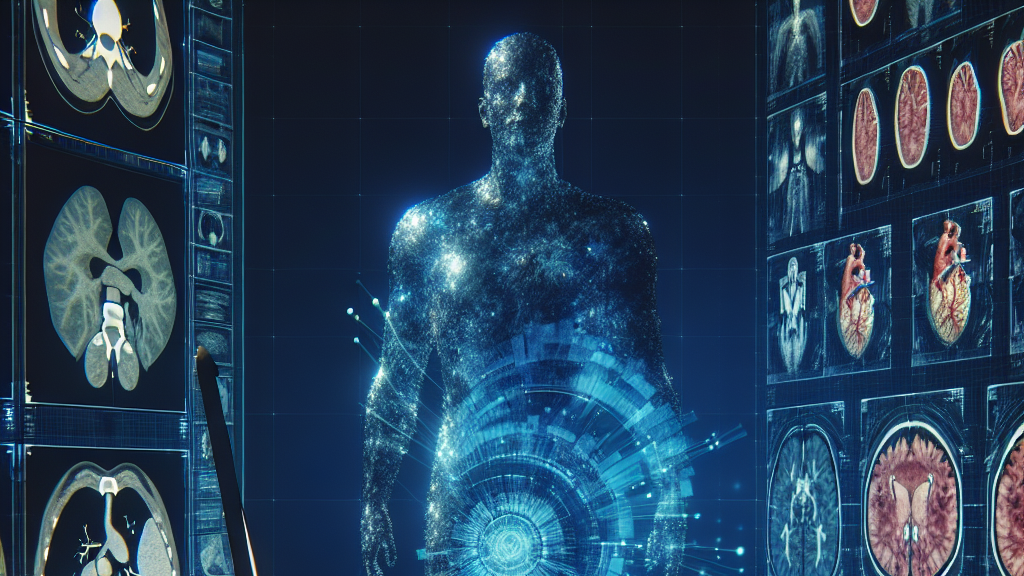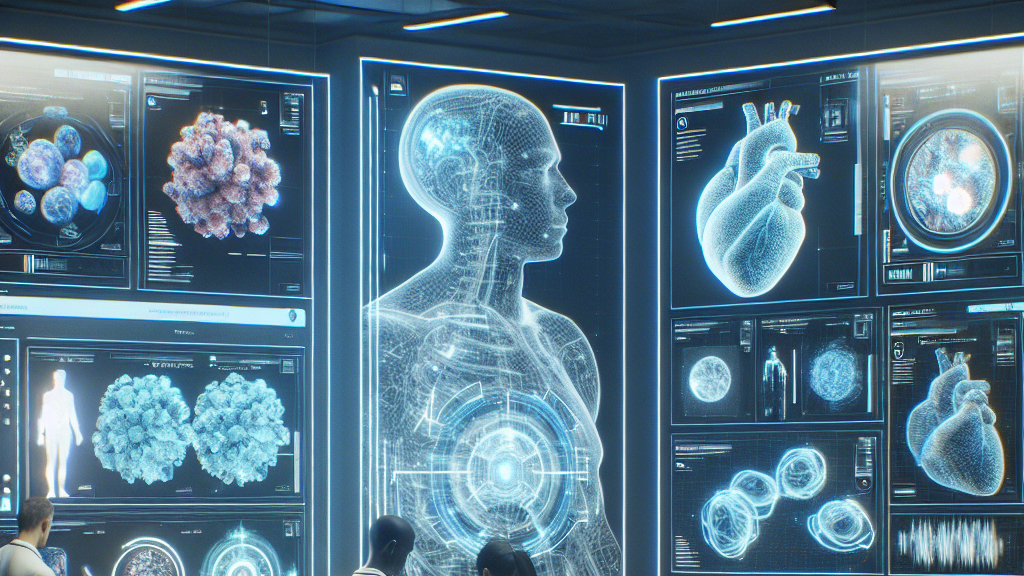
Imagine a world where medical treatments are as personalized and precise as ordering your favorite playlist. That’s the promise of combining artificial intelligence with clinical trials. With advancements in AI technologies like causal inference and digital twins, we are poised to completely transform the way clinical research is done. It’s like having a virtual twin that helps doctors predict how you’ll react to medications without ever stepping into a clinic.
At the heart of this exciting development are two key AI technologies: causal inference and digital twins. Causal inference allows researchers to understand the true cause-and-effect relationships in clinical data, providing insights that were previously hidden. Digital twins create virtual replicas of patients, enabling doctors and researchers to simulate different treatment options and predict outcomes with unprecedented accuracy. These technologies are not just concepts; they’re being integrated into current frameworks to supercharge clinical trials as we know them.
Now, think about the future of healthcare. Instead of one-size-fits-all treatments, imagine walking into a doctor’s office where your digital twin has already been used to find the best treatment option for you. By using AI, doctors can predict potential risks or side effects, leading to safer and more effective healthcare. This means a future where treatments are quick, precise, and custom-made—redefining patient care as we know it.
Digital twins were first used in engineering and aeronautics to create digital replicas of physical assets like jet engines before being adopted in healthcare!
FAQs
What are digital twins in clinical research?
Digital twins in clinical research are virtual replicas of patients used to simulate and predict the effects of treatments, allowing researchers to assess potential outcomes without actual physical trials.
How does AI’s causal inference improve clinical trials?
AI’s causal inference helps identify true cause-and-effect relationships in data, revealing hidden insights that improve trial accuracy and effectiveness, leading to more personalized patient treatments.
Why is integrating AI important for future clinical trials?
Integrating AI into clinical trials modernizes healthcare by speeding up the research process, enhancing safety, and providing personalized treatment plans tailored to individual patients, ultimately improving healthcare outcomes.
Background
Causal inference and digital twins are the core components in this study. Causal inference is a statistical method that lets scientists determine cause-and-effect relationships within data, helping uncover real insights rather than just correlations. Digital twins create a precise digital replica of an object or system in the real world, in this case, human physiology, enabling testing and analysis without affecting the actual subject. This approach is becoming invaluable in predicting response to treatments before they are applied in reality.
History
The idea of digital twins was popularized in the early 2000s within engineering fields like aeronautics, where engineers used digital twins to simulate the performance of complex machinery such as aircraft engines. This concept was then adapted to healthcare, where digital twins of human organs or systems allow for advanced research and more accurate predictions about treatment effects. Similarly, causal inference has its roots in statistics and econometrics, but has gradually found its way into healthcare as a powerful tool to truly understand how different treatments can affect patient outcomes.
Based on “Revolutionizing Clinical Trials: A Manifesto for AI-Driven Transformation” by Mihaela van der Schaar, Richard Peck, Eoin McKinney, Jim Weatherall, Stuart Bailey, Justine Rochon, Chris Anagnostopoulos, Pierre Marquet, Anthony Wood, Nicky Best, Harry Amad, Julianna Piskorz, Krzysztof Kacprzyk, Rafik Salama, Christina Gunther, Francesca Frau, Antoine Pugeat, Ramon Hernandez, available on arXiv (arxiv.org/abs/2506.09102), used under CC BY 4.0 (creativecommons.org/licenses/by/4.0/).