Connect with us

Search by keyword

Economics

Can Happiness Spread Like a Smile?

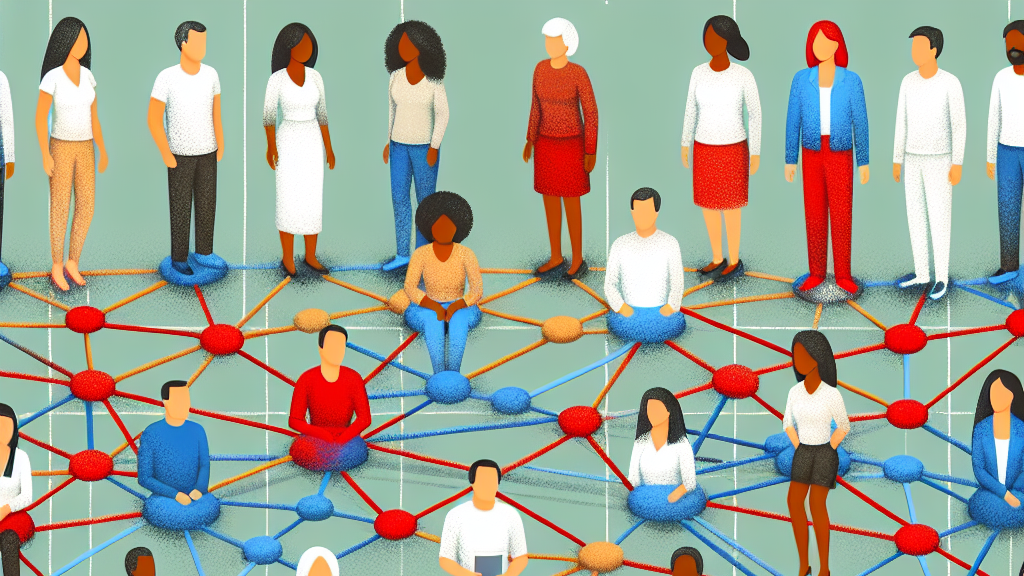
This research redefines happiness as a deeply interconnected web of relationships. It shows how a single person’s positive actions can spark a ripple effect of happiness and cooperation throughout a community, potentially transforming social dynamics.

Can Happiness Spread Like a Smile
✨Researched by humans. Explained by robots. Learn more.

What if happiness isn’t just a personal pursuit, but a shared experience that can ripple through entire communities? This intriguing idea is rooted in the concept that happiness is not just about personal pleasure but about a life of purpose and contribution. Imagine happiness as a game where your contentment is influenced by those around you, and vice versa. This is what researchers are exploring by studying ‘homo-felix’, or happy humans, who find joy not just in their own achievements but in the well-being and happiness of others.

In the study, researchers discovered fascinating happiness feedback loops through simple games people play in everyday interactions. The games show that individuals tend to value happiness not just from their own gains but also from the happiness of those they interact with. In these scenarios, happiness can spread as people become more generous and cooperative, going beyond self-interest to create a stronger, happier community. The interactions create a variety of outcomes, sometimes leading to more cooperation even when it seems unlikely.

Imagine a community where one person starts being more giving and thoughtful. This single act can lead to a domino effect, encouraging others to act more cooperatively and considerately. It’s a bit like when someone shares a smile, and suddenly the whole room lights up. This research suggests that happiness can be contagious, potentially leading to communities that are more cooperative and supportive, transforming how we view personal and societal well-being.

Did you know? The word ‘happiness’ in the U.S. Declaration of Independence refers to living a virtuous life, not just personal pleasure.

FAQs

How does the concept of ‘homo-felix’ redefine happiness?

The concept of ‘homo-felix’ redefines happiness as a collective experience, not just personal pleasure. It suggests individuals find joy in their own happiness as well as in the happiness of others, creating a ripple effect of well-being throughout a community.

What role do feedback loops play in spreading happiness?

Feedback loops in happiness occur when an individual’s joy is positively influenced by those around them. This interaction can lead to a chain reaction where caring about others’ happiness leads to greater overall joy and cooperation within a group.

Can a single person’s actions really influence community happiness?

Yes, a single person’s prosocial behavior can spark change by inspiring others to also act cooperatively. This can lead to a shift from non-cooperative to cooperative dynamics within a community, spreading happiness and creating more support and unity.

Background

The research analyzes ‘homo-felix’ or happy humans, who derive happiness not only from personal achievements but also from the joy of others. The study uses game theory to understand how interactions and happiness feedback loops affect individual and group behavior. These loops suggest happiness can spread as individuals become more other-focused and cooperative, highlighting the interconnectedness of social relationships.

History

Happiness has long been discussed by philosophers, from Aristotle’s notion of eudaimonia, or a life of virtue, to modern understandings focused on personal pleasure. This study builds on game theory, particularly Nash equilibrium, to explore how happiness is shaped by interactions. It diverges from traditional models by emphasizing prosocial behavior and cooperation, aligning with emerging research on positive psychology.

Based on “The pursuit of happiness” by Debora Princepe, Onofrio Mazzarisi, Erol Akcay, Simon A. Levin, Matteo Marsili, available on arXiv (arxiv.org/abs/2506.10537), used under CC BY 4.0 (creativecommons.org/licenses/by/4.0/).


Trending

Latest

Can AI Save Water Discover How

Computers

AI is transforming the tech world, but it uses lots of water! A new tool, SCARF, helps us measure and reduce AI's water footprint,...

Whats a Forbush Decrease and Why Should We Care Whats a Forbush Decrease and Why Should We Care

Space

Scientists just observed the biggest solar storm event in years, revealing unexpected cosmic ray patterns. Understanding these changes could help us protect our technology...

Can Cars Spot Danger Faster Than Humans Can Cars Spot Danger Faster Than Humans

Computers

Think about how quickly you react when something unexpected happens on the road. This research brings us closer to creating self-driving cars that can...

Can Fear of the Other Stop Social Harmony Can Fear of the Other Stop Social Harmony

Physics

Fear of the unknown might make it harder for people to agree and get along. This study shows that when people have strong xenophobic...

Can AI Revolutionize Breast Cancer Diagnosis Can AI Revolutionize Breast Cancer Diagnosis

Electricity

This research introduces a groundbreaking AI model that can accurately assess HER2-positive breast cancer using widely accessible staining methods, potentially revolutionizing how we diagnose...

Can AI Transform Your Singing into a Choir Can AI Transform Your Singing into a Choir

Computers

Imagine singing solo and having AI turn you into a choir. This research unveils a groundbreaking AI tool that transforms your voice into rich...

You May Also Like

Math

Ever wonder if Minesweeper can always be beaten? Scientists have found that beyond a certain number of mines, solving it becomes almost impossible. But...

Quantum Biology

This research reveals how the cost of maintaining friendships can shift our willingness to work together. By understanding these dynamics, we could better design...

Computers

This research explores how strategically timed cyber deception can fool hackers and protect sensitive information. By using game theory, it helps defenders act one...

Quantum Biology

This study redefines fitness in evolution by linking it to machine learning, showing how nature's adaptations can inspire smarter AI and improve our understanding...

Economics

Ever wondered what makes people work together, even when they don't have to? Turns out, in games where everyone benefits from cooperation, some people...

Computers

This study dives into how our future with AI might unfold by examining interactions between AI developers, regulators, and you, the user. It suggests...

Computers

Exploring how AI developers, users, and regulators can work together using game theory and advanced AI models to build trust and cooperation. This can...

Computers

Imagine if AI systems could play games to learn trust and cooperation! This study uses game theory to understand how AI developers, regulators, and...

Physics

This research shows how the way people are connected in communities influences how many people get vaccinated. It could lead to smarter vaccination strategies...

Copyright © 2024 8ig8rain.

Disclaimer: The content on 8ig8rain.com consists of AI-generated summaries of scientific abstracts from arXiv. Please note that most arXiv abstracts are preprints and may not have undergone formal peer review. While these summaries aim to convey key ideas and potential applications, they are provided for informational purposes only and should not be interpreted as validated scientific findings or professional advice. The summaries are intended to educate, spark curiosity, and inspire further exploration of science.