Ever wondered if your virtual assistant or an AI-powered chatbot treats everyone the same, regardless of gender? Turns out, many AI systems have a kind of ‘unseen’ bias embedded in their programming that can affect how they interact with us and make decisions. This bias isn’t just a theoretical issue—it can have real-world consequences, like perpetuating stereotypes or making biased hiring decisions in AI-driven recruitment processes.
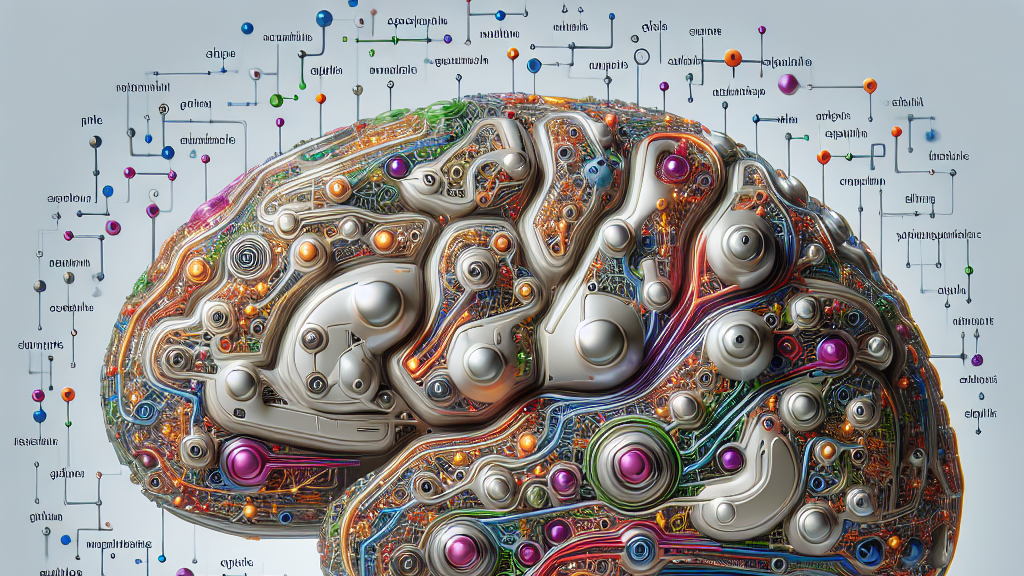
Researchers have found that these biases in large language models (like the ones behind chatbots) occur because certain ‘neuron circuits’ in the model are biased. They discovered gender biases hidden in specific neurons, and unraveling these biases is like untangling a complex web: mess with the wrong neuron, and you could break the entire brainpower of the AI! To solve this, they’ve introduced a new dataset called CommonWords that carefully examines these biases and helps pinpoint exactly which neurons to target, allowing for a smarter, more nuanced approach to de-biasing AI.
Imagine a future where AI systems make unbiased decisions in hiring, customer service, or even courtroom settings. This research has the potential to make that happen by ensuring our AI technology is fair and equitable for everyone. It means that in the future, AI could be used more confidently in sensitive areas, knowing that these systems are free from gender prejudice and capable of making impartial decisions.
Did you know? Just like the human brain, AI models have ‘neurons’ that can be biased towards genders!
FAQs
What is gender bias in large language models?
Gender bias in large language models refers to the unfair or unequal treatment and representation based on gender, which can lead to inaccurate or discriminatory outcomes in AI interactions.
How does the study propose to fix gender bias in AI models?
The study proposes to fix gender bias by identifying specific biased neurons within neural networks and editing them using a logit-based and causal-based strategy, ensuring the model’s core capabilities remain intact.
Why is fixing gender bias in AI models important?
Fixing gender bias in AI models is crucial for ensuring fairness and equity, as biased models can perpetuate stereotypes and lead to unequal treatment in areas like hiring, legal decisions, and customer service.
What is the CommonWords dataset?
The CommonWords dataset is a new resource introduced in the study to systematically evaluate and address gender bias in large language models, enabling researchers to better understand and mitigate such biases.
How does neuron editing work in addressing gender bias?
Neuron editing works by precisely identifying and modifying the neurons responsible for bias within AI models, allowing for targeted interventions that reduce bias without compromising the overall performance of the model.
Background
Large language models, like those in AI chatbots, use neural networks that mimic human neurological structures with ‘neurons’ that process information. However, just as humans can have biases based on experiences, these AI models can develop biases based on the information they process. Gender bias is when these AI systems behave differently towards different genders, which can reflect in outputs like text generation. Mitigating this bias without affecting the functionality of the models requires a precise approach, likened to editing specific neurons responsible for these biased perceptions.
History
Gender bias in AI systems has been a growing concern as these technologies become more integrated into daily life. Earlier attempts to address bias relied heavily on fine-tuning models or altering inputs, which often resulted in diminished capabilities of the AI. This new approach, focused on neuron editing within AI models, builds upon previous findings by pinpointing and directly addressing the bias within the model’s ‘brain,’ thereby maintaining its overall performance while promoting fairness.
Based on “Understanding and Mitigating Gender Bias in LLMs via Interpretable Neuron Editing” by Zeping Yu, Sophia Ananiadou, available on arXiv (arxiv.org/abs/2501.14457), used under CC BY 4.0 (creativecommons.org/licenses/by/4.0/).