Connect with us

Search by keyword

Computers

Can AI Be More Fair in Everyday Decisions?

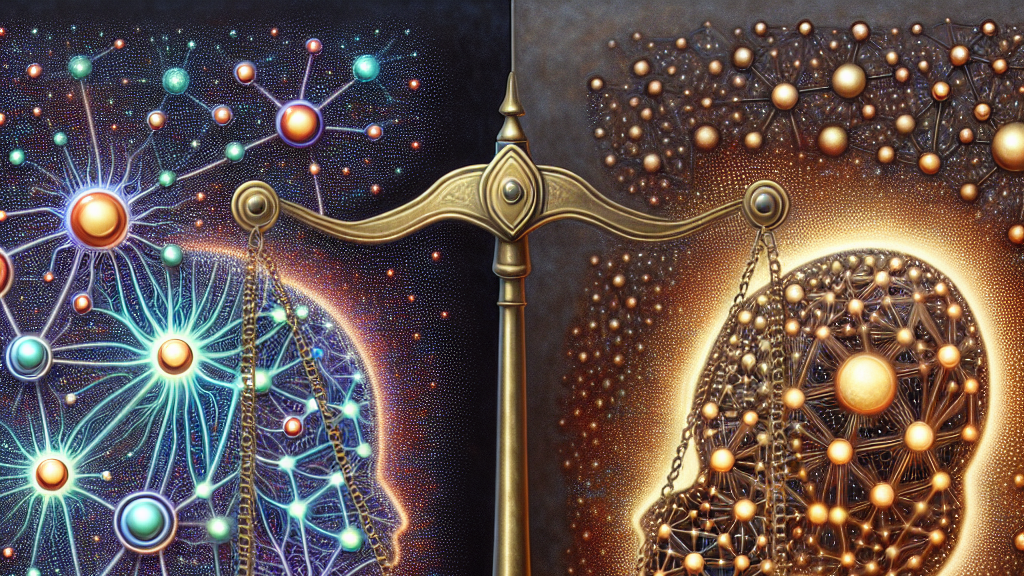
This research explores how to make artificial intelligence (AI) more fair by preventing bias in decisions based on factors like race or gender, even in complex situations. By balancing accuracy and fairness, it paves the way for fairer AI use in finance, hiring, and healthcare.

Can AI Be More Fair in Everyday Decisions
✨Researched by humans. Explained by robots. Learn more.

In a world where AI is increasingly used in critical decision-making areas like hiring, finance, and healthcare, ensuring these systems treat everyone fairly is crucial. Imagine if a smart computer system helps a company decide who to hire or helps doctors diagnose patients but makes unfair choices based on someone’s race or gender. That’s what this study aims to fix by addressing fairness in AI systems.

A team of researchers developed a framework to ensure fairness both on a large scale (treating everyone equally) and locally (making sure individual AI systems don’t have biases). They focused on federated learning, a new way AI systems learn by sharing data while keeping it private. Their approach works well even when these systems face multi-choice problems, like deciding between more than just yes or no.

This groundbreaking approach could lead to more trustworthy AI systems, capable of making decisions without bias. Imagine a future where AI can help doctors make fairer treatment decisions or ensure a loan application is judged solely on financial data, not biased assumptions. By balancing fairness and accuracy, we might just get there.

Did you know that federated learning lets AI learn from data without ever actually seeing it? It’s like learning a new language without leaving your home!

FAQs

What is Federated Learning in AI?

Federated learning is a way for artificial intelligence (AI) to learn from data across multiple locations while keeping that data private. It’s like teaching a class where each student learns with their materials, sharing insights without sharing the actual textbooks.

How does this research ensure AI fairness?

This study focuses on making AI decisions fair by addressing biases that can appear due to factors like race or gender. It introduces a framework that balances accuracy with fairness, even in complex scenarios with multiple factors involved.

Why is fairness in AI important?

Ensuring fairness in AI is critical because these systems often make decisions affecting people’s lives, like hiring or healthcare. Fair AI avoids unjust preferences or biases, leading to more equitable treatment for everyone.

What is the difference between global and local fairness?

Global fairness ensures equal treatment across all people, while local fairness focuses on equality within individual groups or clients using the AI. This research tackles both to create more balanced and unbiased AI systems.

How does this research improve current AI technology?

The introduction of a framework that balances both global and local fairness in multi-class problems represents a big step forward. It outperforms current methods by ensuring AI can be fair and accurate without significant trade-offs or high costs.

Background

Federated Learning allows AI to learn from data stored in multiple locations while maintaining data privacy. Fairness in AI aims to prevent decisions that could be unfair due to biases, such as those based on gender or race. The concepts of global and local fairness refer to ensuring unbiased decision-making across entire populations or within specific client systems.

History

Fairness in AI has been a growing concern as these systems are increasingly used in decision-making. Past research focused on improving AI’s accuracy without introducing unfair biases. This study uniquely combines both fairness and accuracy, particularly in federated learning, which represents a new way of training AI systems. The research expands on previous efforts by addressing multi-class decisions rather than simple binary choices, paving the way for broader applications.

Based on “The Cost of Local and Global Fairness in Federated Learning” by Yuying Duan, Gelei Xu, Yiyu Shi, Michael Lemmon, available on arXiv (arxiv.org/abs/2503.22762), used under CC BY 4.0 (creativecommons.org/licenses/by/4.0/).


Trending

Latest

Can AI Save Water Discover How

Computers

AI is transforming the tech world, but it uses lots of water! A new tool, SCARF, helps us measure and reduce AI's water footprint,...

Whats a Forbush Decrease and Why Should We Care Whats a Forbush Decrease and Why Should We Care

Space

Scientists just observed the biggest solar storm event in years, revealing unexpected cosmic ray patterns. Understanding these changes could help us protect our technology...

Can Cars Spot Danger Faster Than Humans Can Cars Spot Danger Faster Than Humans

Computers

Think about how quickly you react when something unexpected happens on the road. This research brings us closer to creating self-driving cars that can...

Can Fear of the Other Stop Social Harmony Can Fear of the Other Stop Social Harmony

Physics

Fear of the unknown might make it harder for people to agree and get along. This study shows that when people have strong xenophobic...

Can AI Revolutionize Breast Cancer Diagnosis Can AI Revolutionize Breast Cancer Diagnosis

Electricity

This research introduces a groundbreaking AI model that can accurately assess HER2-positive breast cancer using widely accessible staining methods, potentially revolutionizing how we diagnose...

Can AI Transform Your Singing into a Choir Can AI Transform Your Singing into a Choir

Computers

Imagine singing solo and having AI turn you into a choir. This research unveils a groundbreaking AI tool that transforms your voice into rich...

You May Also Like

Computers

Imagine a machine capable of reading ancient books, deciphering complex pages with precision! This research is paving the way for AI to unlock the...

Computers

Dive into the world of AI mistrust, where computers don't always know when they're wrong! Discover how teaching AI to see like us might...

Computers

Discover potential dangers in using artificial intelligence to count votes and how even a small error could change election outcomes.

Computers

AI tools that create faces are showing bias by favoring certain looks. This bias isn’t just about beauty—it affects judgments about intelligence and trust....

Computers

Researchers are testing if blending sound and sight in AI could boost its smarts. This matters because it could mean smarter tech in devices...

Computers

This research introduces a new dataset to help AI systems more accurately identify images of minors online, potentially protecting children from digital exploitation and...

Computers

This research dives into why some AI models seem like mysterious black boxes, while others are easy to understand, using insights from computer science...

Electricity

This groundbreaking study shows how advanced sensors and AI can improve methane leak detection from space, helping us fight climate change more effectively. With...

Computers

Exciting new research shows our computers can be even smarter in predicting chemical reactions and properties by using hidden layers of information, promising faster...

Copyright © 2024 8ig8rain.

Disclaimer: The content on 8ig8rain.com consists of AI-generated summaries of scientific abstracts from arXiv. Please note that most arXiv abstracts are preprints and may not have undergone formal peer review. While these summaries aim to convey key ideas and potential applications, they are provided for informational purposes only and should not be interpreted as validated scientific findings or professional advice. The summaries are intended to educate, spark curiosity, and inspire further exploration of science.