Imagine if technology could see into the future of your health. That’s the exciting reality researchers are working on with pancreatic cancer, one of the deadliest forms of the disease. Early detection could be life-changing, but with symptoms often appearing late, survival rates have remained devastatingly low.
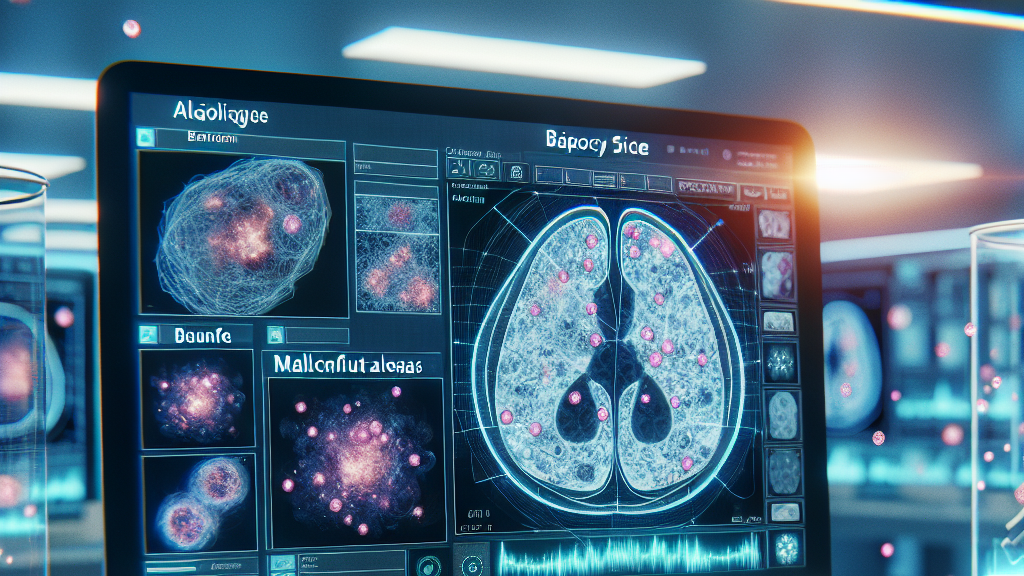
In a remarkable breakthrough, scientists have developed an artificial intelligence model that combines information from radiology reports and CT scans to predict the risk of having pancreatic cancer. Think of it like an ultra-smart detective sifting through clues, identifying signs of trouble long before they become deadly. The AI model achieved impressive results, accurately distinguishing between high-risk and low-risk patients. This means doctors could intervene sooner, giving patients a fighting chance.
Picture this: a future where your routine check-up includes an AI analysis that flags potential pancreatic issues before they spiral into stage IV cancer. With this technology, early treatment could become a reality, potentially increasing survival rates and saving countless lives. It’s not just a dream; it’s the future of healthcare getting closer to your doorstep.
Pancreatic cancer is often called the ‘silent killer’ because it shows no symptoms until it’s advanced.
FAQs
What is the new AI model for pancreatic cancer risk prediction?
The new AI model combines data from radiology reports and CT scans to predict the risk of pancreatic cancer. This fusion of information means it can identify signs of cancer earlier, potentially improving survival rates.
How effective is the AI in predicting pancreatic cancer risk?
The AI model achieved a concordance index of 0.6750 on internal data and 0.6435 on external data, showing a strong ability to differentiate between high and low cancer risk patients.
Why does early detection of pancreatic cancer matter?
Pancreatic cancer is typically diagnosed at an advanced stage, leading to low survival rates. Early detection can allow for earlier intervention, potentially increasing patient survival and improving outcomes.
How are deep learning models different from traditional methods?
Deep learning models, like the one used for pancreatic cancer risk prediction, can analyze vast amounts of data more efficiently and accurately than traditional methods, identifying patterns and risk factors that might go unnoticed by human eyes.
Can this AI model be used for other types of cancer?
The principles behind this AI model could potentially be applied to other types of cancer, revolutionizing early detection and treatment across various diagnoses.
Background
Pancreatic ductal adenocarcinoma (PDAC) is a particularly aggressive type of cancer that often goes undetected until a late stage because its symptoms can be vague or non-existent. Deep learning models are a form of artificial intelligence that can analyze complex data patterns. By combining clinical data like radiology reports with imaging data from CT scans, these models can improve the accuracy of medical predictions and help in early disease detection.
History
Cancer research has been striving for early detection methodologies for years. The integration of deep learning into medical imaging is a relatively recent advancement, building on decades of work in radiology and the development of various imaging technologies. Previous studies have shown promise in using these technologies to improve diagnostic accuracy, but combining them with AI to actively predict risk is a cutting-edge approach that leverages recent advances in data science and machine learning.
Based on “Opportunistic Screening for Pancreatic Cancer using Computed Tomography Imaging and Radiology Reports” by David Le, Ramon Correa-Medero, Amara Tariq, Bhavik Patel, Motoyo Yano, Imon Banerjee, available on arXiv (arxiv.org/abs/2504.00232), used under CC BY 4.0 (creativecommons.org/licenses/by/4.0/).