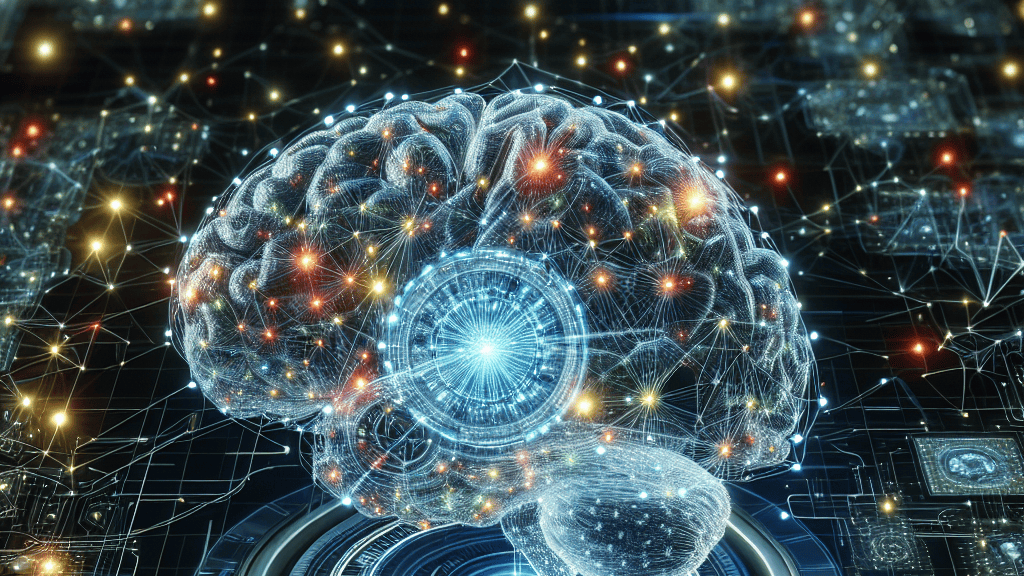
We’ve often heard that AI is the future of understanding our brains and solving mental health puzzles. But what if the popular AI models used to decipher these mysteries are not as effective as we think? A recent study has found that the brain-connecting graph models used in AI could actually hinder our understanding rather than help it, revealing a surprising truth about these cutting-edge technologies.
The research took a hard look at the performance of graph deep learning models, which are designed to predict cognitive and clinical outcomes based on the complex web of brain connections known as the connectome. However, instead of sharpening our insights, the study found these models often deliver poorer results, surprisingly degrading predictive accuracy. To overcome this issue, the researchers developed a novel hybrid model that combines the strengths of linear approaches with graph attention networks, enhancing both prediction accuracy and our ability to interpret what the brain is telling us through both localized and widespread neural patterns.
Imagine being able to diagnose cognitive disorders with a high degree of reliability or tailoring personalized mental health treatments just by understanding your brain’s connectome. This research is reshaping the landscape by highlighting the need for more interpretive power in AI models. In the future, better-designed AI could unlock these possibilities, leading to more precise medical interventions and a deeper understanding of cognitive health.
Did you know that the brain connectome has as many connections as there are stars in the Milky Way galaxy?
FAQs
What is the main focus of brain AI research?
Brain AI research focuses on understanding cognitive functions and neurological disorders by analyzing the brain’s network of connections known as the connectome. The goal is to map these connections in a way that can predict clinical outcomes and aid in treatment planning.
How did this study change the way we see graph deep learning models?
This study found that contrary to expectations, graph deep learning models might actually hinder predictive performance in analyzing brain connectivity. It urges a reevaluation of these models to enhance both accuracy and interpretability in mental health insights.
What solution did the researchers propose for improving AI models?
The researchers introduced a hybrid model that combines linear approaches with graph attention networks. This new approach aims to better predict outcomes and make the data more interpretable, providing a clearer picture of brain connectivity patterns.
Why is understanding the brain connectome important?
Understanding the brain connectome is crucial as it underpins cognitive functions and may reveal insights into neurological disorders, enabling more effective and personalized treatments. It helps map the brain’s neural pathways and how they contribute to various mental health conditions.
What potential real-world applications could arise from this research?
The research points towards future applications such as improved mental health treatments, precise diagnosis of cognitive disorders, and personalized interventions based on individual brain connectivity patterns. These advances could revolutionize how we approach mental health and cognitive care.
Background
The connectome refers to the intricate web of connections between neurons in the brain. Understanding this network is crucial for insights into how the brain processes information and its role in cognitive functions and disorders. Graph deep learning models have been used to analyze these connections, hoping to predict outcomes effectively.
History
Previous research has heavily relied on deep learning models to understand the human brain’s connectome, aiming to predict outcomes related to mental health and cognition. These models have been praised for their potential to map complex neural networks. However, growing evidence suggests they might not be as effective in practice, leading to reevaluations such as this study.
Based on “Rethinking Functional Brain Connectome Analysis: Do Graph Deep Learning Models Help?” by Keqi Han, Yao Su, Lifang He, Liang Zhan, Sergey Plis, Vince Calhoun, Carl Yang, available on arXiv (arxiv.org/abs/2501.17207), used under CC BY 4.0 (creativecommons.org/licenses/by/4.0/).