Connect with us

Search by keyword

Computers

Can AI’s Flaws Offer a Double Fix?

This research shows that two major risks in AI, hallucinations and jailbreaks, are more connected than we thought, potentially allowing us to fix both at once. By understanding and leveraging this connection, we can create strategies making AI safer and more reliable.

Can AIs Flaws Offer a Double Fix
✨Researched by humans. Explained by robots. Learn more.

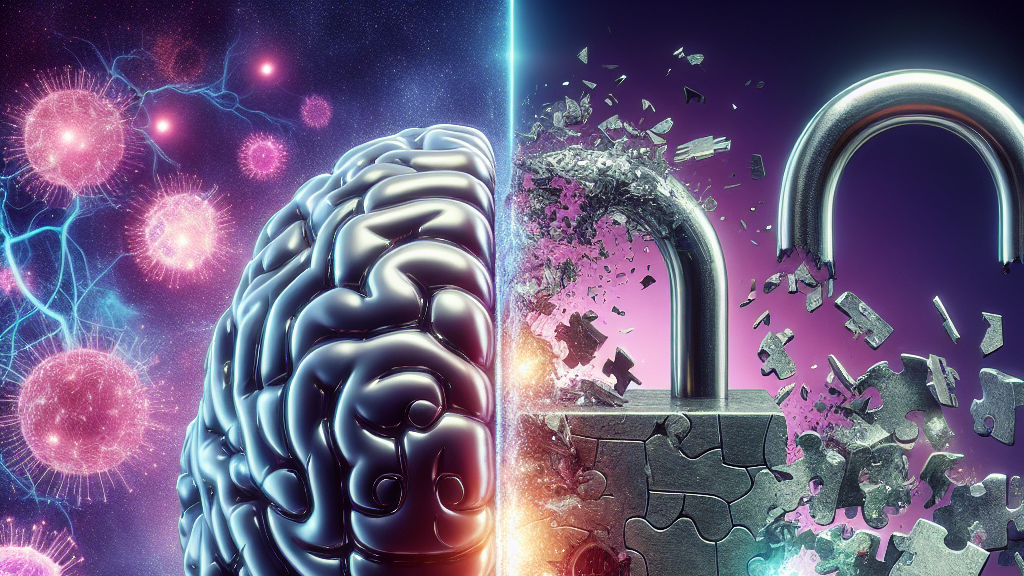
Imagine if we could tackle two big problems in AI with one clever solution! That’s exactly what this new research suggests about large AI models. These models often fall prey to hallucinations—where they make stuff up—and jailbreak attacks, which bypass their safety mechanisms. What if a fix for one could actually help solve the other? Stopping hallucinations could keep jailbreaks in check, and vice versa.

The researchers propose a fresh perspective by showing that these two vulnerabilities share similar underlying characteristics. They looked at how AI models like LLaVA-1.5 and MiniGPT-4 deal with these issues and found intriguing patterns. Both problems respond to changes in how the models focus on information, or ‘attention dynamics.’ And when they tried to solve one vulnerability, they noticed improvements in the other as well.

What does this mean for us? Think of it like getting a two-for-one deal in technology. By targeting these shared issues in AI, developers could soon have a robust way to make AI systems more secure and reliable. Imagine future AI tools that are less likely to make stuff up or get tricked—leading to smarter, safer, and more trustworthy tech in our daily lives!

Did you know? AI hallucinations can lead AIs to confidently provide false information, a bit like confidently claiming that the sky is green!

FAQs

What are AI hallucinations?

AI hallucinations occur when artificial intelligence systems generate incorrect or misleading information with high confidence. It’s like when a chatbot tells you a made-up fact, thinking it’s true.

How does the connection between hallucinations and jailbreaks improve AI security?

By identifying that both vulnerabilities share similar traits, fixes for one can potentially make the system more resistant to the other. This means enhanced security with less effort!

How can this research affect everyday tech users?

This research can lead to more reliable AI systems, reducing instances of misinformation and making user interactions with tech safer and more trustworthy.

Background

Large foundation models, like the ones powering your favorite AI assistants, are prone to messing up in two big ways: hallucinations and jailbreak attacks. Hallucinations happen when AI confidently makes something up, while jailbreaks trick AI into doing or saying things it shouldn’t. These researchers explored how both issues are tackled on different levels: hallucinations at the attention level and jailbreaks at the token level.

History

AI has been woven into our technology for years now, starting with simple chatbots to today’s complex models like LLaVA-1.5 and MiniGPT-4. Previously, researchers mainly studied hallucinations and jailbreaks separately, but this study shows they might be two sides of the same coin and suggests a unified approach to addressing them.

Based on “From Hallucinations to Jailbreaks: Rethinking the Vulnerability of Large Foundation Models” by Haibo Jin, Peiyan Zhang, Peiran Wang, Man Luo, Haohan Wang, available on arXiv (arxiv.org/abs/2505.24232), used under CC BY 4.0 (creativecommons.org/licenses/by/4.0/).


Trending

Latest

Can AI Save Water Discover How

Computers

AI is transforming the tech world, but it uses lots of water! A new tool, SCARF, helps us measure and reduce AI's water footprint,...

Whats a Forbush Decrease and Why Should We Care Whats a Forbush Decrease and Why Should We Care

Space

Scientists just observed the biggest solar storm event in years, revealing unexpected cosmic ray patterns. Understanding these changes could help us protect our technology...

Can Cars Spot Danger Faster Than Humans Can Cars Spot Danger Faster Than Humans

Computers

Think about how quickly you react when something unexpected happens on the road. This research brings us closer to creating self-driving cars that can...

Can Fear of the Other Stop Social Harmony Can Fear of the Other Stop Social Harmony

Physics

Fear of the unknown might make it harder for people to agree and get along. This study shows that when people have strong xenophobic...

Can AI Revolutionize Breast Cancer Diagnosis Can AI Revolutionize Breast Cancer Diagnosis

Electricity

This research introduces a groundbreaking AI model that can accurately assess HER2-positive breast cancer using widely accessible staining methods, potentially revolutionizing how we diagnose...

Can AI Transform Your Singing into a Choir Can AI Transform Your Singing into a Choir

Computers

Imagine singing solo and having AI turn you into a choir. This research unveils a groundbreaking AI tool that transforms your voice into rich...

You May Also Like

Computers

This research explores how artificial intelligence language-powered robots might think they're seeing things that aren't actually there. Investigating this quirk could lead to more...

Computers

This research explores if AI-created test collections for evaluating search engines can be trusted, especially considering potential biases. Understanding this could change how we...

Materials

Thanks to a new AI approach called LEGO-xtal, creating perfect crystal designs has become way easier and faster than ever before. This breakthrough could...

Computers

This research explores how robots that understand and act on both vision and language can be tricked into doing things they shouldn't, revealing potential...

Computers

Ever wondered if we can make AI models smaller without losing any information? This new technique called ZipNN can save a ton of space...

Computers

Researchers are uncovering how easily hackers could exploit weaknesses in talking AI gadgets, making it crucial to develop stronger defenses to protect us from...

Computers

CrypticBio, a massive dataset of visually confusing species, is set to revolutionize AI models by helping them identify species that look nearly identical. This...

Computers

AI is being used to tackle the tricky task of identifying species that look almost identical to each other, helping save wildlife and preserve...

Computers

AI systems are smarter than ever, but also more vulnerable to hidden dangers. Researchers have found a way to keep AI agents safe from...

Copyright © 2024 8ig8rain.

Disclaimer: The content on 8ig8rain.com consists of AI-generated summaries of scientific abstracts from arXiv. Please note that most arXiv abstracts are preprints and may not have undergone formal peer review. While these summaries aim to convey key ideas and potential applications, they are provided for informational purposes only and should not be interpreted as validated scientific findings or professional advice. The summaries are intended to educate, spark curiosity, and inspire further exploration of science.